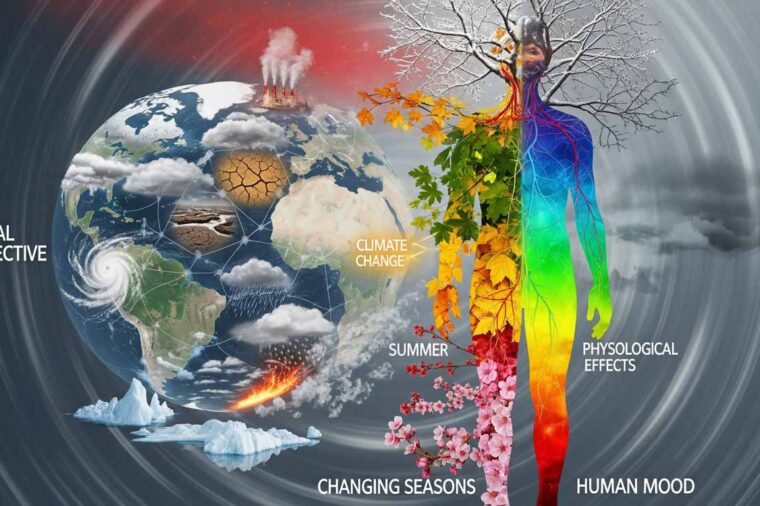
Hello! Welcome to my blog #3 on the inquiry question: “How does the changing season from summer to fall and winter affect our mood, what we eat and what we do?” In this blog post, I will address my first round of research on understanding the science behind seasonal changes and the relationship it has with the brain.
Round 1 of research question: What is the science behind seasonal changes, and how is it related to the human brain?
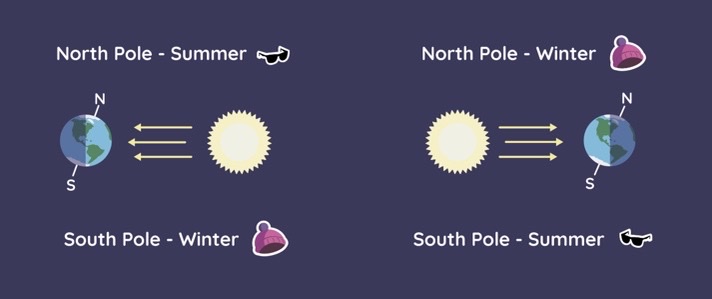
Seasonal changes happen due to the Earth’s tilted axis. Throughout the year, different sections of the Earth receive the Sun’s most direct rays, and due to this, the Northern and Southern Hemispheres have opposite seasons. This means that if it is summer in the Northern Hemisphere, it will be winter in the other hemisphere and vice versa. (1) Basically, not everyone on Earth will experience the same seasons at the same time, with some experiencing little change in seasons, while others are experiencing more obvious changes. Many individuals will experience Seasonal Affective Disorder (SAD), especially when days get shorter in the fall and winter months.
Some people also experience SAD during the spring and summer months (winter-pattern SAD); however, this is way less common. (2) In my blog post today, I will be focusing more on SADs that occur in the fall and winter months.
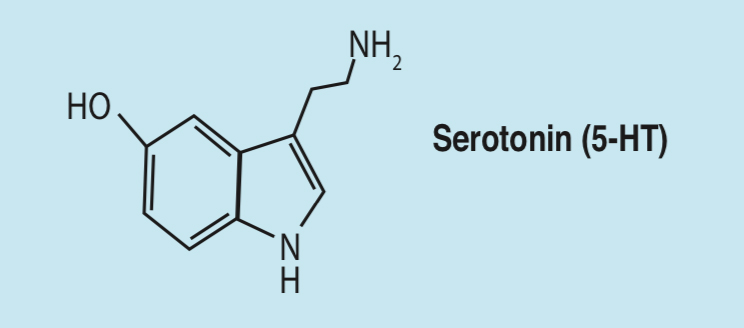
Scientists have discovered that the people who have SAD, especially winter-pattern SAD, have reduced levels of the chemical serotonin in the brain, which helps with regulating one’s mood. Serotonin is a neurotransmitter in our body that tells the body how to work and helps in controlling a person’s happiness, memory, sleep, body temperature, and hunger. (5) Several studies also suggest that sunlight affects levels of molecules that help maintain normal serotonin levels, which means that shorter daylight hours can prevent these molecules from functioning, leading to a decreased level of serotonin in fall and winter. (2)
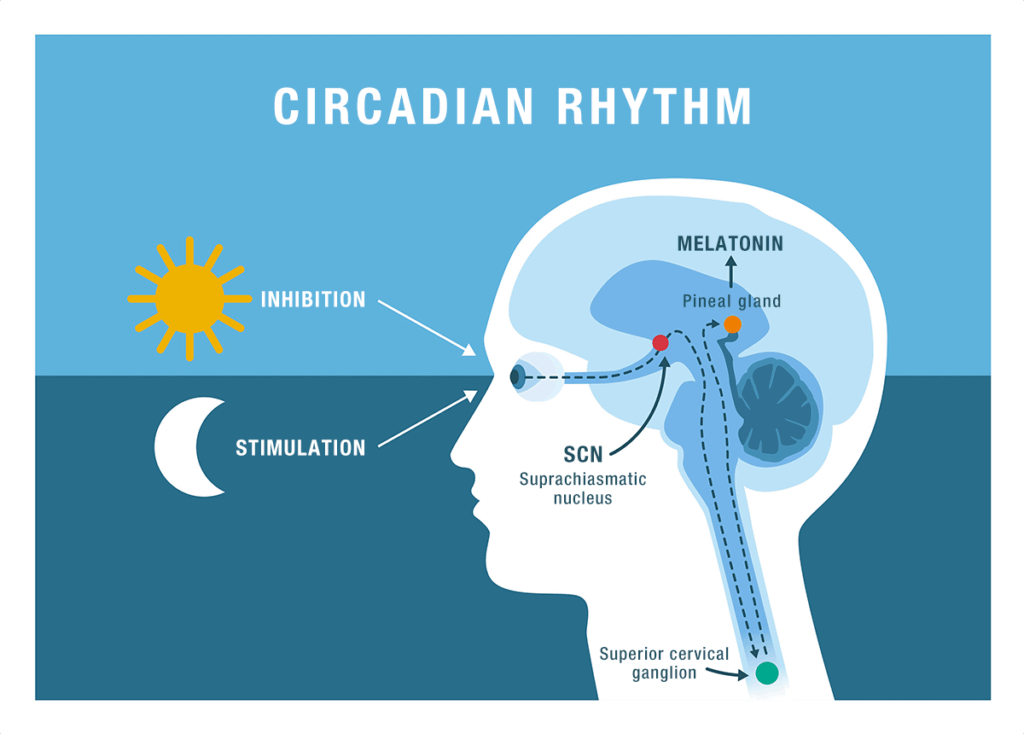
Another hormone which might be affected during days with little to no sunlight is melatonin. Melatonin is a hormone in your brain that tells the body when it is time to relax and get ready to rest, and it usually happens when the sun goes down. (4) Studies have found that melatonin levels are much higher at night during the longer day length periods (April-September), while in the shorter day length periods (October-March), the melatonin levels are less clear and lower. (3) The overall study suggests that nighttime melatonin in the longer days was significantly higher than in the shorter days. Melatonin affects the brain as it regulates our sleep-wake cycle, reduces inflammation, controls circadian rhythms, and promotes neuroprotection. (4)
References:
(1) Nasa Science (2019) What Causes the Seasons? Retrieved from https://spaceplace.nasa.gov/seasons/en/
(2) National Institute of Mental Health (2023) Seasonal Affective Disorder Retrieved from https://www.nimh.nih.gov/health/publications/seasonal-affective-disorder
(3) Luboshitzky, R., Lavie, P., Shen-Orr, Z., Herer, P., & Lavie, L. (1998). Daily and seasonal variations in the concentration of melatonin in the human pineal gland. Retrieved from https://www.sciencedirect.com/science/article/abs/pii/S0361923098001051
(4) Cleveland Clinic. (2023). Melatonin: What It is, Uses, and Side Effects Retrieved from https://my.clevelandclinic.org/health/articles/23411-melatonin
(5) Nationwide Children’s Hospital (2023) What is Serotonin? Retrieved from https://www.nationwidechildrens.org/family-resources-education/700childrens/2023/02/dopamine-and-serotonin
Thanks for reading!


Hi Isabella, I really enjoyed reading your blog post #3!! Your blog post was very informative and intriguing. Next time, I would talk about what your next step for this project is, talking about what you would do in blog post #4 and how that will help you get closer to solving your inquiry question. This will help the readers have a slightly better idea of your plan as your research continues to build up. I can’t wait to read your other posts!
A website that might help you throughout your research:
https://norcalbehavioral.com/the-science-behind-seasonal-mood-changes-how-your-brain-responds-to-the-seasons/