

Money has always been an important part of life shaping our daily actions and goals. Many people often believe that having a better financial situation than another will lead to more happiness in our future. Although money supports financial stress and can gives our lives stability, it doesn’t always end up in long term happiness. Many people’s goal in life is to chase money believing it will fix all their problems, causing them to sacrifice their own health, family and eventually their own emotions, all being control by the amount of money they have. If not looked at right, money can make make our life expectations unrealistic and give us unclear definition of what true happiness is.

In this blog post, I will discuss a sub question that researches about how does the stress of managing money influence overall happiness?
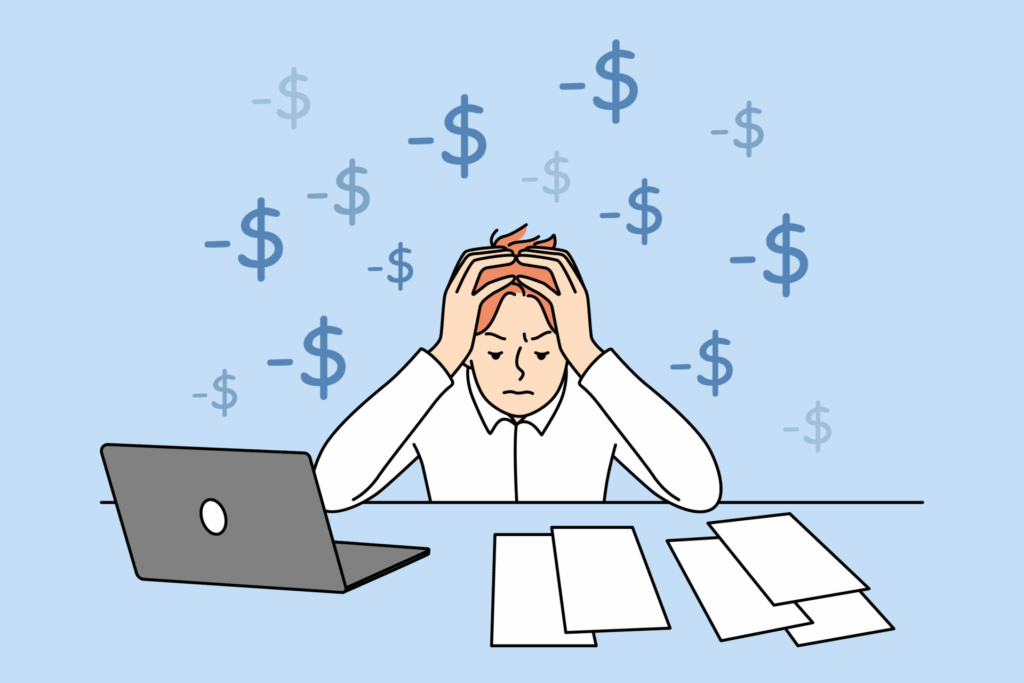
I decided on researching this topic because many young adults in Canada struggle with financial stress. Financial stress damages an adult’s mental health a lot, leading to depression.” A positive association between financial stress and depression is found in both high-income and low-and middle-income countries, but is generally stronger among populations with low income or wealth.” (1) Financial stress damages an adult’s mental health a lot, leading to depression. ” Individuals with higher levels of financial worry were noted to be more likely to experience psychological distress after adjusting for the socioeconomic and health-related variables (adjusted odds ratio, AOR 1.20, 95% confidence interval, CI 1.10–1.31, p < 0.001).” (2) This shows that higher levels of financial worry were significantly associated with psychological distress.
While researching this topic I thought to myself about how does this affect the younger generation of adults in the world. Financial stress like paying taxes, paying rent, monthly groceries etc., have made “adulthood may have lasting effects on financial security, physical health, and overall wellbeing.” (3) While still adjusting into adulthood, young adults are hit with massive financial stress that well affect their long term happiness. “One in six young adults in the US experiences high FS, which portends high risk of PD.” (3) Although we can acquire happiness from many different ways, we can not avoid financial debts. To pay off loans, debts etc., you would need to work multiple jobs, creating an unstable work life balance, further disrupting our long term happiness.

I decided to research people who do have financial freedom by having a lot of money, to see if money can lead to lead us to overall happiness. “When people have enough money to handle unexpected expenses or plan for the future, they experience less anxiety and more peace of mind.” (4) Having enough money to take away financial stress can be great for mental health. It gives you stability on the future, making you more optimistic on what’s to come, further helping you becoming happy.

Although having money to help you with your financial stress it does not give you real happiness. “This doesn’t mean you need to be wealthy to be happy, it’s about having enough to feel secure and in control of your financial situation.” (4) So yes money can help with our financial stress, but that will not give you real happiness. Money allows you to have time to have true happiness by making connections and relationships.
Financial stress and depression in adults: A systematic review – PubMed
https://bmcpublichealth.biomedcentral.com/articles/10.1186/s12889-024-20863-5?
Money and Happiness: How Financial Freedom Shapes a Fulfilling Life – Economic Insider



Hey Kian, great post. I like how your post explains clearly how money and financial stress affect happiness, and the research you included supports your points well. Something you can improve on is that some sentences repeat ideas or are a bit long, which can make parts unclear. Shortening those sentences and removing repeated lines could make your writing easier to follow. Overall, you show good understanding of the topic and use strong evidence to support your ideas. I’m looking forward to reading your next post.