

Hi it’s jennah. This is my 3rd blog post and I’m so excited to share my info with you guys. Today I’m going to be doing research about cheer to help justify and show evidence for my story. I’ll be covering half of it, this being, the exposition, point of attack and the rising action. I hope you enjoy what I’ve discovered!
Exposition:
Summary of what happens in this section of the story:
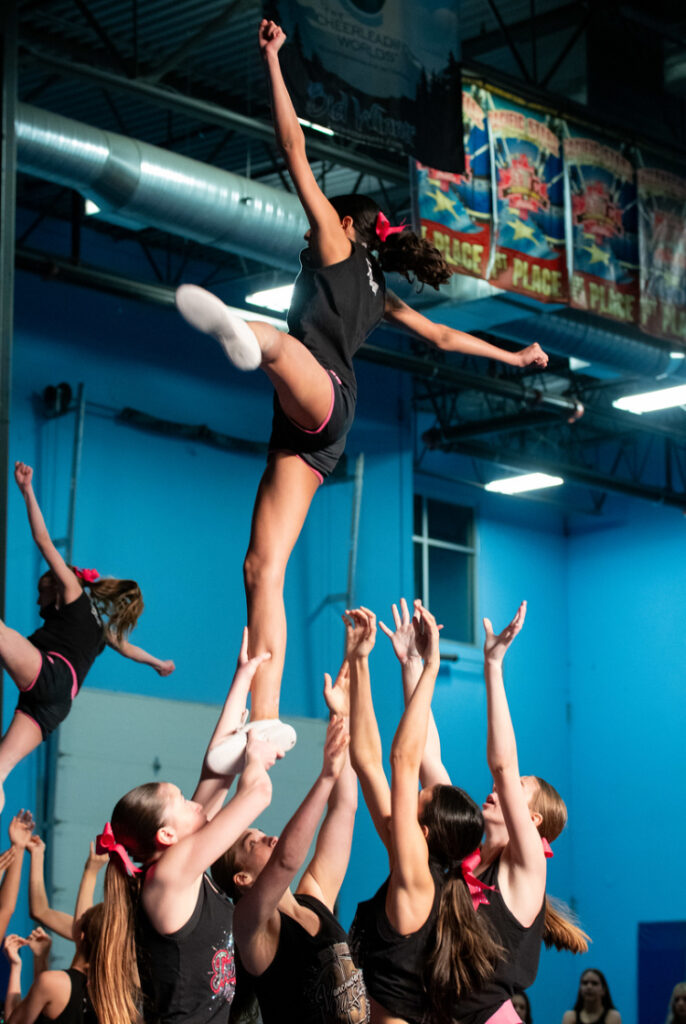
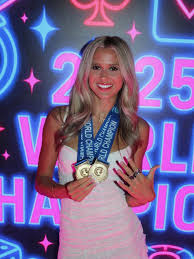
Zoya is a 35-year-old former all-star cheerleader who was once famous, she’s a 5-time world champion who “globed” over six times. Ten years earlier, Zoya tore her ACL during a competition but couldn’t stop in the middle of the performance and pushed through and finished her routine. The injury forced her to quit the sport she loved, as well as the future she imagined, her cheer career, her fiancé, and a perfect life.
Now, her days are repetitive, she work as a sports therapist, she goes home, eats, sleeps. Her life isn’t quite the same as before. Although she stays fit and occasionally flies or tumbles, but she never competes like she used to.
On the 10-year anniversary of her injury, paparazzi swarmed her, and later that day an agent called inviting her to appear on a podcast to talk to her about her past career. Except when the producer hesitates to call cheerleading a sport, Zoya feels the determination to defend the sport she once loved.
Point of attack:
Summary of what happens in this section of the story:
Zoya’s main conflict is proving that cheerleading is a real, demanding sport while confronting the painful memories of her past.
Rising action:
Summary of what happens in this section of the story:
Rising Action One
Zoya goes on the show. She introduces herself, explains how she got into cheerleading, and shares her early life. A time when everything felt perfect. As she talks, she revisits emotional memories and flashbacks.
Rising Action Two
The interview digs deeper: she explains her injury, how it changed her life, and what she did afterward. She describes the commitment of cheerleading, the long hours, the sacrifices, intense training, the performance energy, and the thrill of victory. Sharing this brings both pride and pain, but she pushes through.
Points:
Real life experiences!
- A former UCF (University of Central Florida) cheerleader named Jayda Redden was severely injured during her first practice on the team. She was doing a basket toss and was dropped on her head causing her severe brain damage. (1)
- The incident and her story was shared on social media (TikTok, Instagram, etc), and her story went viral. She got millions of views and was widely recognised in the cheer community. (1)
- Jayda stated, “they had thrown me in the air and from what I’ve been told is … the main base, the right base and the back spot stepped out, so the coach caught my feet and so my head went back, and I hit like the back right side of my head.” (1)
- Jayda was later forced to retire her cheerleading career because of this incident and stated that ““I hope UCF rebuilds that cheer program with new coaching staff because there’s so much wrong with them and there’s so much darkness that they have swept under the rug.” (1)
These points are extremely important to the exposition part of my story because it shows the struggles that certain athletes have to face, how recklace your coaches and teammates can be when something goes wrong and much more. They demonstrate how strong each athlete has to be to survive only 1 season and how easy it is to fall out of love with it. Jayda Redden is only 1 out of many athletes who have been forced to retire because of an injury and there will still be many more to come. Just like Zoya (the character in my story), Jayda was injured and couldn’t return to the sport she loves, but Zoya, with hard work and dedication, she returned and lived her dream life once again.
Consideration?
- According to the Garfield messenger, something can only be considered a sport when it requires physical exertion, skill, and competition. They state that in some cases, all the criteria is met, but that activity is not considered a sport, for several reasons, and they’re all different depending on the activity and scenario. (2)
- And example is cheerleading. It meets all the criteria, physical exertion, skill and competition, but is not at all considered a sport among many people. People say that cheerleading is more like a performance rather than a competition. Because of this, people say that “Not many cheerleaders actually compete — so some argue it doesn’t fully meet the “competition” requirement.” (5)
- Except, people do consider activities like chess a sport. This is what the Garfield messenger has to say about it. “Besides moving the pieces, there’s also the mental pressure felt while playing in the intense environment of competitive chess. It will manifest itself as physical strain creating high blood pressure, sweating, and nausea.” This is what makes chess a sport. (2 & 3)
These points show that even if an activity meets all the criteria to be a sport (and then some), that doesn’t mean that it can be considered a sport. The way that society decides what is and isn’t a sport isn’t fair and impacts many people and athletes all around the world. I thought that these points and cites best explained my point of attack, but not only that, also to show that the system is rigged. Cheerleading meets all the criteria and then some, but many people think that it’s either too much like other sports like circus, gymnastics, etc. or it’s not enough like any of them. Do you see how hard it is for some people?
In my own words (pulled directly from blog post 1), this is my take on cheerleading and later, will provide points and evidence from various sites.
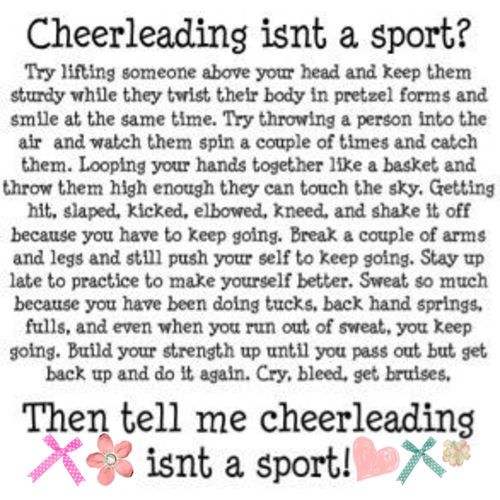
People only see the performance and runs we do, but nobody sees the effort and stamina it takes to compete in these skills. It begins with long hours of practice, where the athletes train their bodies to be strong, flexible, and perfectly in sync for tumbling and stunts. The first few months of being on your team are some of the most nerve-racking. You feel the constant need to push yourself and prove to your coaches that you have what it takes to be put in the front and be on this team. But it’s not only the beginning of the routine where this applies. You have to push to do this throughout the season to ensure you keep your place in the routine. During this time, it’s crucial that you don’t skip practices, as you are going to be required to choose cheerleading over everything as the season comes to a full start. As the season starts up, you can’t miss practice at all if you are sick, broken, or even attending a vacation that was planned; if you don’t notify the coaches, you are required to skip it and choose even practice over family events.
In the middle of the season is where it’s the hardest and most challenging. It’s filled with injury, exhaustion, adding skills on, doing random runs that only make sense to us, and the constant rush to push to perform harder stunts, sharper routine changes, and upgrades to skills. The middle involves conditioning, constant runs repeating missed skills and fallen stunts, and so much more. When you are injured during this time, you risk the possibility of being replaced. Even if they just say, “It’s only until you get better,” they don’t always mean it. Sometimes you get replaced for good, and you get put in the back of the routine, only coming in at certain moments.
Then comes the competition. The competition is where all your months of effort and energy are put to the test for the judges, and every comp is a big deal, as you can earn bids to competitions like Worlds, sometimes even fully paid. During your performance, the judges score based on difficulty, timing, and execution, just like gymnastics or dance, except completely different. And don’t forget, if you mess up, pop a tumbling skill, drop a stunt, or miss a count, you risk taking points off and scoring lower.
Throughout the season, cheerleaders rely on teamwork, communication, and physical power to succeed; they do this to help prove that their sport requires both athletic ability and discipline. By the end, it’s clear that cheerleading isn’t just about pom-poms and dancing; it’s a demanding, competitive sport that takes true athletes that are dedicated to mastering and succeeding.
How are they chosen for the Olympics?
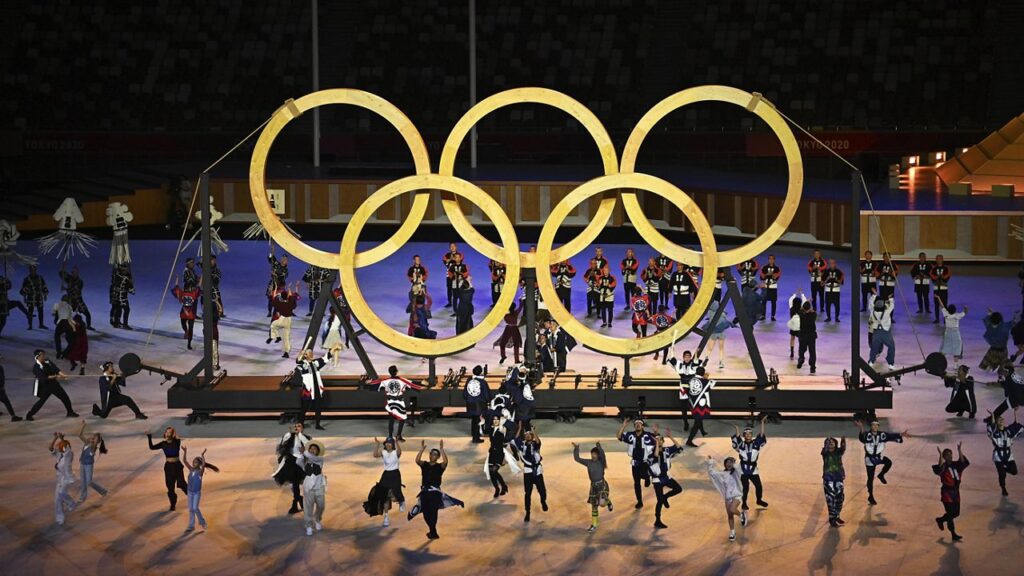
- In any sport, there are geographical participation rules, meaning for something to be called a sport it must be widely practiced around the world. (3)
- The IOC also considers media appeal, costs, and “value added” to the Games when deciding what sports to include. They have to account for how much it’ll cost for public appearance and Olympic level training, how the public engages with it and how much they want to see it, how interesting it is to watch, etc…(3)
- Although, even if a sport is recognised, that doesn’t mean that it’ll be chosen for the Olympics, but it will still be considered a sport. EX: bowling and chess are recognized by the IOC but not in the Olympic program. But at least they are recognised as sports. (3 &4)
- There have to be limits and rules on inclusion to ensure the Olympics stay manageable. This means a certain number of teams, athletes, participants, cost, etc…(4)
These 4 points that I’ve listed above are all meant to cover how sports are chosen for the Olympics and chosen to be recognised. As you can see, there are many requirements that I’ve listed and this isn’t even all if them, these are the most important. But later, you will see hat cheerleading covers any and all requirements. This means that technically, cheerleading can be recognised as a sport world-wide, but many choose not to turn that path.
In my story, I want to not only help people not only be educated on the sport, but also to change their minds about whether or not cheerleading is a sport.
What is cheerleading? Pros and cons about being recognised as a sport.
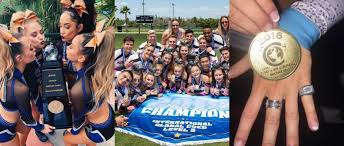
- Cheerleading requires athleticism, strength, endurance, and coordination. Although this is similar to other recognized sports (such as gymnastics), cheerleading has its own twists that makes it unique and different from the rest. (5)
- Cheerleading is inclusive just like dance or gymnastics, it’s equally seen as something both girls and boys can do, just like many other sports (5&6).
- People often only see cheerleading like a performance rather than a competition, although it’s like both. It’s both competition and performance making it and excellent addition to the “sports” categories. (5)
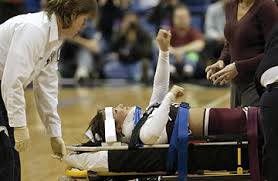
This is a short description of cheerleading, but not really everything. There are minor details about it, but I’m mainly comparing and putting pros and cons of it In this section. To really know and educate yourself on cheerleading, you are able to see the text that I pulled from my first blog post and read it through. In there is more info about cheerleading.
Sideline cheerleading:
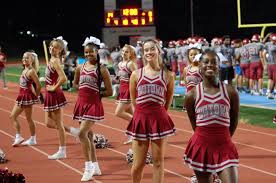
- Sideline cheerleading is school based and focuses on school, based activities and games. It’s meant to cheer on the sports teams that are playing and to hype up the crowd. (7)
- It’s recreational meaning squad based, its more beginner friendly focusing on dancing and formations. It’s a lot more casual. (7)
- It includes basic lifts, dancing and motions, low level tumbling and many loud chants used to hype up crowds and get them excited for game days. (7).
This is not the cheerleading im talking about. There are 2 types of cheerleading. 1 being sideline (this one) and the other being All-star that I and many others believe should be considered a sport. In my story Zoya will be talking about her struggles and how she started cheerleading. Step 1 being her high school team (sideline), then she goes into all-star.
All-star cheerleading:
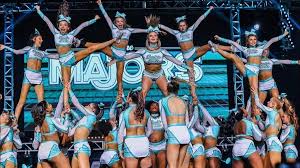
- More athletic and lots of action, it’s performance-based, but also includes competition. The teams perform routines (2–3 minutes) full of stunts, tumbling, pyramid, jumps and dance. (7)
- They are judged by real judges. This is based on technique, execution, difficulty and so much more. They also take points off based on how many deductions you receive, although, you can also hit your routine meaning 0 deductions and a “hit 0,” although, this does not mean a perfect scoring routine. (7 &8)
These are arguments and points/descriptions that Zoya will be mentioning in my story.
Dance and gymnastics sports.
- Dance and gymnastics are recognised as sports because they are both distinctly competitive and include physical activity. (9)
- They include specific rules and regulations which pushes competition even further. (9)
Compared to cheer:
- People often say that cheer is different from gymnastics and dance because it was historically created to encourage and support other teams. But overtime it has grown into a sport and mix of many. (9)
- There are 2 versions to it, sideline and all-star. Meaning that “if 1 is recognised, the other has to be too.”(9)
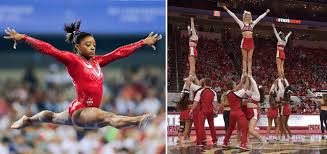
I think that people have a hard time accepting change and because cheer was originally created to support teams, it is hard to change many people’s perspectives and make them cheer on cheerleading.
Cites:
- https://www.orlandosentinel.com/2025/08/25/tale-of-former-ucf-cheerleader-dropped-injured-during-practice-goes-viral/
- https://www.garfieldmessenger.org/6050/articles/opinion/what-is-considered-a-sport/
- https://www.britannica.com/story/how-are-sports-chosen-for-the-olympics
- https://www.olympics.com/ioc/faq/sports-programme-and-results/what-are-the-conditions-required-for-a-sport-to-be-recognised-by-the-ioc
- https://www.britannica.com/procon/cheerleading-debate
- https://usacheer.org/history-of-cheerleading
- https://eecheer.com/2025/03/27/types-of-cheerleading-explained/#:~:text=Sideline%20Cheerleading%3A%20Think%20game%2Dday,Star%20teams%20competing%20for%20glory.
- https://cheerupathletics.com/what-is-all-star-cheerleading/#:~:text=All%20Star%20Cheerleading%20is%20a,Cheerleading%20utilizes%20a%20spring%20floor.
- https://whhsnews.com/8036/opinion/opinion-competitive-dance-cheer-should-be-considered-sports/#:~:text=Open%20Search%20Bar-,OPINION:%20Competitive%20Dance/Cheer%20Should%20be%20Considered%20Sports,physical%20skills%20to%20do%20so.
Thank you so much for reading and I hope you enjoyed learning about the Sport of cheerleading!

I really enjoyed reading this post. I can tell you took lots of time to write your story and incorporate real-life events into your story. I loved how you included other peoples view on cheer as well as your own, it makes the meaning of the story more meaningful. I would suggest adding more detail about Zoyas cheer carrer and how it has impacted her. Overall, it was a great post and I’m excited for your next post!