
For this blog post, I’m doing some research to support the first half of my story about Jorin, Arenthe, and its justice system. This research round is mainly about how real courts are starting to use technology, how those systems can become biased or corrupted, how people lose trust in justice, and what it does to someone when they have to carry a dangerous secret. All of this will help me write the exposition, point of attack, and rising action of my story in a way that feels more grounded, even though my world has gods, curses, and a kinda alive court machine.
For this post, the sections of my story that I’m focusing on are first the exposition, where Jorin arrives in Arenthe, and is introduced to their supposedly perfect justice system and the mysterious machine that decides guilt. The, the point of attack, where he realizes the justice system is actually built on lies and performance, with a puppet ruler and a corrupted belief in the law. Thirdly, the rising action, when people awaiting trial start dying in strange ways, guards are found dead, and the nation slowly begins to lose faith in both their god and their court. Jorin is pulled into all of this and begins to uncover the truth, which later becomes the heavy secret he has to carry.
To make Arenthe’s machine feel more believable, I started by looking at how real courts are already using artificial intelligence and other digital tools. In Canada, for example, official court resources explain that AI is being used to help with things like organizing legal information, assisting self-represented people to find resources, and making some court processes more efficient. These tools don’t replace judges; they act more like helpers in the background so that cases can move faster and information is easier to find (1).
Another article describes how AI is also being used specifically for translation in court processes, helping reduce language barriers by turning decisions and documents into different languages more quickly, which can make justice more accessible for people who don’t speak the main court language well (2).
However, the more I read, the more I noticed a big warning sign: judges and courts are being told not to hand over their actual decision-making power to machines. The Canadian Judicial Council recently released guidelines about AI, saying clearly that a judge’s authority should never be delegated to AI, and that while AI tools can support judges, they have to be used carefully, with attention to ethics, independence, and the risks of bias or error (3).
Another legal article about AI translation in courts points out that even though AI can translate large volumes of legal documents much faster than humans, it still makes mistakes and doesn’t always understand context, so human review is essential and it is said that its far too soon to fully trust the technology with something as serious as court rulings (4). This is really helpful for Arenthe: in my story, the nation ignores these warnings in the most extreme way. Instead of keeping humans in charge, they literally let a machine decide guilt, and then pretend that this is the purest form of truth and justice.
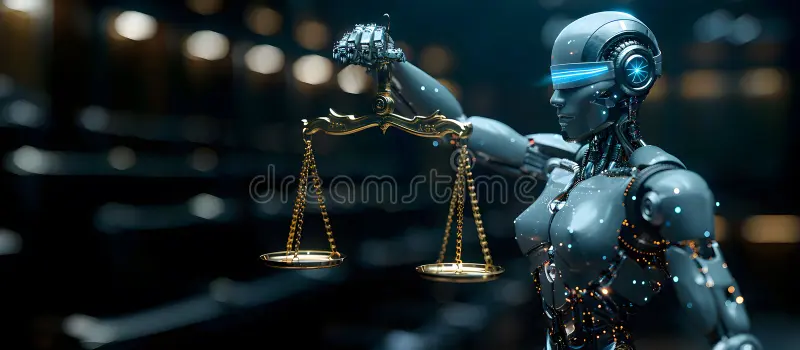
I also wanted to understand how something that looks objective and fair, the justice machine, can actually be biased underneath. One famous real-world example is a risk assessment program used in the US criminal justice system called COMPAS. A ProPublica investigation found that this algorithm, which is supposed to predict how likely someone is to reoffend, tended to label black defendants as “high risk” more often than white defendants, even when the black defendants did not go on to commit new crimes (5).Another article that revisits this issue explains that COMPAS showed a much higher false positive rate for black people than for white people, meaning the system overpredicted risk for black defendants and treated them as more dangerous than they actually were (6). These examples show how data and algorithms, which are supposed to be neutral, can actually repeat and even amplify unfairness that already exists in society. In Arenthe, I’m basically taking this idea and combining it with magic: their machine is fed by corrupted rules and twisted human input, so it also looks neutral but quietly punishes certain people.
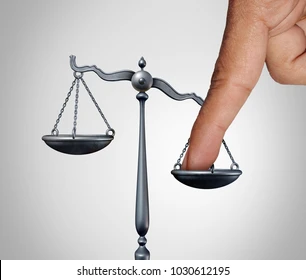
Because Arenthe calls itself the nation of justice, I also wanted to know how people in real life feel about their justice systems. A report on the 2023 National Justice Survey from the Canadian Department of Justice says that, overall, people in Canada have moderate levels of confidence in the criminal and civil justice systems, so not extremely high ones. Confidence also changes depending on who you are though: for example, Indigenous respondents reported lower levels of confidence compared to white respondents, while many racialized groups reported somewhat higher confidence than white respondents (7). A separate indicator from Statistics Canada that tracks “confidence in access to fair and equal justice” shows that confidence levels are not the same for everyone and can shift over time. It breaks down how many people feel that the criminal justice system is fair and accessible, and how many don’t, which is important for understanding how stable or fragile public trust really is (8).
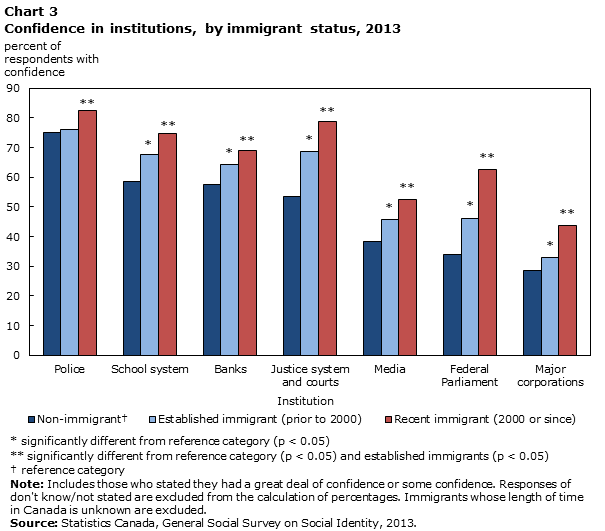
These findings help me imagine the mood in Arenthe. On the surface, everyone might repeat the slogan that their courts are pure, fair, and guided by divine technology. But underneath, a lot of people would have private doubts, especially as mysterious deaths keep happening among people who are on trial or who work as guards. Just like in the real world, belief in the system isn’t a switch that’s either on or off, it’s more of a shaky line that can go up or down based on rumours, personal experiences, and what tragedies people see around them. I want to capture this in the rising action. The slow tipping point where people move from quiet discomfort to open distrust in their god and their apparently perfect machine.
The last part of my research for this blog post is about secrets, because one of the most important parts of my story is Jorin’s decision to keep the truth about Arenthe to himself. Psychology articles talk a lot about how keeping secrets affects people. One piece from an article explains that keeping a serious secret can lead to increased feelings of shame, isolation, uncertainty, and feeling like you’re not being your real self. It says that when people constantly think about their secrets, instead of just hiding them in conversations, that private rumination is what really damages their wellbeing and can make them feel lonely and anxious (9). Another article from the Association for Psychological Science describes secrets as “persistent mental burdens” that people carry around with them. It reports that people who fear their secret being discovered, or who feel a high cost if it is revealed, tend to think about it more often, and the more they dwell on it, the worse they feel (10).
Using these ideas together, I can see how Jorin’s arc makes sense. He returns to his homeland, Blancheur, with this huge knowledge about Arenthe: that their great court is cursed, their ruler is a puppet, and their god is trying to save them in a strange, performative way. He chooses not to tell anyone because he believes the consequences would be unbearable, not just for himself, but for the nations involved. According to the research, this decision would probably make him feel ashamed (even if he thinks he’s doing the right thing), isolated from other people who can’t understand why he’s suddenly so distant, and constantly preoccupied with what he knows. Over the years, that secret becomes an invisible weight that eats away at both his mind and his body, which matches the way I described him slowly being crushed by guilt and misfortune before he finally lets himself go.

Sites/references:
5. https://www.propublica.org/article/machine-bias-risk-assessments-in-criminal-sentencing
6. https://researchoutreach.org/articles/justice-served-discrimination-in-algorithmic-risk-assessment
7. https://www.justice.gc.ca/eng/rp-pr/jr/pccccjs-pcsjpcc/index.html
9. https://www.psychologytoday.com/ca/blog/insight-therapy/202504/the-cost-of-keeping-secrets
10. https://www.psychologicalscience.org/news/2024-march-secrets.html
Also, for the next post, I’m planning to move away from the legal side and dive more into the myth and symbolism in my story. I want to research how different cultures imagine gods of time and justice, what curses and prophecies usually represent in literature, and how rulers and priests sometimes act like “performers” or puppets for higher powers. I also want to look at ideas about collective memory and forgetting, how a nation can loudly praise a hero at first and then slowly let their name fade, which lines up with how Jorin is remembered for a while in Arenthe and then mostly forgotten. That research will help me shape the climax, falling action, and resolution of my story.


Hi Joelle! I really love the concept of your story and how you are going about writing your story. You seem really passionate about writing and knowing what you are writing also somewhat applies to teh real world.
For the next blog post, you might want to explain your plot with a bit more details and context as at first, it is a little hard to understand. Overall, really great work!
-Parmis
Hi Joelle! This is a fantastic research breakdown — it really shows how much thought you’re putting into grounding Arenthe’s justice system in real-world concepts. I especially like how you connect modern AI issues (bias, over-reliance, loss of human judgment) with the magical machine in your story. It makes the world feel believable even with gods and curses involved. The part about public trust and the psychology of keeping secrets adds a lot of emotional depth to Jorin’s arc, too. Can’t wait to see how you explore the mythic side next, especially the symbolism behind justice, time, and forgotten heroes.