Hello! This is my blog #4 in response to my inquiry question: “How does the changing season from summer to fall and winter affect our mood, what we eat and what we do?” In this blog post, I will be researching my second round of research, where I will research Seasonal Affective Disorder (SAD) and how it impacts our mental health and everyday life. Here, I will focus more on SAD and will research symptoms, causes, and treatments, as well as how SAD is different from general mood changes.
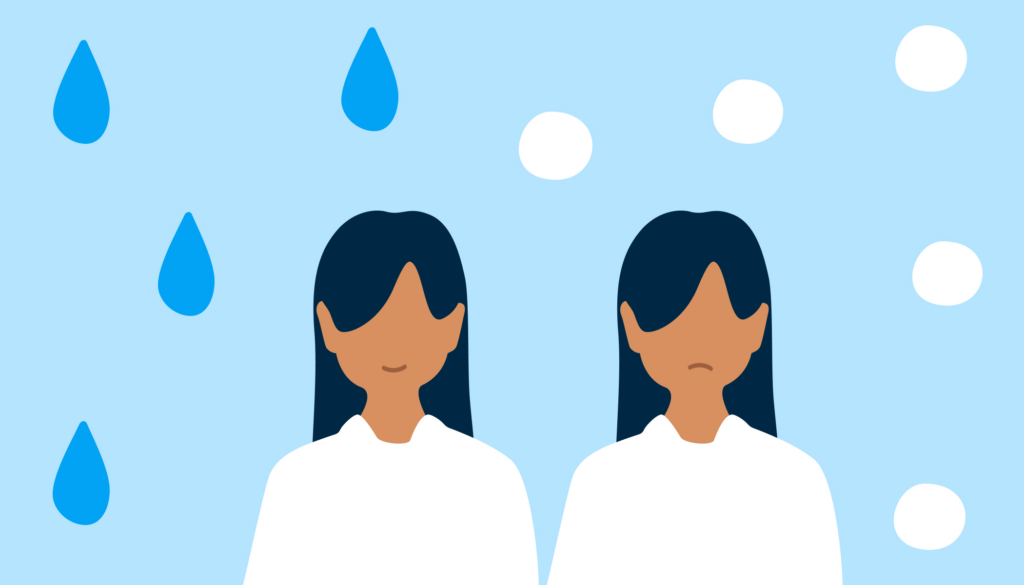
Firstly, I will give a brief description of what Seasonal Affective Disorder is, and some symptoms of SAD. Seasonal Affective Disorder, also known as SAD, is a type of depression that is related to changes in seasons. SAD begins and ends at the same time every year. (1) In most cases, seasonal affective disorder symptoms appear during late fall or early winter and go away during the sunnier days of spring and summer (winter-pattern SAD). (1) Signs and symptoms of SAD may include feeling listless, sad or down most of the day or nearly every day, oversleeping, losing interest in activities you once enjoyed, having low energy and feeling sluggish, having difficulty concentrating, feeling hopeless, and much more. (1) It is also important to note that winter-pattern SAD should not be confused with “holiday blues,” which are feelings of sadness or anxiety brought on by stress at certain times of the year, and that these two should not be confused with one another. (2)
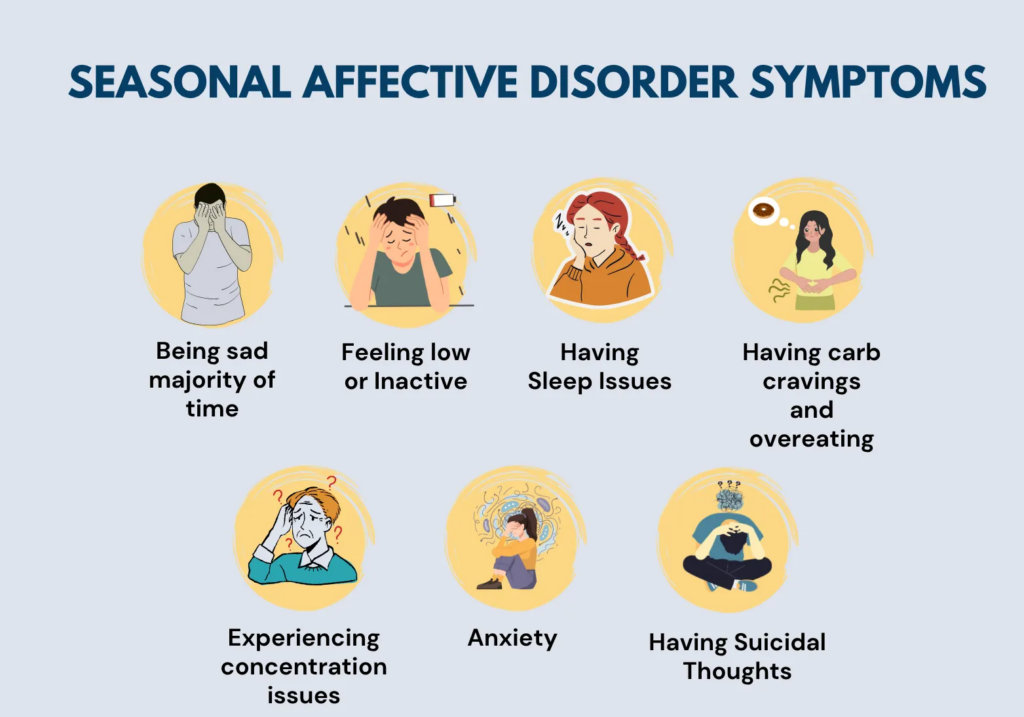
Now, I will dive into the impacts that Seasonal Affective Disorder (SAD) can have on our mental health and everyday life. For students, this can affect their ability to learn and concentrate during lectures or study sessions, with their minds frequently wandering. (3) Memory formation and recall are also damaged, which makes it difficult for these students to retain or retrieve the information needed during tests and exams. (3) Additionally, SAD can make students lose their motivation and interest in studying, completing assignments, and participating in class activities. (3)
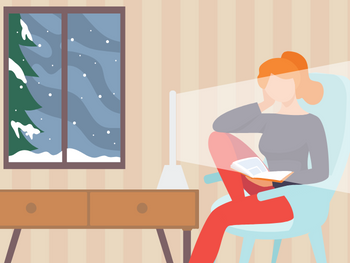
Lastly, I will explain more about the treatments for Seasonal Affective Disorder. There really isn’t any “permanent” cure for SAD, but there are some long-term treatments that can help prevent symptoms from returning each year. Most treatments for SAD fall into four main categories: Light therapy, psychotherapy, antidepressant medication, and Vitamin D. (2) Light therapy and vitamin D are usually used as treatment for winter-pattern SAD, whereas psychotherapy and antidepressants are used to treat depression in general, which includes both winter and summer-pattern SAD. (2) Currently, there are no treatment options that are specific to summer-pattern SAD, since it is quite uncommon to have. (2)
Resources:
- Mayo Clinic (2021) Seasonal affective disorder (SAD): Symptoms & Causes. Retrieved from https://www.mayoclinic.org/diseases-conditions/seasonal-affective-disorder/symptoms-causes/syc-20364651
- National Institute of Mental Health (NIMH): Seasonal Affective Disorder. Retrieved from https://www.nimh.nih.gov/health/publications/seasonal-affective-disorder
- Mission Prep Healthcare: Does depression cause bad grades? Retrieved from https://missionprephealthcare.com/blog/does-depression-cause-bad-grades-mental-health-effects-explained/
Thank you for reading!

Hi Isabella!💗I really enjoyed reading your post, it was clear and organized. I especially liked how you separated your writing into symptoms, impacts, and treatments. Also your examples helped me understand SAD better. I think some real life examples could help your post feel even more engaging. Overall the post was captivating and informative. I am so excited to read the next one!