
For this post, I am doing my second round of research to support the later parts of my story about Jorin, Arenthe, and their justice system. This time I am focusing on the more mythical and symbolic layers of the story, like gods of justice and time, curses, the idea of justice as a performance, and how whole nations remember or forget people like Jorin. All of this connects to my climax, falling action, and resolution, where Jorin has to decide what to do with the truth and eventually disappears from history while the world keeps spinning.
For this round, the story sections I am thinking about are the climax, where Jorin discovers the full truth about the curse, the puppet ruler, and the living machine, and chooses to keep it to himself. Then the falling action, where he returns to Blancheur, carries this secret, and slowly collapses under guilt and misfortune. Finally, the resolution, where both Arenthe and Blancheur basically move on, Jorin is mostly forgotten, and the court of Arenthe stays corrupted.
First I looked at gods of justice because Arenthe is called the nation of truth and justice, and its whole identity is built around that. In Greek mythology, Themis is the Titan goddess of divine law and order. She is linked to the rules of conduct that even the gods follow and is often shown with scales as a symbol of balance and fairness (1). Dike, her daughter, is connected more directly to human justice and punishing wrongdoing (2). In Egyptian myth, Ma’at represents truth, justice, and cosmic balance, and pharaohs are supposed to rule in her name so that the world does not fall into chaos (3). These figures all show justice as something bigger than human law, almost like a force that keeps the universe from collapsing. This helps me build Arenthe’s main god of justice as someone who cares about the balance of the whole world. It also supports the idea that when Arenthe’s court becomes corrupt, it is not only a political problem but a spiritual one that affects their entire reality.
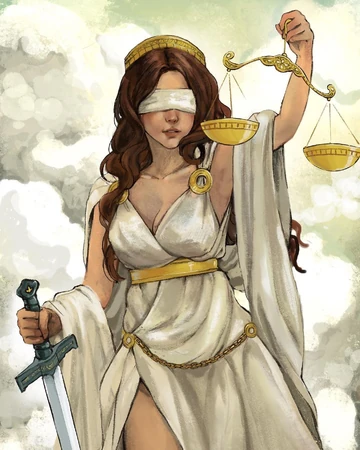
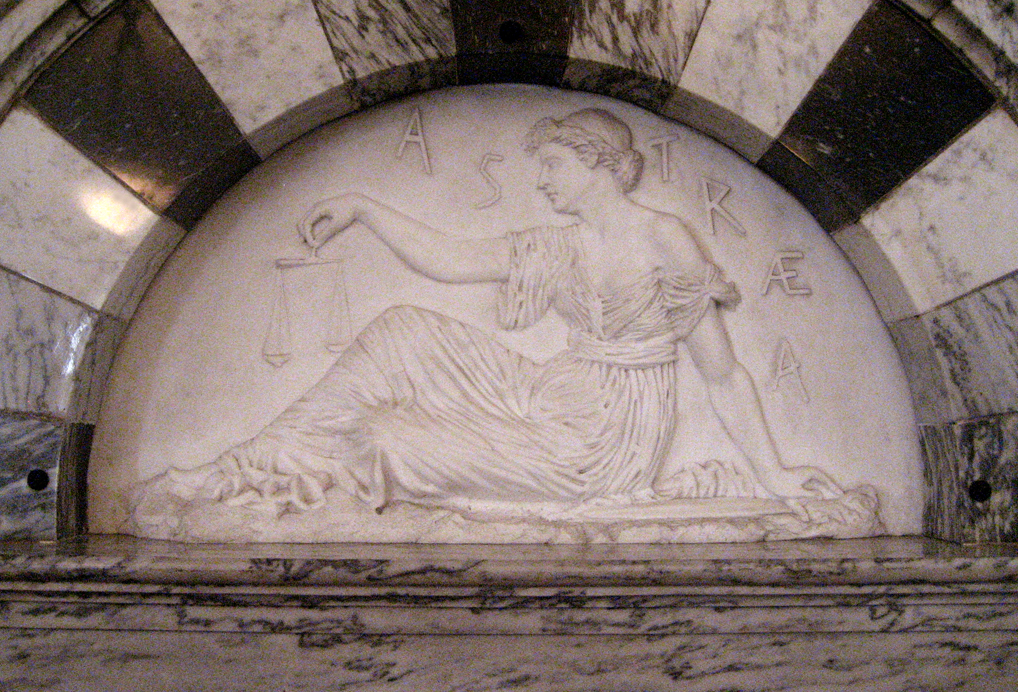
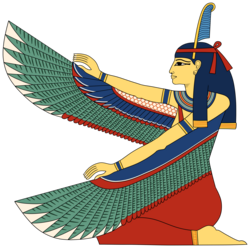
The first picture is Themis, the second picture is Dike, and the third picture is Ma’at.
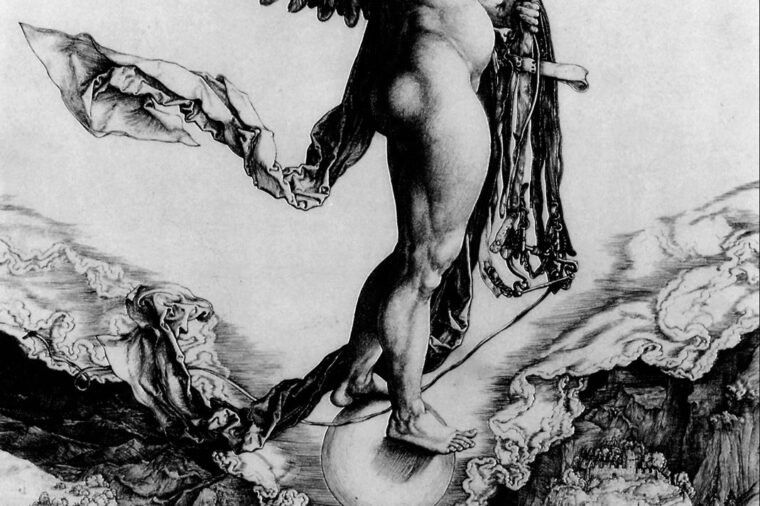
Next I wanted to understand gods of time because in my story the people of Arenthe offend the god of time, and that is where their curse begins. In Greek thought, time is not just one thing. Chronos is the god of measurable time, the kind you can count with clocks and calendars, while Kairos represents the right/critical moment, a kind of special time that feels full of meaning and decision (4)(5). Some writers describe Chronos as the kind of time that slowly eats everything, linked to aging and death, and Kairos as the moment where you can change your fate if you act wisely (5). This is really helpful for my climax. Jorin’s decision is a Kairos moment, a turning point that could shift the path of the nation. The curse from the god of time feels more like a Chronos force, something that grinds the nation down over generations.
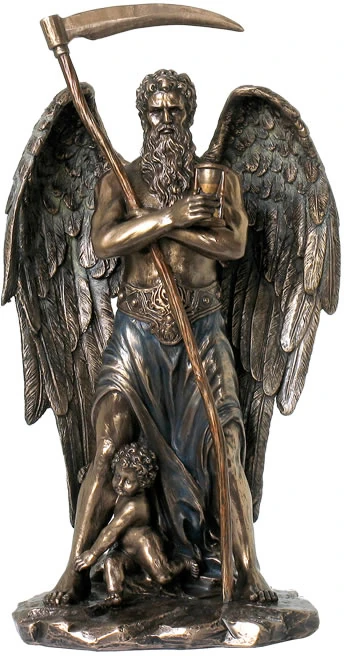
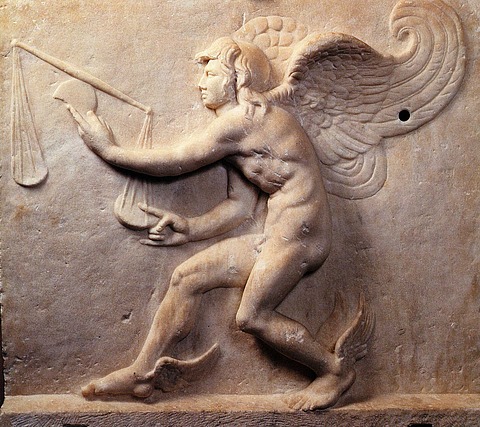
The first image is Kairos, and the second image is Chronos.
After that I looked at how myths and curses work in stories in general. Articles about mythology in literature explain that myths and mythological symbols are used in modern stories to add deeper layers of meaning about power, fate, and morality (6)(7). Writers often use gods, curses, and prophetic punishments to show patterns that repeat across generations and to explore how people deal with guilt or broken promises (6). One analysis of Aeschylus’ play “Seven Against Thebes” talks about the curse placed by Oedipus on his sons. The curse is not just a magic threat, it represents psychological wounds and unresolved family trauma that get passed down and eventually destroy the next generation (8). This idea of a curse as something both magical and symbolic fits Arenthe. The curse from the god of time is a symbol of a nation that refuses to face what it did wrong. The god who gave them technology to make the ruler’s life easier then turns that gift into something dangerous when people abuse it.
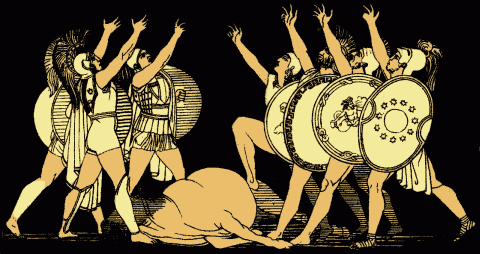
“Seven Against Thebes”
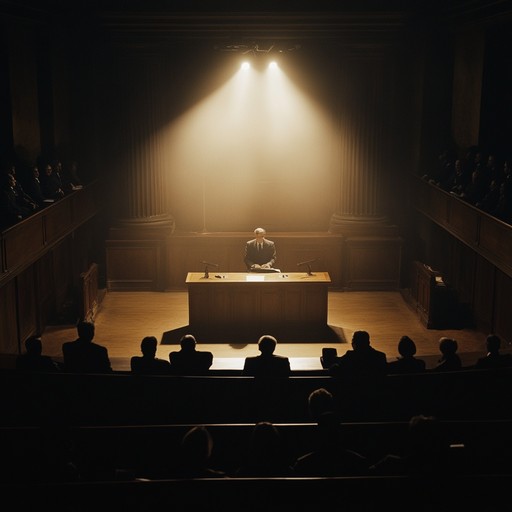
Because my story is about a court that feels more like a staged performance than true justice, I also researched how real courts can be theatrical. Legal scholars sometimes describe trials as a kind of theatre, with costumes, set design, scripts, and roles like judge, lawyers, witnesses, and audience (9). One article argues that modern courts use ritual and performance to make the process feel serious and legitimate, even when the people watching know there is some form of artifice involved (9). Another piece on law and theatre explains that courtroom rituals and storytelling work together to convince people that justice is being done, not just legally but emotionally too (10). In Arenthe, their court is literally a stage, with the ruler as a puppet actor for the gods and everyone else playing their roles. Knowing that real courts already have this theatrical side helps me exaggerate it in my fantasy world in a way that still feels believable.
Finally, I looked at research on collective memory and forgetting because in my resolution, Jorin’s name becomes a big deal for a while and then fades away. Collective memory is the shared pool of stories, images, and knowledge that a group uses to understand its own past and identity (11). It is not the same as formal history, because what a nation remembers is often selective and sometimes even conflicts with historical facts (11)(12). Scholars who study national memory point out that people have to remember things they have in common, but they also have to forget certain events in order to hold the nation together (13). Some writers even argue that constantly holding on to certain memories can keep old wounds open, while strategic forgetting can sometimes be used to move forward, even if it is uncomfortable or unfair. This is what happens with Jorin. For a short time, both Arenthe and Blancheur react strongly to his fate, but over the years people let his story fade because it is too heavy and complicated. Remembering him fully would force them to face the truth about their gods and their justice system, so instead him or the memory of him is smoothed out or ignored. On the surface, nothing changes that much, but underneath, the nation’s identity has a crack in it that won’t really ever leave.
Sites/references:
1.https://www.theoi.com/Titan/TitanisThemis.html
2. https://study.com/academy/lesson/who-is-themis-in-greek-mythology-family-tree-symbol-facts.html
3. https://www.evans.ink/post/themis-goddess-of-justice
4. https://www.stephenchamberlain.net/personal-reflections/chronos-and-kairos-the-gods-of-time
5. https://footnotes2plato.com/2015/05/15/minding-time-chronos-kairos-and-aion-in-an-archetypal-cosmos/
6. https://www.int-jecse.net/media/article_pdfs/English_2The_Influence_of_Mythology_on_Modern_English_Literature (This is a pdf/document btw)
7. https://medium.com/%40benevodesignss/the-influence-of-mythology-in-literature-9f729ebd671a
9. https://law.unimelb.edu.au/__data/assets/pdf_file/0009/2887407/Performing-Justice-Jessie-Allen.pdf (pdf/document again)
10. https://csalateral.org/issue/10-1/enacting-law-dramaturgy-courtroom-contemporary-stage-nellis/
11. https://en.wikipedia.org/wiki/Collective_memory