
The Hidden Side of Fast Fashion: How Workers and Communities Are Affected
Inquiry question: How does fast fashion impact the environment, and what can we do about it?
Round 2 Research: Exploring the Human and Economic Sides of Fast Fashion
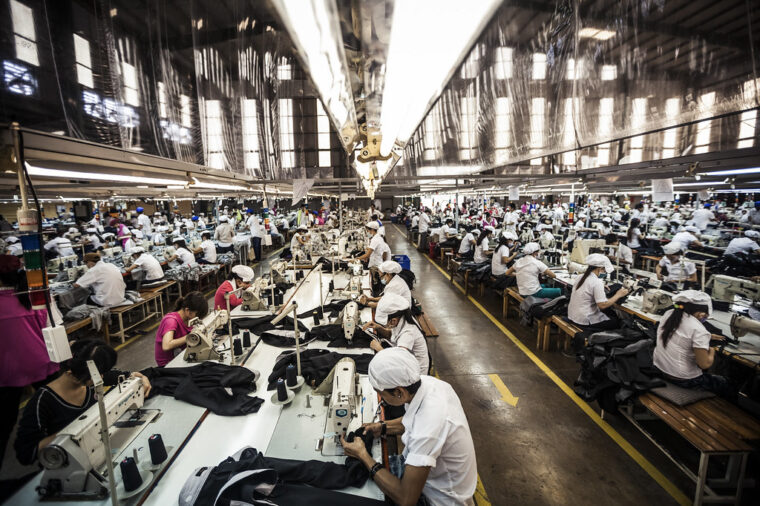
Fast fashion’s impact goes far beyond environmental harm; it also affects the people who make our clothes and the global communities that handle textile waste. Many major brands rely on garment factories in countries where labor costs are extremely low, which keeps retail prices cheap but often results in workers being paid far below a living wage. For example, reports from labor advocacy groups show that some garment workers earn as little as a few dollars per day while working long hours in unsafe and overcrowded facilities [1]. These conditions worsen when companies ask for very fast production, which pushes factories to cut corners on safety and worker protections. In several major textile-producing countries, investigators have found workers exposed to toxic dyes, poor ventilation, and excessive heat, all of which contribute to chronic health problems. In Bangladesh and Cambodia, researchers documented factories where employees handled hazardous chemicals without proper gloves or masks, and in some cases were not allowed to have breaks because they had to meet production deadlines [2]. These risks show how the speed of fast fashion directly creates unsafe labor environments.
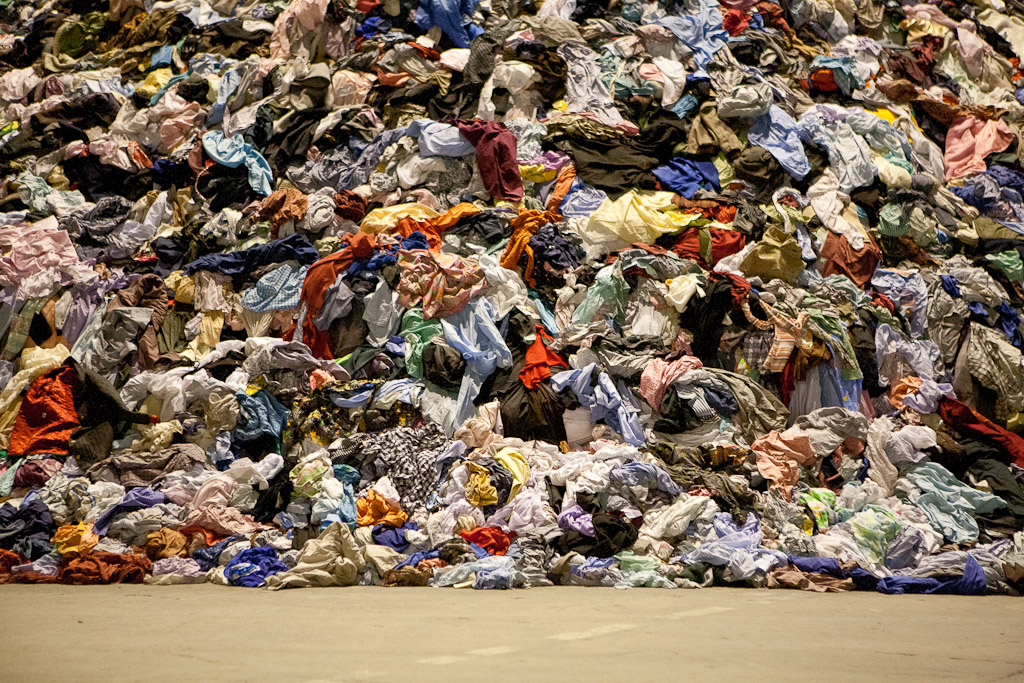
Photo: Textile waste accumulated in an open landfill, showing the fast disposal of fast fashion items.
On the economic side, fast fashion encourages overconsumption. Brands release new collections weekly and promote constant trend cycles, which leads consumers to buy more clothing than they actually need. This creates a lot textile waste. Studies show that a large portion of discarded clothing ends up in countries like Ghana and Kenya, where second-hand markets cannot handle the volume. As much as 40 percent of imported second-hand clothing becomes immediate waste due to poor quality or damage, overwhelming landfills and harming local environments [2]. Waste management experts report that synthetic fabrics from fast fashion do not break down easily, meaning they can sit in landfills for decades. In coastal communities, textile waste often clogs drainage systems or washes into the ocean, adding to marine pollution.
These social and economic issues connect directly to environmental ones. When overproduction increases, factories use more water, chemicals, and energy, and workers are the first to feel the pressure. The global system that keeps fast fashion inexpensive also distributes harm unevenly, with the greatest environmental and health burdens falling on low-income communities worldwide [3]. In places surrounding dyeing and washing facilities, contaminated wastewater is often released into rivers used for drinking, bathing, and farming. Research from environmental groups has shown that these polluted waterways contain heavy metals and microplastics, which give long-term health risks to nearby families. This creates a cycle in which the environmental damage caused by fast fashion directly affects the same communities already facing economic challenges, showing that the true cost of fast fashion extends far beyond the price tag on a piece of clothing. [2]
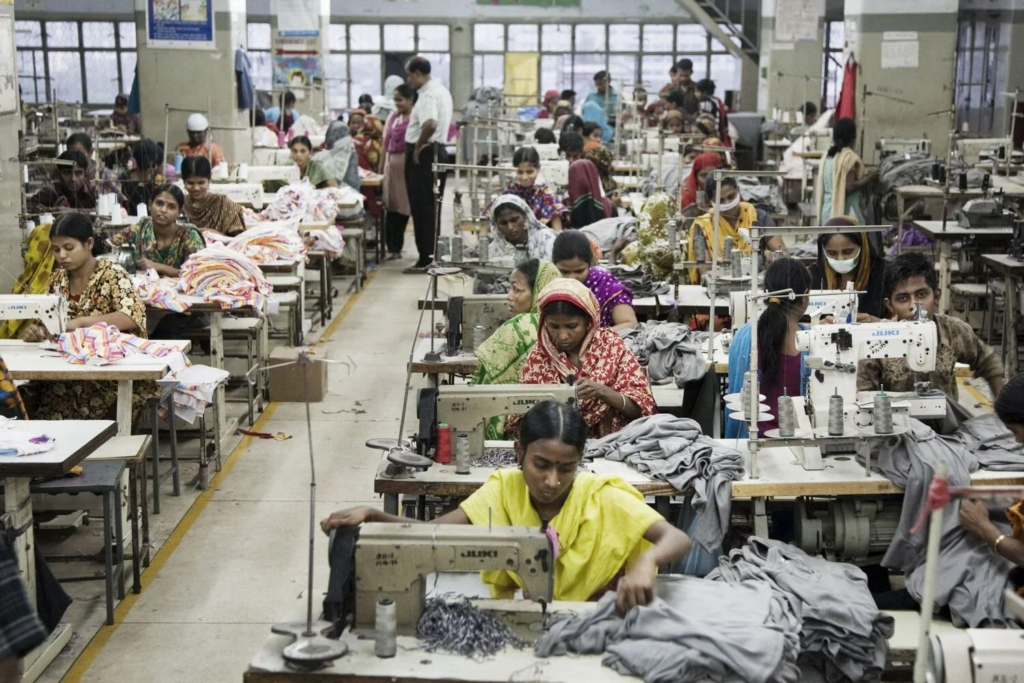
Photo: Garment workers in a factory setting, representing the human labor behind low-cost clothing.
3. Implications for Myself and My Community
This topic matters to me because clothing is something I interact with every day and learning about the human and economic sides of fast fashion helps me think more critically about the choices I make. Understanding how garment workers are treated and how quickly clothing becomes waste makes me more aware of how my purchases affect people and ecosystems.
In my community, focusing on sustainability can help us shift away from harmful fashion habits. Simple actions such as organizing clothing swaps, repairing old clothes, shopping second-hand, etc. can reduce the demand for high-waste production. Community repair workshops, local thrift events, and donation drives are all ways to encourage people to value their clothes longer and reduce unnecessary textile waste. Even small changes can help build a culture that respects both the environment and the people involved in making our clothes.
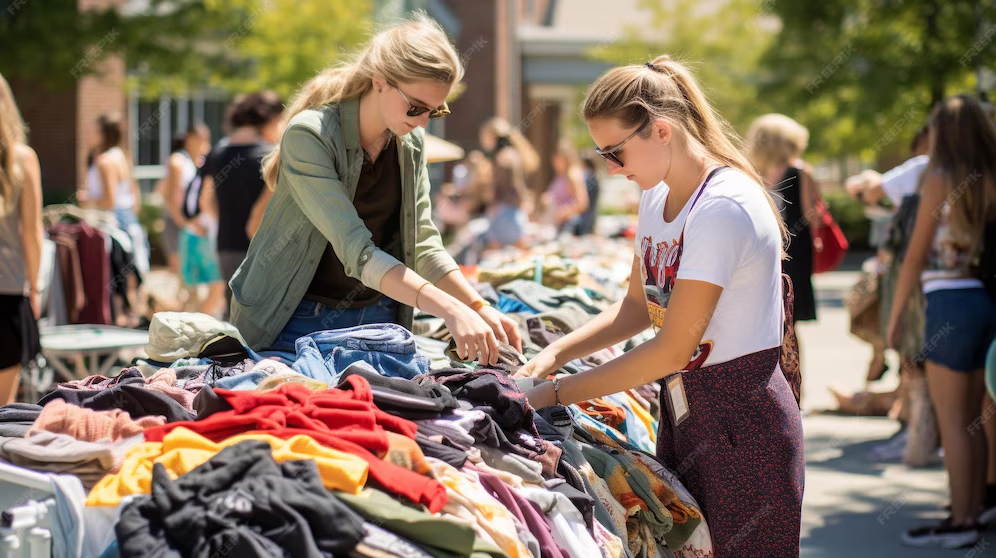
Photo: A clothing swap event, showing how communities can reduce textile waste through reuse.
Sources:
- UCLA Sustainability. (2024). The Fast Fashion Epidemic. Retrieved from https://sustain.ucla.edu/2024/02/16/the-fast-fashion-epidemic/
- Earth.Org. (2024). Fast Fashion’s Detrimental Effect on the Environment. Retrieved from https://earth.org/fast-fashions-detrimental-effect-on-the-environment/
- BBC News. (2022). Why clothes are so hard to recycle – and what we can do about it. Retrieved from https://www.bbc.com/news/science-environment-60382624
- United Nations Environment Programme (UNEP). (n.d.). Fast fashion: its environmental and social impact. Retrieved from https://www.unep.org

Hello!Andrea,I do like your blog post on fashion.This is in our daily behaviour because we do dress.I do like that you would do more research on effects affecting people and the society.I am ready to follow up your research.All the best.
Hello Andrea!
Hope you are doing fine. Its been very great going through you blog post in the field of fashion.Its very great that you have very great interest in field of fashion.As we all know that the field of fashion has a very great impact in our world.
I would encourage you to work hard towards your project as it may help you in future.