
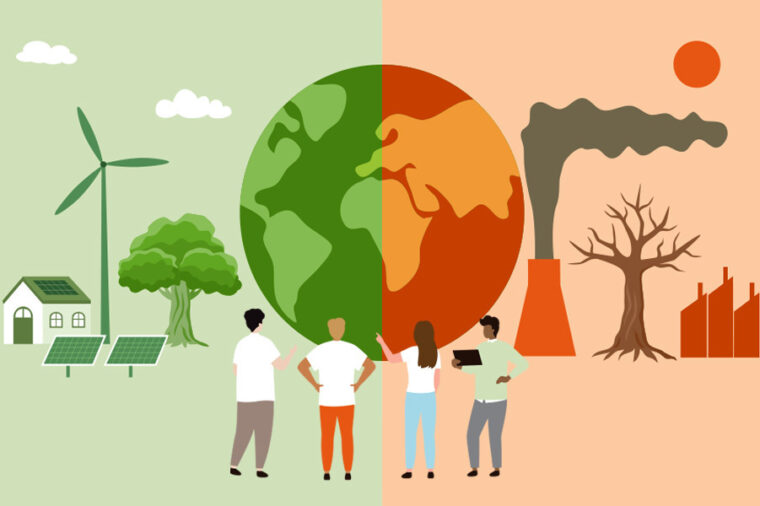
For my third round of research, I will be focusing on the biggest impacts of climate change and what it has done to our planet and our communities. I will try to find out what it has done to marine life as well as animals on land. My main goal for this round is to gather information on all the negative things climate change has caused to help me predict which problems could worsen and which new problems could arise.
- If we continue down our current path, Earth will continue to warm and the effects will be profound.
- We are already seeing effects scientists predicted, such as loss of sea ice, melting glaciers and ice sheets, a rise in the sea level, and more intense heat waves.
- Some changes like droughts, wildfires, and extreme rainfall are happening faster than scientists previously assessed, and some of these changes are and will be irreversible over the next hundreds to thousands of years.
- We are expecting hurricanes to become stronger and more intense, more droughts and heat waves, longer wildfire season, and changes in precipitation patterns.
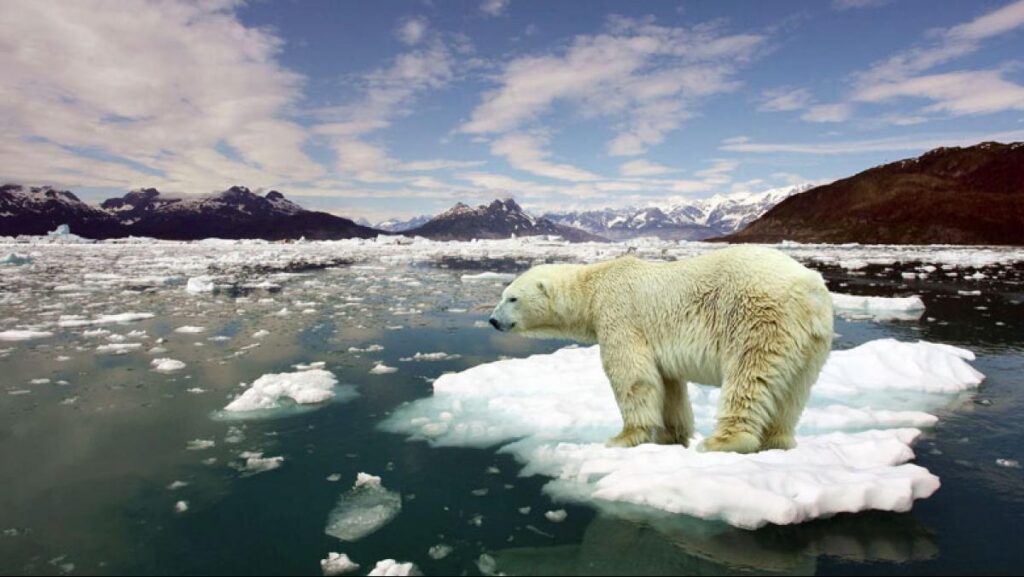
- Another expected change that is extremely worrying is that the arctic will likely become ice-free. This is problematic for a number of reasons, the biggest being the animals (1).
- Our oceans and glaciers have also experienced changes. Oceans are warming and becoming more acidic and ice caps are melting rapidly.
- Climate change can also impact human health by worsening the quality of air and water, which can increase the spread of certain diseases and alter the frequency and intensity of extreme weather events (2).
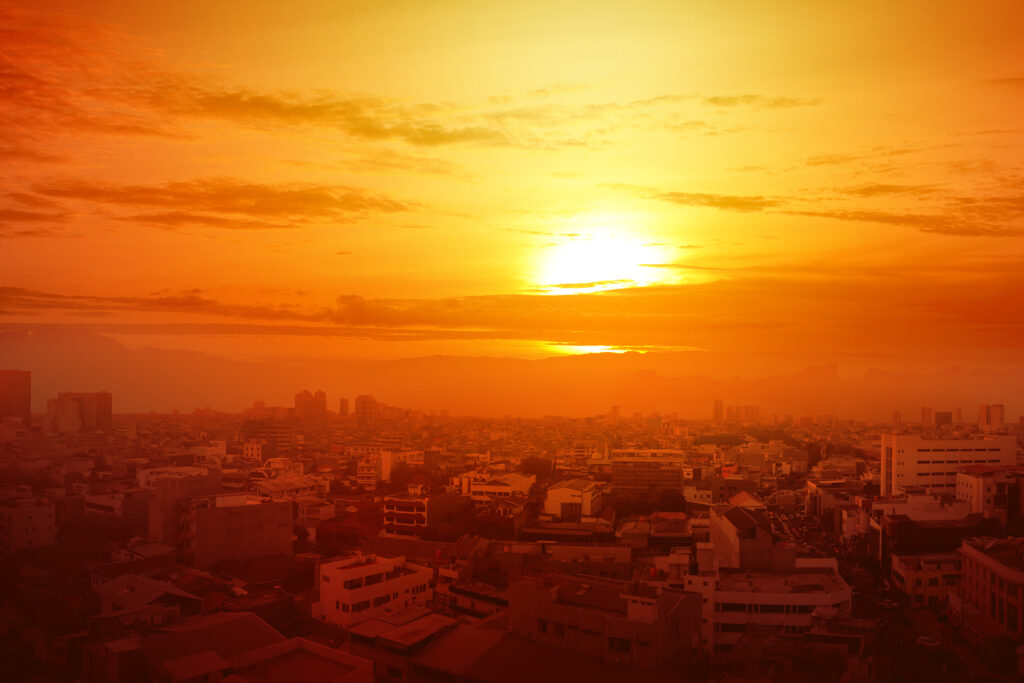
- Extreme heatwaves are now occurring at almost 5 times the frequency they were occurring in the pre-industrial times and are anticipated to further increase by 8.6 times at 1.5°C of warming, 13.6 times at 2°C, and 27.4 times at 3°C.
- Current policies put us on a trajectory to reach 2.7°C of warming by 2100.
- The chance of having a major heatwave increases to 30% under 1.5°C of warming, but rockets to 80% at 3°C.
- Average July temperatures in 2023 for parts of Northern and Eastern Canada were up to 7°C higher than the 30-year average.
- Estimates suggest that wildlife populations have declined by 69% over the past 5 decades due to human impacts.
- Future climate change could cause abrupt and irreversible species loss this century, affecting marine life as early as 2030 and land ecosystems mid-century.
- Changes in ocean temperatures are pushing American lobsters northward along the US coast, disrupting local fishing industries.
- Warmer waters along the coast of Northwest Africa are also driving sardines northwards, which poses a risk to millions of people in that region who rely on these fish.
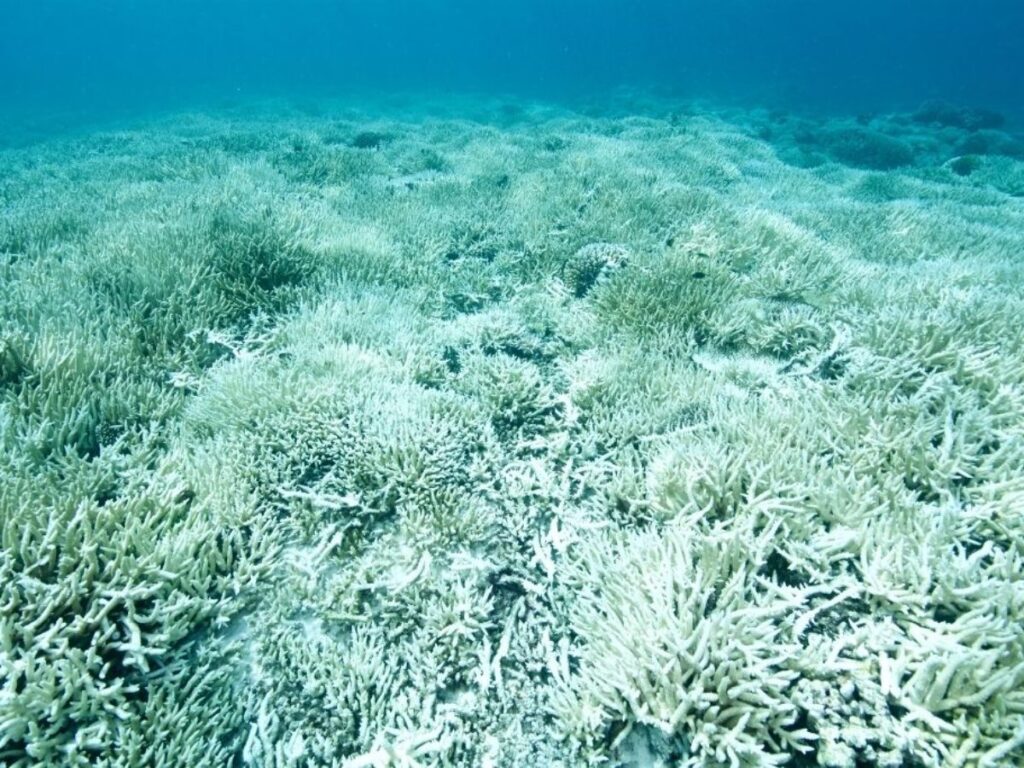
- One of the most striking examples of climate change induced mass mortality is the warm-water coral reefs, which are facing increasing mass-mortality because of human caused marine heat waves.
- Between 2009 and 2018, around 14% of the world’s corals from reefs had been lost (an amount larger than Australia’s coral reefs,) largely due to bleaching, where corals expel the symbiotic algae that they depend on for existence in response to high water temperatures, ultimately resulting in death.
- At 1.5°C of warming, estimates suggest that 99% of coral reefs could be lost, with no coral reefs existing at 2°C (3).
- Record-breaking 2018 wildfires in British Columbia made headlines for multiple reasons, one of which being the air quality.
- The smoky air caused serious air quality problems in Western Canada, with whole communities facing mental health effects from sudden evacuations.
- Poor air quality has a wide range of health risks, notes Kim Perrotta from the Canadian Health Association for Sustainability & Equity.
- “Certainly from a short-term health impact, it could put people in the hospital, it could aggravate asthma, it’s going to aggravate heart conditions. It could lead to premature deaths, but probably there’s long-term health impacts from it too.”
- Canadians might also be surprised to hear that climate change can also increase the spread of certain types of infectious diseases.
- Infectious diseases are caused by bacteria, viruses, or parasites that are spread through food, water, or animal and insects such as mosquitoes and ticks.
- Impacts of climate change, such as increases in temperature, precipitation, floods, and droughts, are changing the range and spread of these diseases (4).
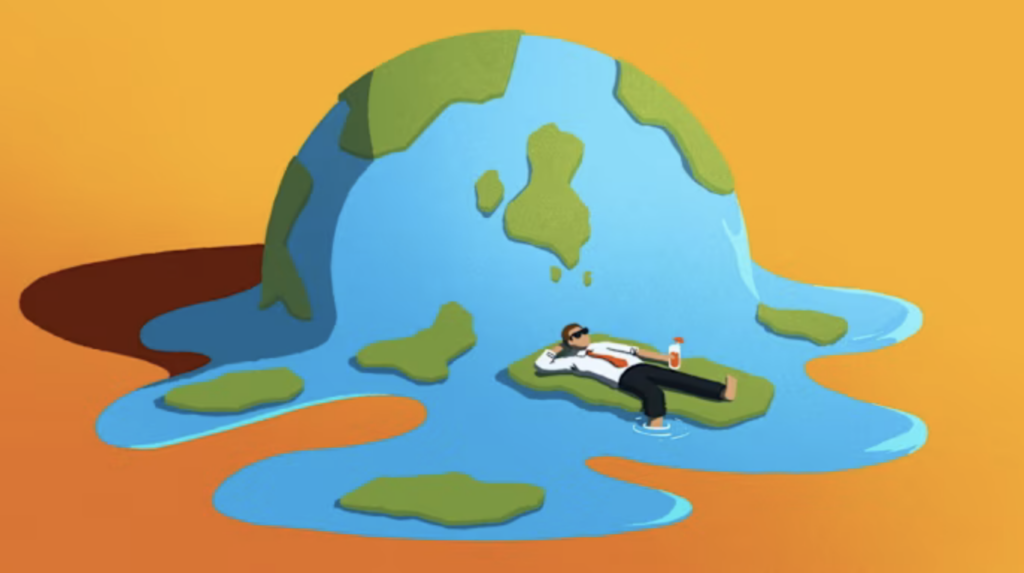
- Economists agree that costs related to climate change will increase as emissions grow. The Canadian Institute for Climate Choices estimates that the average cost per disaster in Canada has increased more than tenfold since the 1970s.
- Geographic exposure or reliance on certain economic sectors can also increase the vulnerability of certain communities to climate change.
- Youth and future generations face intergenerational equity issues as they will be burdened by the consequences of an increasingly dangerous climate.
- In Canada, climate change has disrupted access to Indigenous and northern communities, threatened cultural sites, and affected traditional activities, such as hunting, fishing, and foraging.
- Many coastal communities face the risk of tidal flooding and storm surges, while some face irreversible effects of sea‑level rise.
- Climate change will also adversely affect certain economic sectors, such as forestry, agriculture, and fisheries (5).

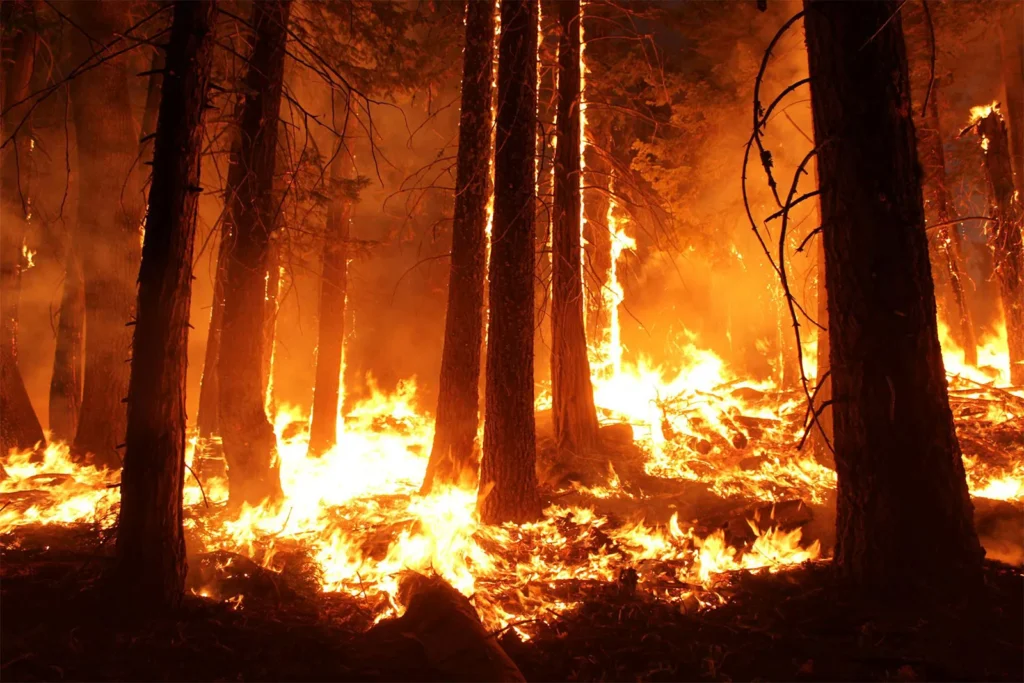
- Fires have always been a part of Canada’s ecosystems, but now they’re becoming more dangerous,
- Each year fire becomes more devastating. British Columbia experienced its worst fire on record in 2017 when almost 900 000 hectares went up in smoke.
- In 2016, one of the most destructive fires in the country swept through Fort McMurray, destroying nearly 2500 buildings forcing the evacuation of 90 000 citizens.
- Wetter winters mean more grass grows in the spring, and prolonged summers with higher temperatures intensify the fire season.
- Hot, dry weather turns said grass into a flammable fuel source, turning our forests into powder kegs, ready to burn.
- Dr. Mike Flannigan, a prominent fire scientist and professor at Thompson Rivers University describes what we’re facing like this: “The warmer we get, the more fire we have. The more fire we have, the more greenhouse gasses that are released. The more gasses that are released, the warmer we get. A vicious cycle.”
- As if that wasn’t alarming enough, fierce fires burn deep into the soil, where most of the boreal forest’s carbon is locked. Jill Johnstone, a University of Saskatchewan professor, says, “These forests are part of the lungs of the planet. The boreal forest stores about 50% of the global carbon that is in the soil.” (6).
- Climate fuelled extreme heat is causing rising death rates and health issues across Canada.
- A study found that between 1981 and 2018, 37% of heat-related deaths globally were attributable to climate change.
- More health risks from extreme heat include cardiovascular events, respiratory conditions, kidney disease, adverse pregnancy outcomes, and mental health impacts such as increased anxiety, depression, and aggressive behaviour.
- The 2021 heatwave caused an estimated 619 heat-related deaths, making it the deadliest disaster in B.C’s recorded history.
- Scientists found that the 2021 heatwave would have been virtually impossible without human-caused climate change.
- Without action on adaptation and health system preparation, B.C. could average 1,370 heat-related deaths per year by 2030.
Thank you for reading!!!
Sources:
- NASA (2024) Is it Too Late to Prevent Climate Change? | Retrieved from https://science.nasa.gov/climate-change/faq/is-it-too-late-to-prevent-climate-change/
- US Environmental Protection Agency (2025) Causes of Climate Change | Retrieved from https://www.epa.gov/climatechange-science/causes-climate-change
- Zero Carbon Analytics (2024) Climate change is driving natural systems beyond their limits | Retrieved from https://zerocarbon-analytics.org/science/climate-change-is-driving-natural-systems-beyond-their-limits/
- Climate Atlas of Canada (2020) Climate Change and Health | Retrieved from https://climateatlas.ca/climate-change-and-health
- Office of The Auditor General of Canada (2021) Lessons Learned from Canada’s Record on Climate Change | Retrieved from https://www.oag-bvg.gc.ca/internet/English/att_parl_cesd_202111_05_e_43913.html
- CBC Docs (2022) Six ways climate change is affecting Canada | Retrieved from https://www.cbc.ca/documentaries/the-nature-of-things/six-ways-climate-change-is-affecting-canada-1.6527535
- Canadian Climate Institute (2024) Climate Change and Heat Waves | Retrieved from https://climateinstitute.ca/news/fact-sheet-heat-waves/