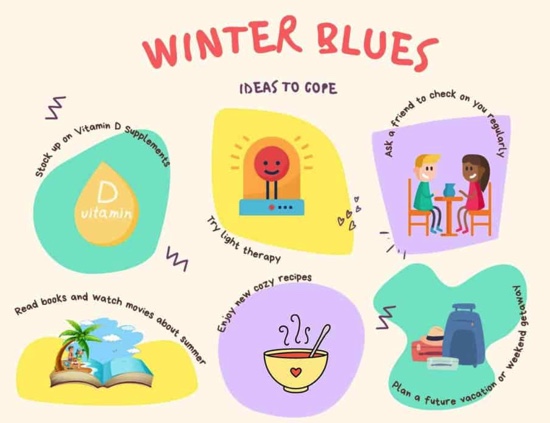
Hello! This is my inquiry blog post #5 surrounding the question: “How does the changing season from summer to fall and winter affect our mood, what we eat and what we do?” In this blog post, I will be presenting my third (and final) round of research. In this final round, I will investigate how people can adapt and adjust their habits to stay healthy and happy during seasonal changes, especially during the darker winter months like January.
During the winter season, shorter days and colder weather can affect mood, energy levels, and daily routines (1). However, there are several healthy habits that can help someone’s mental and physical well-being (1).
One important strategy is to maintain a healthy daily routine (2). According to Interior Health, keeping a consistent sleep schedule and practicing relaxation techniques such as guided meditation or deep breathing can help in reducing stress and improving emotional balance during the winter months (2). These routines can help prevent the feeling of isolation or low motivation (2).
Nutrition is important in maintaining mental health during seasonal changes. In colder months, people often want and crave comfort foods that are high in carbohydrates and sugar. While they may be comforting and delicious, you should always maintain a balanced diet that includes fruits, vegetables, whole grains, and foods rich in Vitamin D to support your mood and health (2). Because sunlight is less exposed during winter times, taking in more Vitamin D is important.

Physical activity and keeping moving during the winter months is another effect way to improve mood (3). Exercise increases the production of endorphins, which are chemicals in the brain that promote feelings of happiness and reduce stress (2). The American Heart Association recommends “150 vigorous aerobic activity, or a combination of both, preferably spread throughout the week.” (3). However, even light physical activity, such as walking outdoors during daylight hours, can help regulate circadian rhythms and increase exposure to natural light (2).
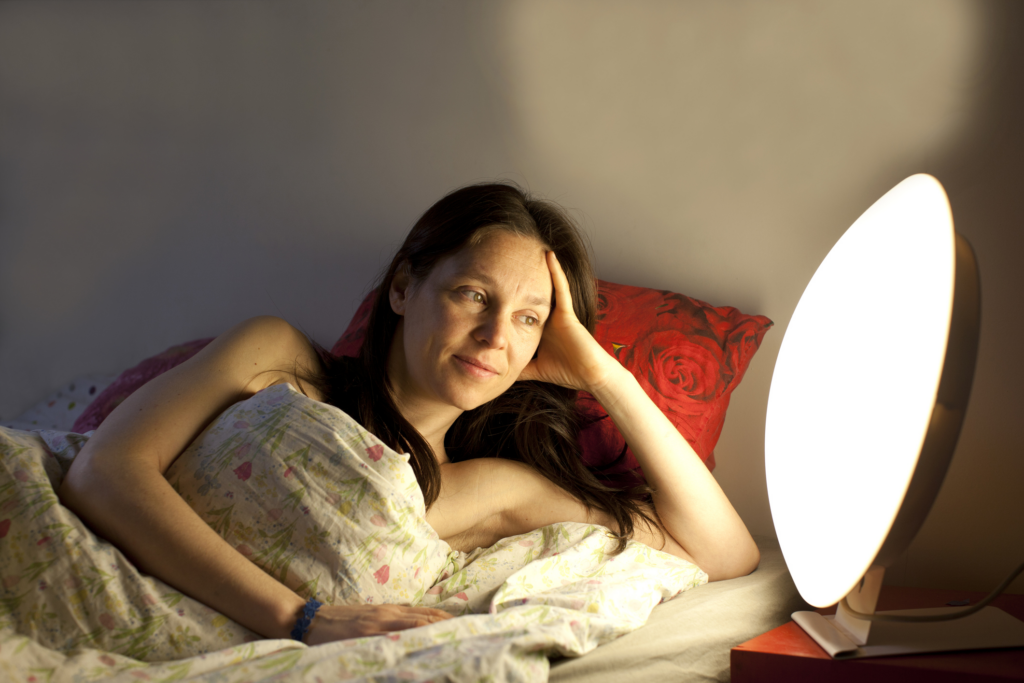
Light therapy is also commonly used, especially for individuals with winter-pattern SAD (2). Light therapy is done for about 30 minutes to 2 hours in the early morning (4). It is an effective treatment for seasonal affective disorder (SAD), and the most common light therapy uses a special type of light, called a light box (4). These light therapy boxes mimic natural sunlight, which can help in regulating serotonin and melatonin levels, which as a result, help in improving someone’s mood and energy levels (2).
In addition, some countries with long winters, such as Norway and Finland, recommend and promote community and outdoor activities even during the colder winter months (2). For example, in Norway, they promote a lot of hiking or cycling activities (5). One example of an organization that promotes this is friluftsliv, which is an organization which helps communities reconnect with nature and has a positive effect on both physical and mental health (5). Practices like these can help maintain a positive mindset toward winter, which can help reduce seasonal depression.
Overall, although seasonal changes can impact our mood, eating habits, and daily activities, there are many steps that individuals can take to support their mental health. By focusing on healthy routines, balanced nutrition, physical activity, and light exposure, people will be able to adapt to seasonal changes and maintain good mental health throughout the year.
Citations:
(1) National Institute of Mental Health (2023) Seasonal affective disorder. Retrieved from https://www.nimh.nih.gov/health/publications/seasonal-affective-disorder
(2) Interior Health (2024, December 11) 10 healthy habits for the winter and holiday season. Retrieved from https://www.interiorhealth.ca/stories/10-healthy-habits-winter-and-holiday-season#:~:text=Keep%20up%20with%20healthy%20daily,guided%20meditations%20and%20breathing%20techniques.
(3) Voyage Healthcare (2019, February 27) 5 ways to stay healthy as the seasons change. Retrieved from https://www.voyagehealthcare.com/5-ways-to-stay-healthy-as-the-seasons-change/
(4) HealthLink BC (2022, October 20) Seasonal affective disorder: using light therapy. Retrieved from https://www.healthlinkbc.ca/healthwise/seasonal-affective-disorder-using-light-therapy
(5) Visit Norway. The Norwegian love for the outdoors. Retrieved from https://www.visitnorway.com/things-to-do/outdoor-activities/friluftsliv/
Thank you for reading!