
Hello everyone, and welcome back to my blog!
As I delve into this week’s blog post, I hope to understand how those in positions of power have utilized moral and political reasoning in order to justify the act of killing (murder) throughout history. Leaders often claim that taking a life is necessary for the “greater good,” protection of society or national security. Examining examples such as tyrannicide, wartime-decision making and revolutions, I can better understand how moral principles are often interpreted or manipulated. This highlights the complexity of ethical decision-making, revealing how power dynamics often shape what is considered right and wrong. Ultimately, this post allows me to question whether moral reasoning can excuse the act of murder, or whether some actions remain unacceptable regardless of prior beliefs and circumstances.
In the past, leaders have often justified the act of murder in political contexts related to violent revolutions (1). This refers to the act of using force to overthrow oppressive regimes when they violate people’s rights and freedoms. Revolutionary violence is a complex and morally controversial topic as it involves rejecting existing authority and utilizing lethal force (1). Philosopheres often argue that revolution may be justified when found to end injustices that nonviolent alternatives may not be able to do (1). Similarly, another common justification of killing is seen through the idea of tyrannicide; also defined as the killing of a ruler who exercises power oppressively (2). Tyrannicide was often seen in ancient societies as a justifiable act for when a ruler became a tyrant (2). Philosophers during that time period argued that killing a tyrant (cruel/oppressive ruler) was not equivalent to murder as tyrants were regarded as threats/enemies (3). Under this ideology, removing a ruler due to tyranny was an act of justice, freeing individuals from oppression while restoring order. This exemplifies how moral reasoning may be used to argue that killing may be permitted when aiming to aid and protect society as a whole.

Leaders often justify killing by directing attention to acts of violence committed by enemies, and using such acts to justify their own (3). Since WWI, governments have built support systems for war, portraying the enemy as morally evil (3). Demonizing the opposing side shows them as murderous, convincing others that killing an enemy is not morally wrong, but a duty to defend humanity (3). Similarily, during WWII, Allied leaders justified their atrocities by highlighting those of Nazi Germany, including bombings causing numerous civilian deaths (3). This approach appeals to moral duty, as it protects society from a worse threat (4). In relation to international law, it also categorizes acts of mass atrocity crimes such as genocide and crimes against humanity as deliberate attacks on civillian populations (4). Government officials use the existence of threats as a justification for military intervention, expressing that force is necessary to prevent certain acts (4). Though this reasoning works to save lives, it also raises ethical questions as using violence may cause further loss.
In addition to wartime justifications, some argue that legal authority itself is a justification for killing (5). This includes acts of self-defence, capital punishment or war. As such acts have legal legitimacy, they are not considered murder (5). Under this understanding, the reason for killing does not matter as the legal frameworks reflecting societal values matter more (5). This illustrates how moral and political reasoning often shift when authority of law is utilized. Such acts raise questions about whether legality should make an act moral (5). Pre-emptive self-defence, which refers to acting prior to an attack occurring is another common moral justification (6). Canadian courts have recognized that one may use self-defence as long as the other person involved is reasonably perceiving a threat where legal force would be necessary to protect themselves (6). Even though the danger was not imminent, this has become key to determining whether self-defence is valid (6). Denying somone the chance to present a self-defence claim is morally unjustified and unfair (6).
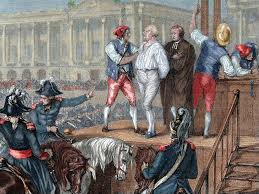
A direct example of the justification of murder comes from the way King Louis XVI of France was treated by revolutionary leaders. His trial was argued to violate existing laws; however revolutionary leaders insisted that executing him was necessary for the survival of civilians (7). During the French Revolution, it was debated whether the king may be tried, arguing that King Louis should be dealt with as an enemy. As the monarchy was abolished, the king was associated with warfare and tyranny, therefore, his death was seen as justified in protecting society (7). This demonstrates how political leaders often justified the act of killing by altering legal status. Instead of viewing King Louis as one with individual freedoms, they saw him as a symbol of oppression, threatening revolutionary success. This shows how the definition of murder may shift depending on who holds power and how one frames their actions.
Ultimately, the justification of killing varies and depends heavily on interpretation, power, and context. Historians note that acts of assassination that were once immoral may be reframed over time as necessary in freeing a community from oppression (8). What one person views as murder may be a sacrifice or liberation by another, depending on values and stakes (8). This illustrates that the justification for killing is not purely ethical or legal, but shaped by current leaders, narratives and the greater good of society. Reflecting on such topics allows us to better understand how moral reasoning has been used to excuse force in the past, while showing how controversial it may be (8).
- https://plato.stanford.edu/archives/sum2021/entries/revolution/
- https://www.britannica.com/topic/tyrannicide
- https://en.internationalism.org/content/17434/war-atrocities-used-justify-new-atrocities
- https://www.globalr2p.org/publications/defining-the-four-mass-atrocity-crimes/
- https://digitalcommons.osgoode.yorku.ca/cgi/viewcontent.cgi?article=1132&context=olsrps
- https://rhcriminaldefence.com/media-archive/can-a-person-kill-pre-emptively-in-self-defence.html
- https://thenewdigest.substack.com/p/the-trial-and-martyrdom-of-louis-1b8
- https://www.cambridge.org/core/journals/transactions-of-the-royal-historical-society/article/abs/history-and-assassination/E18EBA93CB56225F48A89E4180080951
Hi Ishani!
I like your post, your subject is creative and interesting. Im not sure if I have commented on one of your posts before, but I definitely have read one of your posts on the subject and both then and now I noticed that your post are structured and organized really clearly and in a way that’s easy to understand. I think that’s very important when writing post that others will read, because sometimes its clear in our heads but confusing when read. So my only note for when you’re preparing your presentation is to continue making it as clear as you write. <3
Hi!
I really liked how clearly you introduced your topic and explained your main question. Your use of historical examples especially Louis XVI during the French Revolution made your argument stronger and easier to understand. One small suggestion would be to shorten or break up a few longer sentences to make your ideas even clearer. You could also briefly connect each example back to your main question. Overall, this is a thoughtful and well developed post!
Hey Ishani!
I really like how clearly you organized your post and how you used a wide range of historical examples to show how leaders justify killing. Your explanation of tyrannicide and wartime reasoning was especially strong. I found it helpful how you highlighted the shift in moral framing depending on who holds power. One thing I noticed is that some of your arguments were so interesting that I wished you had expanded a bit more on your own reflections, especially when you questioned whether moral reasoning can ever truly excuse murder. Adding a few more personal insights or connecting the examples back to your guiding question could make your analysis even more compelling. Overall, your post does a great job showing how complicated ethical justification becomes when power and survival are involved. Nice work! I can’t wait to see your celebration of learning this week!
Wow!you post is very interesting .