
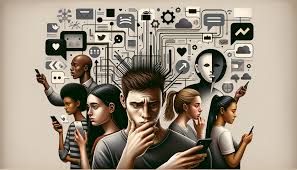
Social media is a big part of almost everyone’s life today, especially for teens. In this post, I want to talk about three things social media affects that we don’t always think about: our behavior, our physical activity, and our sleep. We always hear about how social media can make people anxious or affect friendships, but it also changes the way we act every day, how much we move, and how well we sleep. Understanding these things can help us use social media in healthier ways.

One big behavioral impact of social media is how it changes our habits. Apps like Instagram, TikTok, and Snapchat are designed to keep us scrolling. Sometimes we don’t even realize how much time we spend on them. Studies show that teens with high screen time often check their phones over and over again and have trouble focusing on other things like homework (1). This constant checking can make it harder to manage time and stay organized with school or responsibilities.
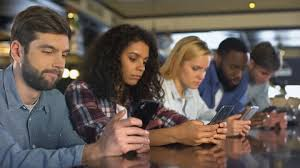
Another thing social media affects is how active we are. When teens spend a lot of time sitting and scrolling, we naturally move less. Research shows that more recreational screen time is linked with less physical activity and more sitting overall (2). Instead of going out to play sports, walk around, or ride a bike, many teens choose to stay inside and scroll. Over time this can lead to lower energy and less overall fitness, which makes it harder to stay healthy.

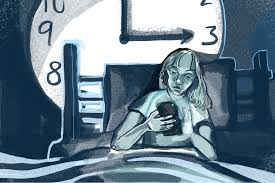
The third big impact is on sleep. A lot of teens stay on their phones late at night, especially before bed. The blue light from screens can make it harder for our brains to feel tired, so we go to sleep later or have trouble sleeping well (3). Research has found that more screen time at night is connected to poorer sleep quality and shorter sleep (4). When we don’t sleep enough, we can feel tired at school, have trouble concentrating, and our mood can be worse the next day.
In conclusion, social media doesn’t just affect how we think or feel emotionally. It also changes our behavior, how much we move, and how well we sleep. These things might not seem like a big deal at first, but over time they add up. Knowing this can help teens use social media more responsibly by setting time limits, taking breaks to be active, and putting phones away before bed. Finding a balance between online time and real life is important if we want to stay healthy and feel our best. Thank you for reading my blog post, I look forward to you seeing my visual presentation of blog post 6!
Here are the sources I used:
- https://www.cdc.gov/pcd/issues/2025/24_0537.htm
- https://journals.plos.org/plosone/article?id=10.1371/journal.pone.0129622
- https://www.frontiersin.org/articles/10.3389/fpubh.2024.1459952/full
- https://www.mdpi.com/1660-4601/19/15/9019
- https://www.healthline.com/health/teenagers-and-social-media-effects-schools
Hello Dylan, Your blog post is quite well written and how you managed to fit so much information into short paragraphs instead of writing hundreds of words. I also liked how you included multiple different aspects on the topic instead of just listing one impact social media has. I also liked how you used more then a few sources as that increases the integrity of the post and prevents misinformation within your blog post. The conclusion also summarizes the blog post really well into one paragraph.
Hello Dylan, it’s my hope that you are doing good. Your question is really amazing because