COMPARISON OF TYPES OF GOVERNMENT
CHINA VS CANADA.
TYPE OF GVERNMENT IN CHINA.
What is the Communist Party of China?
Since 1949, China has been ruled by the Communist Party of China, also known as the Chinese Communist Party or CCP.
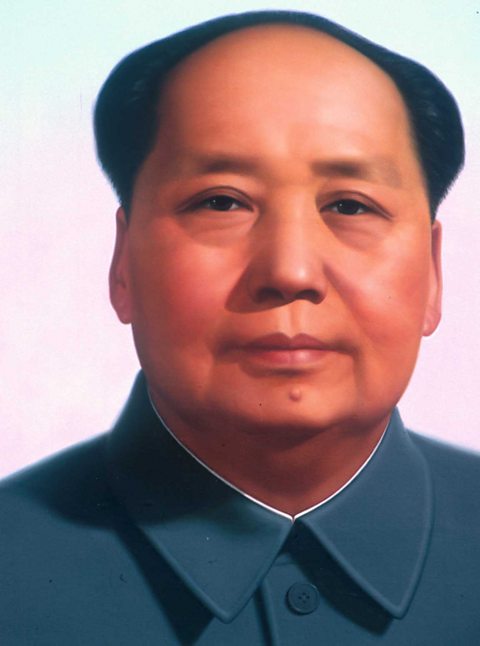
China is a one-party state. The CCP is not elected but remains in government through its control of the army and police force. In 1949, under Chairman Mao, China became a communist country. This meant the state, or government, took control of the land, factories, businesses and other organisations on behalf of the people. There was no private or individual ownership. With the Chinese Communist Party in control, the people worked on behalf of the common good. There is a Chinese parliament (the National People’s Congress) which passes legislation (laws) but the parliament is not where decisions are made. It is the CCP which makes decisions for the country.How is the Communist Party of China structured?
The Communist Party of China’s most important body is the Politburo. The Politburo consists of the most senior Communist Party members including the Communist Party General Secretary (currently President Xi Jinping). He is the leader of the party and the country. In theory, Politburo members are elected. In practice they are selected by existing members from within the Politburo.
Once a decision has been taken by the Politburo, the Chinese parliament or National People’s Congress (NPC) will normally write the decision into law. The NPC is seen by many people in the West as a place for holding debates, exchanging views and writing-up laws as agreed by the CCP. In practice the NPC has no decision-making power.
Once laws are passed by the NPC, decisions can then be passed down to the provinces and townships, to the courts or to the armed forces.
In 2018, a law was passed to get rid of the two term limit on the Chinese President. This has cleared the way for President Xi Jinping to be the leader for life. Originally the limit was put in to stop any Chinese leader becoming as strong and powerful as Mao was but that has now been removed. He is now the strongest Chinese leader .
TYPE OF GOVERNMENT IN CANADA
Key Features of Canada’s Government
- Constitutional Monarchy: Canada recognizes the monarch of the United Kingdom as its head of state, currently King Charles III. The monarch’s role is largely ceremonial and is represented in Canada by the Governor General, who is appointed on the advice of the Prime Minister.
- Parliamentary Democracy: The government is structured around a parliamentary system, which includes two houses:
-
House of Commons: Composed of 338 elected Members of Parliament (MPs) who represent various electoral districts across Canada. The party with the most seats typically forms the government. - Senate: Appointed Senators who represent provinces and territories. Senators are appointed by the Governor General on the advice of the Prime Minister and serve until the age of 75.
3 Sources
- Executive Branch: The Prime Minister is the head of government and is responsible for running the country and making policy decisions. The Prime Minister selects members of the Cabinet, who are usually drawn from the House of Commons and are responsible for specific government departments.
- Legislative Process: Laws are proposed as bills, which must be approved by both the House of Commons and the Senate before receiving royal assent from the Governor General to become law.
- Federal Structure: Canada has a federal system of government, meaning that powers are divided between the national government and provincial/territorial governments. Each province and territory has its own government, led by a Premier, which manages local affairs.
- Judicial Branch: The judiciary is independent and interprets the laws of Canada, ensuring that they comply with the Constitution. The Supreme Court of Canada is the highest court in the country.
SOMALI VS KENYA
SOMALI
Somalia has an internationally recognized central government known as the Federal Government of Somalia (FGS). While certain areas, such as Somaliland, operate under their own separate administrations, the FGS is recognized by the United States and other world powers as the country’s official authority. This government was established after a long political transition that reached a major milestone on August 1, 2012, with the adoption of a Provisional Constitution. Following this transition, the United States formally recognized the new federal government in early 2013, marking a new era of state-building for the nation.The Current Government of Somalia
The Federal Government of Somalia operates as a federal parliamentary republic. This system is designed to share authority across different levels of government rather than keeping all power in one central office.2 The current structure was created to move the country away from the earlier transitional systems that had been in place since 2004.1
Today, the FGS is headquartered in Mogadishu and acts as the official representative of Somalia on the global stage. This federal system was adopted to help bring stability to the country by involving various regions in the national governing process. The transition to this more permanent framework was intended to provide a stable foundation for the country’s future laws and leadership.The Current Government of Somalia
The Federal Government of Somalia operates as a federal parliamentary republic. This system is designed to share authority across different levels of government rather than keeping all power in one central office.2 The current structure was created to move the country away from the earlier transitional systems that had been in place since 2004.
Today, the FGS is headquartered in Mogadishu and acts as the official representative of Somalia on the global stage. This federal system was adopted to help bring stability to the country by involving various regions in the national governing process. The transition to this more permanent framework was intended to provide a stable foundation for the country’s future laws and leadership.The Current Government of Somalia
The Federal Government of Somalia operates as a federal parliamentary republic. This system is designed to share authority across different levels of government rather than keeping all power in one central office.2 The current structure was created to move the country away from the earlier transitional systems that had been in place since 2004.1
Today, the FGS is headquartered in Mogadishu and acts as the official representative of Somalia on the global stage. This federal system was adopted to help bring stability to the country by involving various regions in the national governing process. The transition to this more permanent framework was intended to provide a stable foundation for the country’s future laws and leadership.
How the Somali Government is Structured
The Somali government is divided into three separate branches: the executive, the legislative, and the judiciary. The executive branch uses a dual leadership system where power is split between two top officials. The President serves as the head of state, and the Prime Minister serves as the head of government.2 The Prime Minister leads the Council of Ministers, which handles the daily operations and executive decisions of the government.The legislative branch is known as the Federal Parliament and follows a bicameral structure, which means it consists of two separate houses. The two houses includes:
1.The House of the People (the lower house)
2.The Senate (the upper house)
KENYA:
Kenya System of Government
Structure of Government
Kenya’s government is divided into three independent branches:
- Executive: Headed by the President, assisted by the Deputy President and Cabinet Secretaries. The executive is responsible for policy formulation, law implementation, and administration of national programs. 2
- Legislature: Bicameral Parliament consisting of the National Assembly and the Senate. The National Assembly has 349 members representing constituencies and special interest groups, while the Senate has 67 members representing counties and additional nominated members. The legislature debates and enacts laws, oversees government actions, and represents citizens’ interests. 2
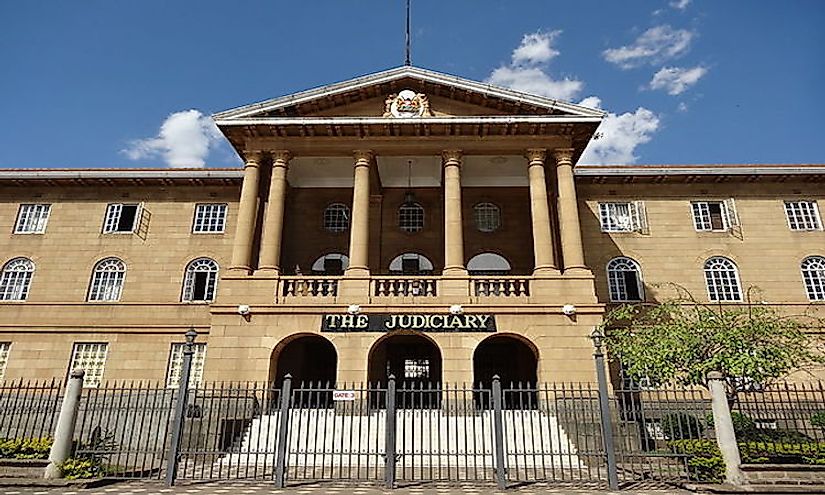
- Judiciary: Independent branch led by the Chief Justice, with the Supreme Court interpreting the Constitution and ensuring the rule of law. Judicial decisions are final and binding