a. What challenges did you overcome throughout this action project? How did you go about
overcoming these challenges?
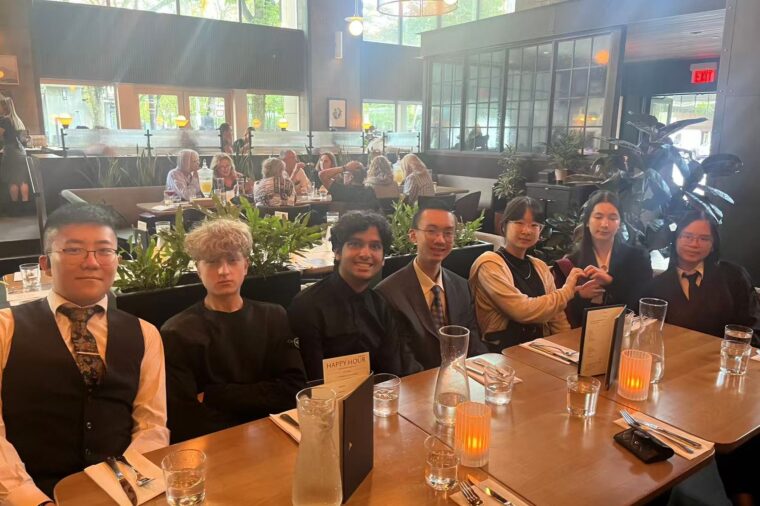
Late on a Friday evening of CAIMUN, I received an emergency text at midnight from one of our delegates, which read, “IT’S AN EMERGENCY.” I was concerned, and when I heard what had occurred, I realized why. One of our delegates’ friends, who does not attend our school, was left alone with a boy. Obviously, this is not a good or safe scenario. We knew we had to rectify it immediately. We temporarily housed her with some of the girls and then phoned and emailed the CAIMUN secretariat to inform them of the issue and to have her relocated. It wasn’t resolved immediately; we emailed and texted one another, attempting to fix it at midnight. But around 1 a.m., she was relocated to another room, and everything was resolved.
Looking back, that experience left a lasting impression on me. It was tough, but it made me understand that you must be calm-headed and think clearly when things don’t work out, particularly when human lives and comfort are on the line. It made me understand what a small team can do if they communicate effectively and continue looking for solutions. I was glad that we succeeded, but simultaneously, I was made to understand that incidents such as this require sound plans to avoid problems. It was a difficult lesson that unexpected events will surely happen, and preparation is not just about having a plan but also about mentally and emotionally preparing to assist other people when the time is critical.
One of the more difficult moments occurred at Sunday dinner. The delegates were divided into groups; some wanted to go to McDonald’s, some wanted to go to Bigway Hotpot, and some wanted to go to Pho. As only two BESTMUN presidents were present, I could not be in three places at once or with each group at all times. It might have been a bit messy, but I managed. Fortunately, there was a Bigway hotpot near a pho restaurant, so I left one group at Bigway and spoke with all of them and the other group. Then, I accompanied the group that wanted pho and ensured everyone was cared for. It was not ideal, but we coped, and everyone was content. In hindsight, moments like these illustrate why flexibility and the ability to think on one’s feet are key to planning for a large group. At times, it is not so much about having a set plan but discovering various ways to ensure everyone feels heard and included.
The greatest challenge we faced in preparing for YLSBCMUN was getting all members of my Dias delegation to complete the committee’s background guide before the event. It was challenging since we were busy and never had standard free time. We arranged for weeks, but could not agree on a meeting date. Determination and responsibility worked for us; we discussed everything hindering us from meeting and decided on a date on which we would all skip one event to meet and work on the background guide.
Since I’m the head of the committee, I needed to oversee everything and assist everyone with their work. I discovered that a few of them were still struggling with their background guide after I was done with mine. I assisted them individually, and we did the background guide together before midnight that evening.
Numerous position papers began arriving the day before the conference, and the cutoff time was midnight before the conference. I had to go through all the position papers to determine whether any delegates employed AI and identify the recipient of the best position paper award. Around 20 position papers arrived that day, each of which was approximately 1 thousand words. I read them until 3 am and continued checking every paper until I completed it at approximately 4 am. We had to wake at 6 am to proceed to the hotel and assist with setting up that day. Despite all the problems and issues, we achieved fantastic outcomes and could not have done it without working diligently and coordinating with one another.
Effective communication among the leaders and delegates was a significant issue for MUN leadership. This was evident during the Cannes conference, when it was challenging to schedule a time for 15 individuals to hold a meeting before the conference. Furthermore, because the conference was jam-packed, it became difficult for me to clarify what I required of the delegates and my fellow leaders. To rectify this, I had to improvise solutions frequently, request delegates to divide themselves and report to each co-leader, and enhance communication among the leaders to communicate the message to the delegates effectively. The other issue was the limited time, with only 1 hour to have dinner at CAHSMUN Horizons. All the restaurants were occupied; the nearest one we could go to was four blocks away from us and didn’t take reservations. To ensure that everyone could have food, I ran in a suit and dress shoes for four blocks, circling the mall 3 times because Google Maps indicated that the restaurant was behind a wall. Still, I was able to get in line, ensuring all the delegates arriving would have a table. Fortunately, when I finally got to the front of the line and two huge tables opened up, the delegates and the sponsor teacher arrived, and all was well.
b. How did this action change the way you think?
This action profoundly changed the way I think, act, and speak. Before participating in Model United Nations, I would never have been interested in global news in a million years, as it seemed irrelevant and distant. I would socialize with people, but not build connections, and remove nothing new from the interaction. Worst of all, I would stutter when speaking in front of a crowd. But Model UN has made me realize the importance of keeping updated with global news and politics and educating myself with history, not just to roast another delegate on the floor but to stay aware of international news and push for the change I want in my community. Model UN had also helped me realize the value of socializing with people, networking, and building actual connections with others, which I might not need today, might not need tomorrow, but will eventually find applicable one day. This also applies vice versa, as I will never know when I can help another human being, and I love helping others!
c. How did this investigation/action impact your future decisions?
This action helped me decide to minor in political science or international relations, to allow myself to be educated on what is happening worldwide, and potential careers as a politician or a lawyer if the world calls for it. Although I find myself very fond of public speaking, helping tackle global issues in the real UN, I recognize the immense responsibility that comes with it, and the very likely future of being unemployed, and if employed, still very possible to not be able to pay the bills. Therefore, Model UN has helped me find my passion in public speaking and helping others with the UN. Still, at the same time, it has helped me realize the hardship and responsibility that comes with it, and that I would not want to take on those responsibilities unless the world calls me to it. I can help in the background while working on something else to support myself.
d. What impact will this investigation/action have on others locally and/or globally?
I hope this action helps other people passionate about public speaking, the UN, or politics find Model United Nations and explore it for themselves to see if they have an interest in this field and if this is what they want to do. Locally at Charles Best Secondary, I hope people will try out the conferences that I have attended, and join the school club for advice and help. Globally, I hope people from other countries of interest can explore Model UN, and to explore UN as a possible career, we can change the world together!
Hi Scottlyu, nice and interesting to go through your blog as it is so educative . Continue the same so as all can be informed.