
Hey everyone, and welcome back to my second blog post of the semester!
For this post, I will be exploring and introducing my sub-questions while expressing the relevance of this topic. My inquiry revolves around the justification of murder and the complexity of human morality. I beleive this is an entriguing topic which raises deeper questions on what it means to act ethically.
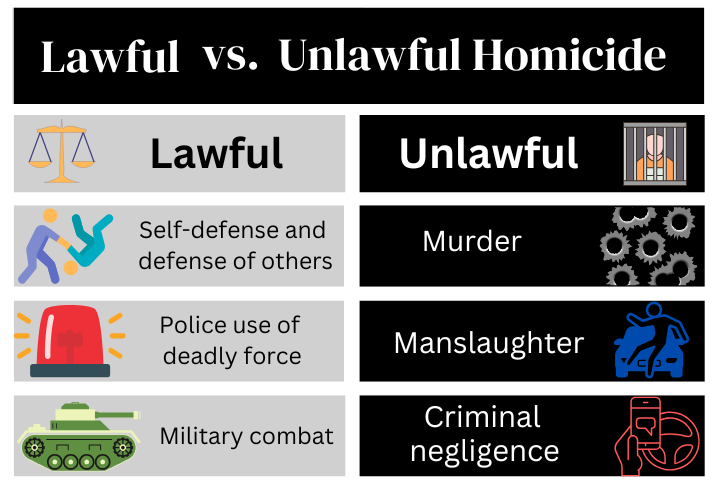
- How do different moral theories (utalitarinism, virtue ethics etc.) define the morality of murder?
This sub-question directly relates to my main inquiry topic and explores the different ethical frameworks. Each theory offers a unique perspective and ideologies. For example utalitarianism focuses on outcomes and often justifies murder if it leads to the greatest good overall. Virtue ethics often emphasize moral character and the intentions behind an individuals actions rather than its consequences. By comparing these perspectives, I can better understand how morality isnt absolute and depends on our definition of “right” and “wrong.” Exploring these framworks reveals whether murder can ever be seen as morally justifiable under ethical circumstances. This sub-question would also allow me to explore what circumstances allow the justification of murder when certain circumstances conflict with legal and emotional judegments.
2. How do societal norms and laws shape our moral understanding or murder?
This question allows me to examine how social and legal systems influence what we view as moral. While moral theories focus on principles, socital norms and how laws translate those principles and rules to govern behaviour. For instance, most societies outaw murder, but what counts as murder depends on context. By studying how societies create laws around killing, I can explore how morality and legality interact, and how culture, religion and time periods affect these standards. This shows us how our moral understanding of murder vary and evolve based on collective beliefs of justice, safety and human life.
3. How have historical figures and leaders justified murder under moral and political reasoning?
This question shows how people in positions of power have used moral or political arguments to defend acts of killing. through history, leaders often claimed that murder or assasination was necessary for “greater good” or national security. Analyzing such cases, such as political revolutions allows me to understand how morality has been reformed or manipulated to serve particular goals. Understanding these justification highlights the complexity of ethical decision-making in leadership and power dynamics, allowing me to explore whether moral reasoning can ever excuse the act of taking a life.

Community Impact
This questions has meaningful inplications for and individuals in my community by exploring the justification of murder. This question challenges me to think deeply about morality, justice, and human behaviour. This allows me to understand how I define right and wrong, and how those beliefs are shaped by culture, religion or societal norms. This question also encourages thoughful questions about law, justice and empathy. By examining how moral reasonings influence decisions, we can better understand how ethics impact our society. It promotes awareness of how easily moral justifications can be used to defend harmful actions, reminding us to think critically about the values guiding our judgements. Overall, this question reflects the importance of morality, compassion, and accountability.
Sources
- https://philosophy.stackexchange.com/questions/2455/is-it-possible-in-any-way-to-justify-murder-using-reason-or-logic
- https://philosophy.rutgers.edu/joomlatools-files/docman-files/Basis_of_Moral_Liability_to_Defensive_Killing.pdf
- https://us.sagepub.com/sites/default/files/upm-binaries/46945_CH_1.pdf
- https://academic.oup.com/book/4558/chapter/146650819#:~:text=Killing%20in%20order%20to%20defend,right%20not%20to%20be%20killed.
- https://deathpenaltyinfo.org/resources/high-school/about-the-death-penalty/arguments-for-and-against-the-death-penalty#
This is an amazing blog post Ishani! I really admire the thoughts that went into your post. I like how your inquiry question is not common, as it intrigues the reader to think on the topic more. You have structured your post very well, with lots of pictures, and strong research points. Overall, I do not have any feedback for your writing because it is very clear and easy to follow. For your next post, you can try to remove the duplicated picture so it doesn’t appear twice. You post is very strong and easy to follow, I cant wait to read your next post!
Hi Ishani, it’s Jaeda. This blog post is amazing! You are tackling such a complicated, nuanced topic; but doing it with openess of mind, and thorough research. The vocabulary you used is very advanced, and I can tell you put a lot of thought in your sub-questions; they are very detailed and connect very well to your overall question.
One tip I could give you for the future, based on experience I have from prior projects, would be to make sure you verify your sources. Especially with a topic like yours that is a bit controversial and political, some sources can be untrue or extremely biased. Make sure your always crosschecking and verifying!
This topic is extremely interesting, and you seem to be doing a really good job so far! Can’t wait to read more.
Hi, Ishani. I really love your topic, it is really deep and interesting! I like how you broke it into clear sub-questions that connect to your main inquiry about morality and ethics. You explain your ideas in a way that’s easy to follow, that makes me want to read more about the topic. One thing, I would change, is to make sure you’re not duplicating your featured image. Love your topic, can’t wait to read more!
Hey Ishani,
Thank you for sharing your well thought out blog post! Your topic is very investing and I can’t wait for you to dive deeper into the topic. I really enjoyed reading your post and how clearly you broke down your sub-questions. It made it easy to follow your thinking about the justification of murder. I like how you explained utilitarianism and virtue ethics in a way that shows you are really thinking critically, and I also appreciate how you connected your ideas to real-world impacts and how it is relevant to the community. Your descriptions of the terms are very clear, however if you gave real world examples on how these ethical frameworks play out in real life, it would be clearer and more engaging for readers. This would make readers even more interested because they can see how it is laid out in the real world. Love your topic, and I am excited to read more!