
Hello everyone, and welcome back to my blog post!
This semester, I began exploring whether “the act of murder can ever be ethically justified under certain moral frameworks.” This week I researched my first inquiry sub-question, focusing on various moral theories and their impact in defining the morality of murder. Each moral theory offers a unique perspective, focusing on different outcomes. By comparing these perspectives, I can better understand how morality isn’t absolute, often depending on each individual’s definition of “right” or “wrong.” Exploring such frameworks allows me to understand what circumstances allow the justification of murder and whether these conflict with legal judgements.
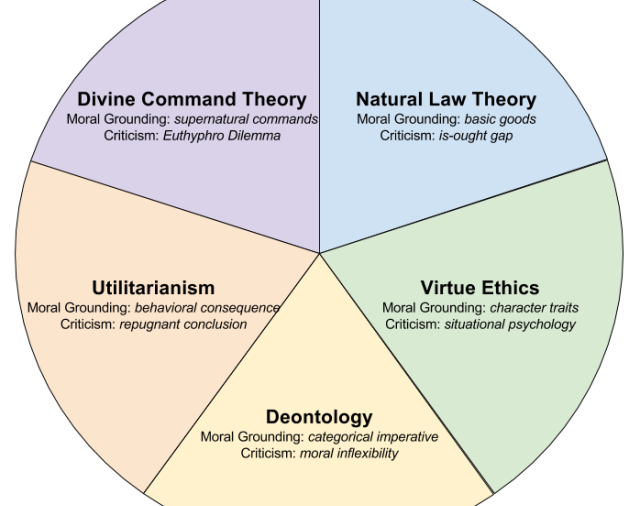
Firstly, what is a moral or ethical theory?
Ethics is the study of morality, defining the difference between right and wrong (1). The task of a moral theory involves providing an account of the right of actions (2). Moral theories provide individuals with a justification for certain ideas and an individual’s judgment of actions (2). Each theory has its own framework intended to guide an individual’s moral behavior (1). According to research, certain moral laws are universal, and every individual has a duty to follow them (1). Moral theories provide guidance, resolve conflicts, explain moral judgements, and give an underlying justification for enforcing moral codes. Specific moral theories are increasingly relevant to legal matters, especially utilitarianism, virtue ethics, and natural law theory. These theories provide a foundational ethical framework that informs the creation and interpretation of legal systems.

Utilitarianism:
Utilitarianism focuses on producing the greatest good for the greatest number of people (3). It asserts that right or wrong can be determined by focusing on the outcome of our actions and choices (3). As a form of consequentialism, it is the only moral theory that can be used to justify war or military force (3). Utilitarianism accounts for the good of society over values such as justice or individual rights. It does not consider life to be inherently valuable but instead finds importance in the pleasure, happiness, and well-being connected to one’s life (4). It defines that murder can be justified or unjustified solely based on its consequences. If killing an individual increases overall happiness, a utilitarian may consider it morally justifiable (4). Utilitarians view killing an individual with family, friends, responsibilities, or a valuable future as impermissible (4). However, they believe killing an individual with no connections or meaningful future results in little to no loss of happiness, defining this act as permissible. Utilitarians act impartially, honing the belief that every individual’s happiness counts equally. A murder with good consequences and overall happiness is justified, but a murder with bad consequences and overall suffering is unjust (4). When a victim has no identity, relationships, or future happiness to lose, utilitarianism provides no reason to call the killing morally wrong. In the legal system, punishment is justified by consequences, not revenge. Laws deter crime, protect society, and rehabilitate offenders. Lawmakers utilize this reasoning when deciding which laws create the most overall benefit. It supports rules that increase social welfare, even though individual cases differ.
Virtue Ethics:
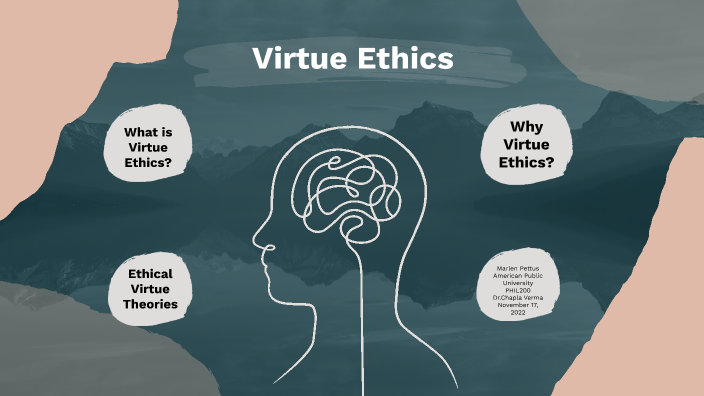
Virtue ethics come from the moral philosophy focusing on the character of an individual making a decision, rather than the consequence of their action or a set of rules. Aristotle declared that a virtuous individual is someone who has ideal character traits (5). These derive from natural tendencies that must be nurtured, but once established, they become stable. It often suggests that ethical behavior comes from developing strong character traits, or virtues, through practice and habit. Virtue ethics argues that murderers are not just individuals who commit a bad deed but individuals with a vicious character (6). In virtue ethics, the morality of an action is deeply connected to what kind of person the individual is (6). Murder is morally not wrong not only due to its outcome or because it breaks a rule but mostly because it emanates a lack of virtue (6). Killing in self-defense is often considered justifiable in virtue ethics frameworks, as it is seen as an act of self-preservation motivated by the desire to protect one’s life. Similarly, killing to protect another innocent individual from imminent danger is also justifiable. It doesn’t provide rigid rules or reduce morality to calculation like consequentialism/utilitarianism (6). Virtue ethics primarily relies on practical wisdom, considering what someone with good character would do in a certain situation. Overall, virtue ethics defines that murder is wrong, as it is a manifestation of a vicious character, not only a harmful consequence or violation of a rule (6).
:max_bytes(150000):strip_icc()/Term-Definitions_natural-law-b344f035a6a04bbab36367c4d68e9f91.jpg)
Natural Law Theory:
Natural law is a system of right or justice held to be common to each human and derived from nature rather than societal rules (7). Natural law comes from the idea that there are moral principles built into human nature and the world itself (7). This involves principles that exist before or outside human-made laws.
Natural law = Moral rules that come from nature, reason, or human morality (not governments)
Natural law argues that prohibition of murder is not a random rule but a rational law. It expresses that rules against murder serve the universal good, not a special interest (8). Every rational being understands rules against murder because God has designed nature in a way that allows us to grasp it with reason (8). This form of law is woven into the human mind. Natural law connects to God, and the rule against murder is not just human reasoning but is tied to a moral order created by God. It is presented as the real moral truth (8). Overall, natural law does not justify murder but condemns it. The justification against murder is moral and rational, not contingent on or useful for social consequences.
The question of whether murder can be morally justified depends entirely on the ethical frameworks used. Morality is rarely simple, and people often face situations where rigid rules don’t capture the complexity of human life. Some moral theories like utilitarianism focus on the outcomes, while theories like virtue ethics judge based on the character and intention of the individual acting (9). Morality relies on deeper moral reasoning, extending beyond strict rules or calculations to decide what is right. This demonstrates that different moral theories extend beyond strict rules to decide what is correct (9).
Next week, I plan on exploring how societal norms and laws shape our moral understanding of murder. Moral theories explain the “why” behind ethical decisions, but societies turn those principles into rules and expectations. Though every society condemns murder, what counts as murder can shift depending on each culture, context, religion, and historical period. By looking at how laws are created and how social values often influence them, I can better understand how morality and legality interact. This contributes to our views on justice, safety, and human life.
Thank you so much for reading my blog post!
2. https://plato.stanford.edu/entries/moral-theory
3. https://ethicsunwrapped.utexas.edu/glossary/utilitarianism
4. https://iep.utm.edu/virtue/
5. https://www.britannica.com/topic/natural-law
6. https://www.acton.org/pub/religion-liberty/volume-13-number-3/natural-law-what-we-naturally-know
7. https://medium.com/@paigepeters/death-by-indifference-a-moral-justification-of-murder-2e67ed431f05
8. https://www.britannica.com/topic/natural-law/Natural-law-in-the-Enlightenment-and-the-modern-era
9. https://medium.com/@paigepeters/death-by-indifference-a-moral-justification-of-murder-2e67ed431f05

This post was really interesting to read and I like how clearly you explained each theory before connecting it back to the main question about murder. The way you showed the differences between utilitarianism, virtue ethics, and natural law made it easy to see how the same action can be judged totally differently depending on the framework. A suggestion that might make help is to add one or two short real or hypothetical examples, like a self defense case and briefly show how each theory would respond to that same situation. That could help readers see your ideas in action. In general, I really enjoyed your post because it explains how different moral theories view murder in their own way, and that made it interesting to think about.
Hi Ishani! I love your inquiry topic for the semester, it is super interesting! You did a great job laying out the different moral theories and explaining how each one approaches the morality of murder it made the overall question feel layered and complex. One thing that could make your future posts even more engaging is adding a real-world case example to show how these theories connect to each theory. It might help readers connect your explanations to situations they’ve heard about.
A helpful link you can use: https://ethicsunwrapped.utexas.edu/case-studies
Ethics unwrapped is a great website because it has many real world cases that include discussion questions, related videos, and bibliographies that can help connect to these theories even more!
Amazing post and good luck with your next posts!