
Hello everyone! Welcome back to blog post #3! I hope you enjoyed my last post, but today, we will be expanding on a topic that is not only quite controversial to many, but is a lasting talking point for debaters across the globe.
Sexism in Science: How Does It Work?
The phrase “sexism” can often seem foreign in lab buildings, with scientists in white coats, and with test tubes and subjects of every size and colour. But supposedly safe university buildings can often house sexual harassment, which is a major contender in the minority of women scientists, with no stable reporting mechanisms (1). Women’s rights have often been overlooked by even political opinions. Kamala Harris, who was a presidential candidate for the 2024 U.S. Presidential Election, is speculated to have been discriminated against because of her biological sex (10). Data thermometers taken by the 2020 National Election Studies found that the three types of sexism shown towards her, and many other female politicians, were hostile, modern, and traditional sexism (10).
Many times, scholars pin the blame on social constructs, like the bisocial model. (4)
What Is The Bisocial Model, And How Does It Affect The Continued Development of Women?
The bisocial model puts emphasis on the constraints that men and women have based on sexual and reproductive properties. It proposes that, due to this differentiation, men are generally more suited to a skilled, earning environment. For many years, the flip side of this “scientific” coin was that women were more efficient and “made” for the home, and meant for childrearing, cooking and cleaning a domestic household. In this right, the bisocial theory limits the continuing evolution of women as a result of the perceived gender distribution, in which men receive higher social roles, and women maintain the status quo of a “picket fence” life.
Today, we rarely hear of this theory, but another Harvard study might lead to discoveries that flip the world of human biological sciences on its head (6).
Women In STEM: Real-Life Examples of Sexism In The Workplace
Melina Kibbe, the now editor in chief of JAMA Surgery, and dean of the Virginia School of Medicine, had always thought of male mice as the norm; running tests on their blood cells, reactions, and aversions to treatment had always been a given. But, one day, the thought had occurred to her, “Why aren’t there any females here?” Through extensive work with her colleague, Teresa Woodruff, to get a $25,000 grant from the American government to study the same treatments on male and female rats. The results? They found that female mice had to be given much higher doses of the same medication, for the same clinical benefit.
This, sadly, took place in 2011. Today, male mice continue to dominate scientific research, despite the 2016 mandate from the National Institutes of Health to include biological sex as a variable in scientific tests. But, in today’s digital age, how can we keep the balance between equality and responsibility?
The Origins of Patriarchy, and How Balance Can Be Redressed as Oppression
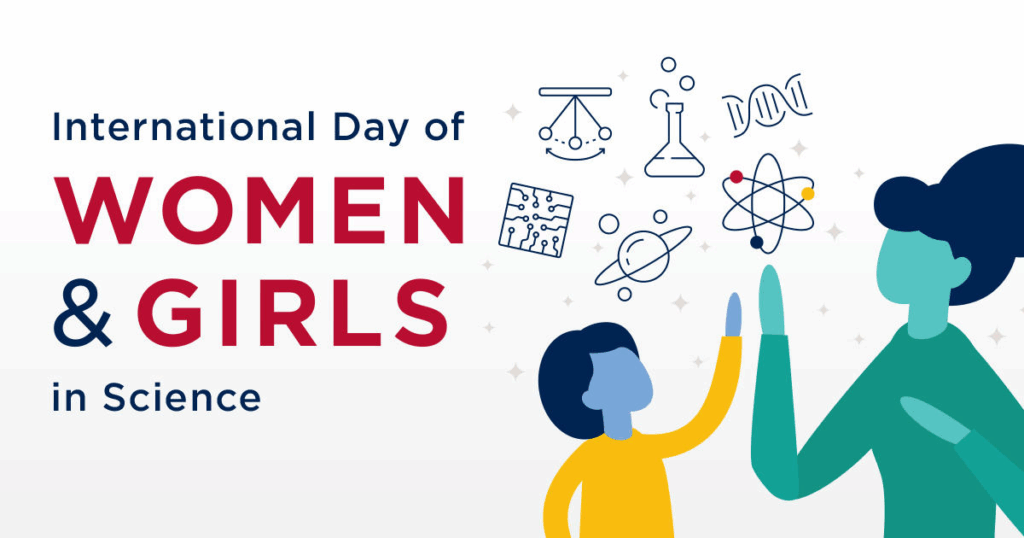
Patriarchy. A buzzword commonly seen in feminist literature, “woke” articles, and hippie mindsets; this social construct seems to run our modern lives. But, what is the patriarchy, how does it work, and how is it evolving now?
Patriarchy is a social system that has historically bestowed power to men in various parts of society, and contributed to disparities in women’s employment, education, and income. In recent times, it has even dictated violence against women, often called “femicide,” and women’s reproductive rights. (3)
It’s earliest known form came in agrarian societies, where men were expected to perform physically demanding tasks, such as sowing, plowing, and gathering crops, while women were subjugated to domestic roles in a household, generationally relegating societal norms, and deeming women as less valuable in society.
Today, gender inequality affects both genders, and even those who do not identify with being a man or a woman. Queer suicide rates have risen due to selective discrimination and prejudice, while women across the world face petrifying oppression on the daily. (5)
The good news? We, as the generation of the future have the power to put an end to a looming societal enabler, once and for all! (8)
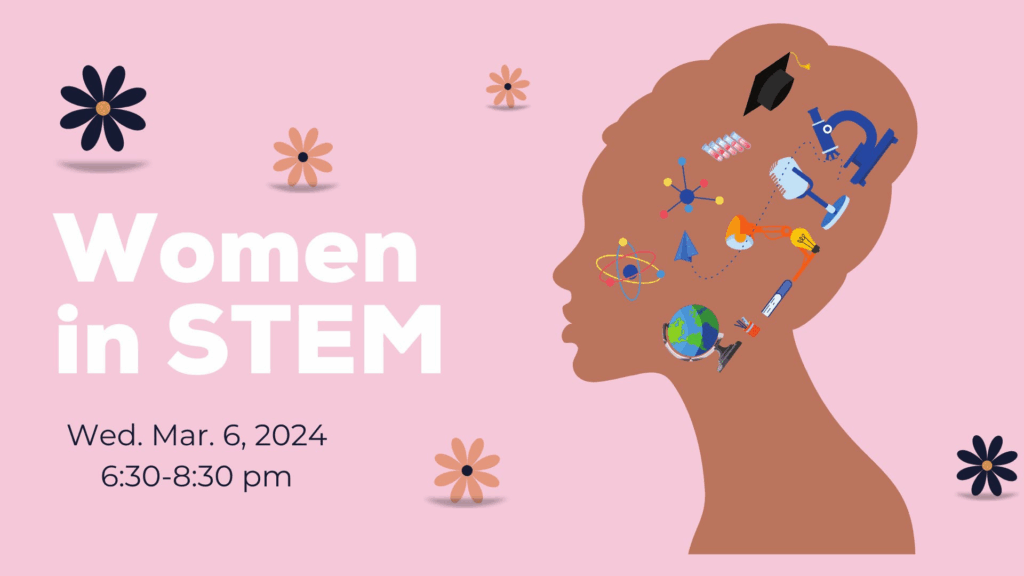
When addressing issues that affect major components of society, we have to keep in mind those who are affected by the system’s hurtful approaches. Some 35% of the entire U.S. STEM workforce are women, while harassment, and discrimination reign rampant. Two thirds of women in STEM consider leaving their field, while male supremacy continues to be a leading factor in the resignation of women from their jobs.
In my next blog post, I will be attempting to find out how we, as a society, can overcome the patriarchal belief system ingrained in us, so please stay tuned for my Blog Post #4!
Thank you so much for reading, and I will see you next time!
Bibliography
1.
Ortenberg R. It’s Nothing New: Sexism in the Lab [Internet]. Science History Institute. 2023. Available from: https://www.sciencehistory.org/stories/magazine/its-nothing-new-sexism-in-the-lab/
2.
Gupta M, Madabushi JS, Gupta N. Critical Overview of Patriarchy, Its Interferences With Psychological Development, and Risks for Mental Health. Cureus [Internet]. 2023 Jun 10;15(6). Available from: https://pmc.ncbi.nlm.nih.gov/articles/PMC10332384/
3.
Peluso C. The Origins of Patriarchy [Internet]. Population Media Center. 2023. Available from: https://www.populationmedia.org/the-latest/unmasking-the-patriarchy-its-origins-impact-and-the-path-to-equality
4.
Zhu N, Chang L. An evolutionary life history explanation of sexism and gender inequality. Personality and Individual Differences. 2020 Apr;157(109806):109806.
5.
Oreskes N. Racism and Sexism in Science Haven’t Disappeared [Internet]. Scientific American. 2020. Available from: https://www.scientificamerican.com/article/racism-and-sexism-in-science-havent-disappeared/
6.
Harvard, Wheeler N. Of mice and women [Internet]. Harvard Public Health Magazine. 2024. Available from: https://harvardpublichealth.org/equity/how-sexism-in-medical-science-harms-womens-health/
7.
Crasnow S, Wylie A, Bauchspies, Wenda K, Potter E. Feminist Perspectives on Science (Stanford Encyclopedia of Philosophy) [Internet]. Stanford.edu. 2009. Available from: https://plato.stanford.edu/entries/feminist-science/
8.
Pitman C. How centuries of sexism excluded women from science — and how to redress the balance – AmericanScience.org [Internet]. Americanscience.org. 2025 [cited 2025 Nov 20]. Available from: https://americanscience.org/article/view?id=1241
9.
Peltz WH. CAN GIRLS + SCIENCE −STEREOTYPES = SUCCESS? Subtle sexism in science studies. The Science Teacher [Internet]. 1990;57(9):44–9. Available from: https://www.jstor.org/stable/24145366
10.
Knuckey J, Mathews A. Racial resentment, sexism, and evaluations of Kamala Harris in the 2020 U.S. presidential election. Social Science Quarterly. 2024 Jun 11;105(4).
Hey Asmi, I really enjoyed reading your post and learning more about your topic. I think women in STEM should be talked about way more, because raising awareness helps show the discrimination many women still face every day. I like how your post includes lots of stats and studies, but explaining why each one is important would make your points even stronger. In my Social Justice class, we were learning about sexism in research centers in the Arctic, and I thought those articles might connect well with your project. Can’t wait to read more!
https://www.cbc.ca/news/canada/north/mosaic-dress-code-sexism-arctic-research-1.5739547
https://www.cbc.ca/radio/asithappens/antarctic-research-stations-rife-with-sexism-and-harassment-probe-finds-1.6606057
Thank you so much for the comment! I love these articles, and I’ll definitely use them in the future!
Hi Asmi! This is definitely a controversial topic, but the angle you approached it kept it unbiased and very informative. I appreciate how you used recent events to explain, emphasizing that bias against women is not ancient, but still is present in todays society. Something I would like to see in the future is to expand the spaces to more than just the work/science space in which women are judged in based by their sex. https://www.sciencedirect.com/science/article/pii/S0264275124005602 is a good resource if you choose to expand on this point. I enjoyed reading this and good luck on your future blog posts!!
-Sarang Jacob
Thanks so much for the feedback! For my next topic, I will be discussing the patriarchy, and misogyny, so I hope that suits your fancy!
Hi Asmi! Your blog post is strong, clear, and very informative. You explain big ideas such as sexism in science and the bisocial model in a way that is easy to follow, and your real-life examples help people understand why these issues still matter today. The story about Melina Kibbe was really effective and made your points feel more real. One thing you could improve is adding smoother transitions between sections so the post feels more connected as a whole. You might also try breaking up longer ideas into shorter points to make the reading flow even better. If you want more support for future posts, resources like the
https://www.unesco.org/en/gender-equality/education/stem (you can paste this)
or this website,
https://www.aauw.org/issues/economic-security/pay-gap (you could paste this as well)
could be helpful. Overall, your writing is confident, thoughtful, and engaging. Great job!
Thanks so much for the criticism! Next time, I’ll definitely focus more on my transitions! Also, thanks for the articles, they were so helpful and interesting to read!
Hi Asmi,
I was very mesmerised by your topic and was eager to learn more about it since it is a very interesting question to discuss. I really enjoyed the different perspectives you looked at and how you included some real life examples to back up your points. I would suggest that you add any personal experiences so that it can seem relatable to you which can help improve the overall quality!
Thanks so much for the sweet comment! Next time, I’ll definitely look into adding more personal examples, thanks!
Hi Asmi!
I really enjoyed reading your post and it is clear that you put a lot of thought and research into explaining how biology and social systems interact to shape sexism in science. One thing i noticed is how effectively you utilized real-world examples, like Melina Kibbe’s discovery about male-dominated medical testing to strengthen your understanding. One idea that may help strengthen your post is briefly adding how modern research challenges older “sexist” assumptions! Your writing is engaging and well organized overall. I can’t wait to read more in the future.
Here are a few sources to help you!
https://pmc.ncbi.nlm.nih.gov/articles/PMC10835038/
https://pmc.ncbi.nlm.nih.gov/articles/PMC10835038/
Thank you so much for this comment! For my future posts, I’ll definitely keep you articles in mind. Thanks!
Hi Asmi! I thought that your post was very interesting and full of fun details. One thing that may help your formatting is not putting all your sentences a little closer together. I’m so exited to read your next blog post!
Thanks so much for the comment Nicola! I’ll totally keep formatting at the forefront of my mind next post! Thanks!
Hi Asmi, great post.
I really like how your post gives a clear explanation of how sexism appears in science, and the research and real examples you include make your points strong. You also do a good job connecting ideas like the bisocial model and patriarchy with your main topic. Some sections are a bit long or combine many ideas at once, which can make them harder to follow, and a few sentences could be clearer if shortened. Breaking up those parts could help your key points stand out more. Overall, your writing shows solid research and a good understanding of the issue. I’m looking forward to reading your next post.
Thank you so much for the sweet comment Ihan, and I’ll keep my formatting in mind for next time. Can’t wait to see what you think of my next post! Thanks!