
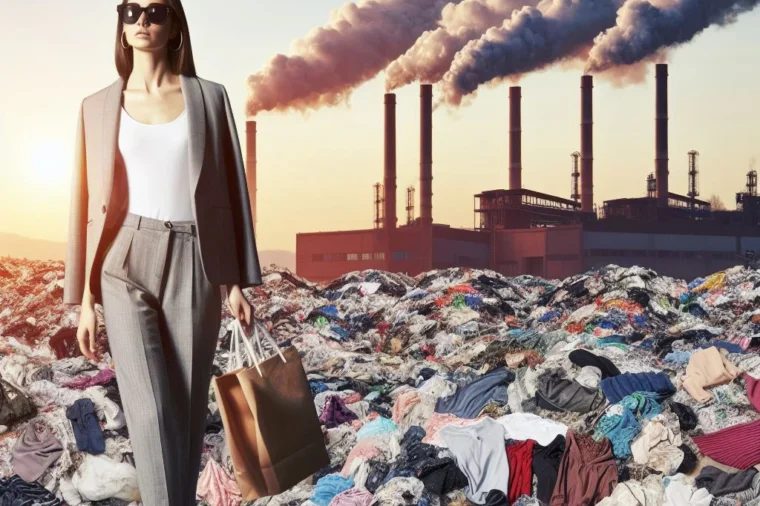
Inquiry Question: How does fast fashion impact the environment, and what can we do about it?
Step 1: Environmental Impact of Fast Fashion Production
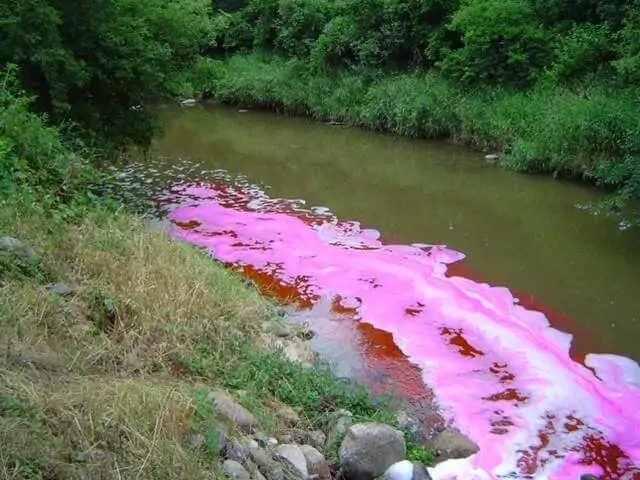
Fast fashion affects the environment in many parts of the production process, especially when it comes to the materials used to make clothes. Cotton, which is one of the most common fabrics, needs a huge amount of water to grow. On top of that, the dyeing process uses strong chemicals, and when factories dump their wastewater into rivers without treating it, it pollutes the water. This can harm drinking water, kill animals, and damage ecosystems in the countries where a lot of fast fashion is produced (1). Research also shows that the fashion industry creates about 20% of the world’s wastewater and uses about 93 billion cubic meters of water every year, which shows how much it depends on natural resources (2).
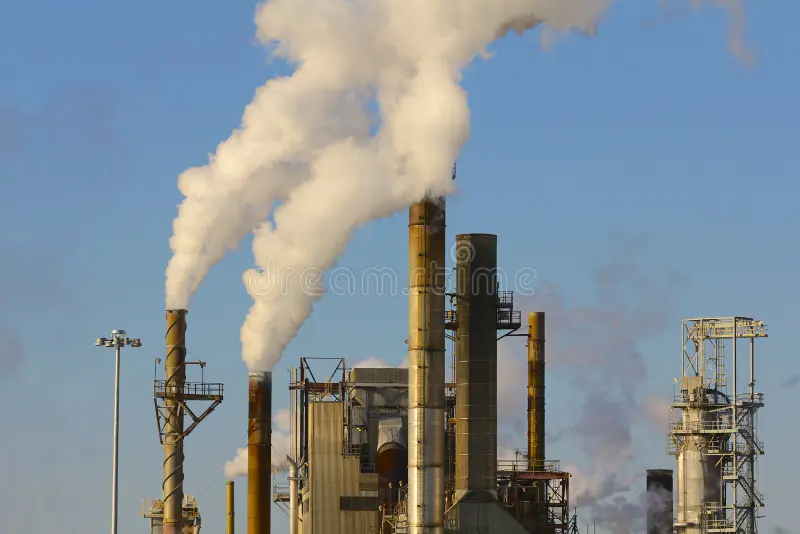
TThe fast fashion industry also plays a big part in climate change. Environmental groups say it produces about 8–10% of the world’s carbon emissions (3). This pollution comes from several steps in making clothes: creating synthetic materials like polyester, running big factory machines, shipping clothes around the world, and constantly producing new items. Polyester is one of the biggest problems because it’s made from petroleum, which is a fossil fuel. Making polyester releases a lot of greenhouse gases, and since it doesn’t break down naturally, it also becomes long-lasting waste (4).
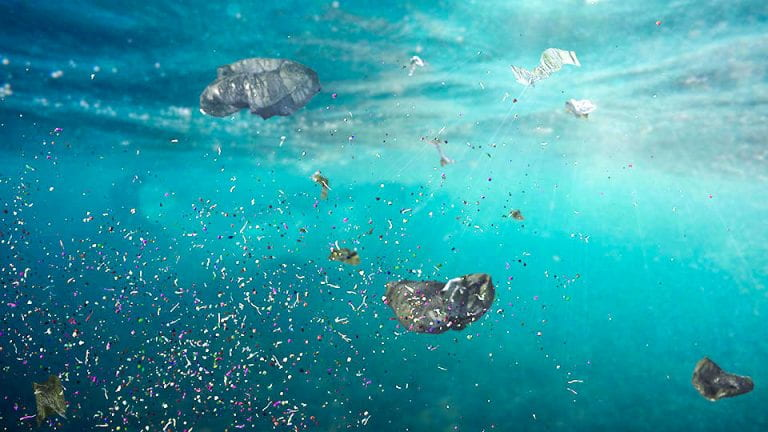
Another big issue is textile waste. Fast fashion encourages consumers to buy more clothing by constantly releasing new trends at low prices. As a result, people throw away clothing more quickly, and most of it ends up in landfills instead of being recycled. Global estimates show that 92 million tons of textile waste are thrown away every year (1). A lot of these clothes are made from synthetic fibers that do not decompose. Instead, they slowly break apart into microplastics that pollute soil, lakes, and oceans (6). Marine animals can accidentally eat these microplastics, which allows them to move up the food chain and spread through ecosystems (7).
Overall, the way fast fashion is made is harmful to the environment because it uses huge amounts of water, puts toxic chemicals into rivers, depends on materials made from fossil fuels, and encourages people to throw clothes away quickly. When you look at all these impacts together, it becomes clear why fast fashion is seen as such a damaging industry. Understanding this helps show how serious the problem is and prepares us to look at what people and companies can do to fix it.
To end off this post, my next blog entry will focus on the human and economic sides of fast fashion. I’ll look at where clothes are made, how garment workers are treated, and how low prices and constant overproduction create even more waste. This will help show how fast fashion doesn’t just harm the environment, but also affects real people and communities around the world.
Thank you for reading!
References
- Scientific American (2022). Fast Fashion Affects Climate, Exploits Workers, and Creates Enormous Textile Waste. Retrieved from https://www.scientificamerican.com/article/fast-fashion-affects-climate-exploits-workers-and-creates-enormous-textile-waste/
- Bailey, K., Basu, A., & Sharma, S. (2022). The Environmental Impacts of Fast Fashion on Water Quality: A Systematic Review. MDPI Water. Retrieved from https://www.mdpi.com/2073-4441/14/7/1073
- Hoosier Environmental Council (2024). Fast Fashion or Mass Pollution? Retrieved from https://www.hecweb.org/2024/12/23/fast-fashion-or-mass-pollution/
- Science Array (n.d.). Fast Fashion’s Hidden Environmental Cost & Solutions. Retrieved from https://sciencearray.com/environment/fast-fashion-environmental-impact-hidden-cost
- CarbonTrail (n.d.). Fast Fashion’s Carbon Footprint: What Is It? Retrieved from https://carbontrail.net/blog/fast-fashions-carbon-footprint-what-is-it/
- Greenpeace International (2023). How Fast Fashion Fuels Climate Change, Plastic Pollution, and Violence. Retrieved from https://www.greenpeace.org/international/story/62308/how-fast-fashion-fuels-climate-change-plastic-pollution-and-violence/
Hi Andrea! I thought this was very well written, I can tell you did a lot of research on your topic. I liked how you included many statistics, it helped my understanding of the topic. I think it would help if you added some more points ( (1) or (2) ). Overall I thought it was amazing and I can’t wait to read your next post!
Hey Andrea! I found your topic and research really interesting and I can’t wait to read more! A resource that might help you with your research for your next round is this article ‘https://sustain.ucla.edu/2024/02/16/the-fast-fashion-epidemic/’. It speaks on the human impact of the fast fashion industry as well as the environmental one. Or, this article that uses exact stats to back up the environmental impact of certain brands ‘https://earth.org/fast-fashions-detrimental-effect-on-the-environment/’. In all, I really enjoyed reading your post and good luck on your next one!
Hello Andrea,
I found your blog post fascinating! I like how the layout of your blog post is in a concise, informative fashion. The addition of various pictures in your post made the blog easy to follow, creating a visual illustration of the topic. My Inquiry is quite similar to your project, so I was very intrigued when you mentioned the factor of consumers in relation to fast fashion. One recommendation that I believe will enhance your project is to create a short description (a sentence is suffice) to label your pictures and what they illustrate in correlation with your text. Additionally, a resource that you may find helpful in regards to your topic is, https://www.bbc.com/news/science-environment-60382624. Another source that could contribute to your findings is, https://thechictribe.com/how-are-fast-fashion-clothes-made/.
Overall, your work looks very promising! Looking forward to your upcoming posts. I’m sure the future projects are going to be splendid!
–Vanessa Vukovic