
For my first round of reasearch concerning the question stated above, I inquired and reasearched the first step of my already created three step reaserch plan. This information really helped give me context on the potential developmental differences for children in different countries based on their education, and how that could affect them in the future. Without anymore explaining, let me show my findings:
Step 1: Research different general forms of education and teaching methods in specific countries, and compare between them.
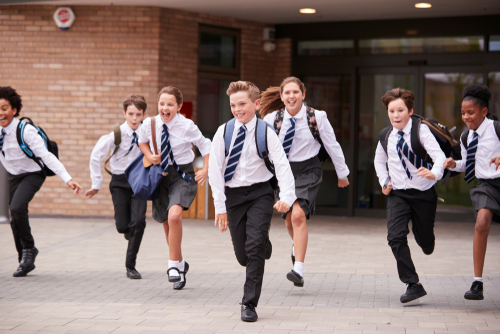
There are a lot of ways that schooling can vary, but I will start with uniforms and dressing. In France, religious dress is banned in most schools, based on the widespread and popular belief that religion and public life should be kept as far apart as possible (1). The law affects many different denominations, hindering Muslim schoolgirls from wearing hijabs and headscarves, Sikh students from wearing turbans, Christians wearing crucifixes and, Jews wearing yarmulkes (1). German schools on the other hand, are very opposed to uniforms, considering them to have a very militaristic associations. Branded school clothing is made to look as unlike a military uniform as possible (1). India focuses on regional diversity, school uniforms varying greatly depending on what region the school is located. Some governement schools might require a more simple dress code, wihle some private schools prefer to have more elaborate uniforms (2). In some areas even, older girls wear traditional dress, such as salwar kameez or saris (2). In Britain, institutions still use a more old fashioned style of blazers with school crests, and ties in house or team colors. Some schools have had this dressing policy for centuries, creating school spirit, and alumni connections (2).
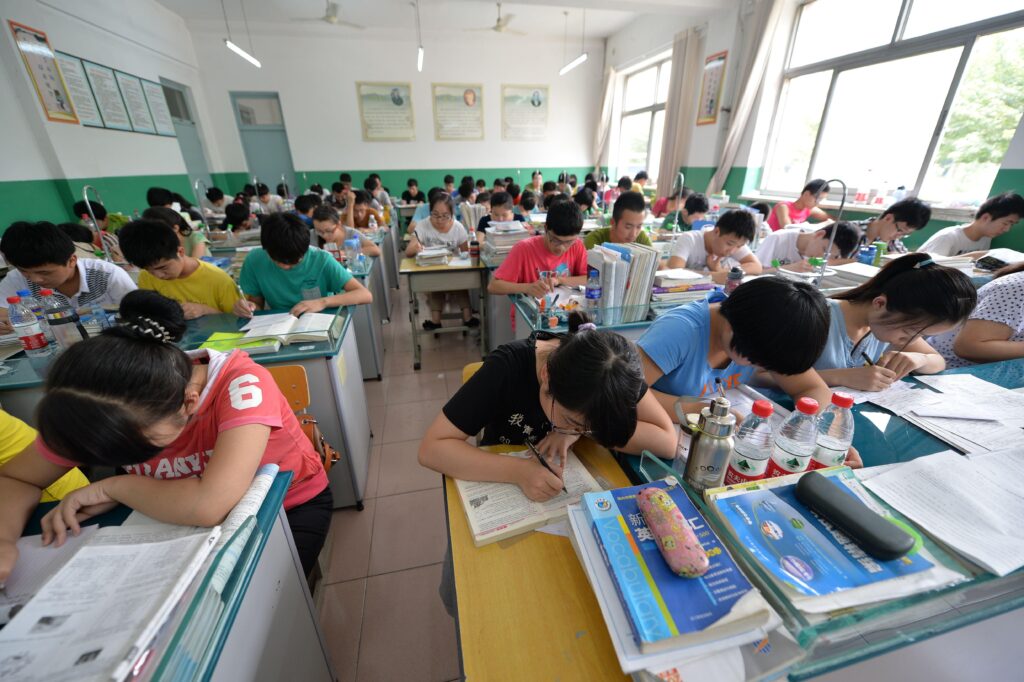
Schooling also very much varies with curriculums, and theaching methods. In China, it’s a very displine based system. There is a very big emphasis on the seriousness of education, and it is instilled in children that they have to try their hardest and dedicate themselves to their school work (3). Some of the pressure can be linked to the One-Child policy, causing heavy pressure and expectation on the one child of the family (4). Chinese education is also very conceptual. Studens learn how to think logically, and figure out solutions step-by-step while problem solving (3). It is a little bit different for schools in the UK. There, they have started with a more holistic approach. In classrooms, instead of just sitting the whole time and listening to a lesson, they engage in more classroom discussions and practical projects, teachers against delivering instruction for the majority of class, instead letting the students take more of a lead in their education. (4) In the United States, teaching is less based on the teachers. State boards have a lot of say in what and how teachers teach, the tests they give, and in what way students should be learning. There is a big emphasis on memorisation and and doing well on exams, something that can feel like quite a burden to the kids (3).
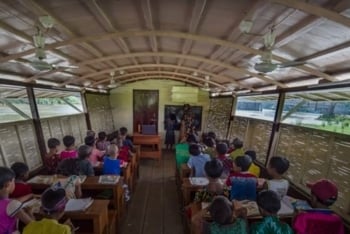
The physical location, and pricing of schools change a bit depending on the country too. There are definetly few countries where public primary and secondary schools aren’t free for most general students, but South Africa is one of those countries (1). School for children is not automatically completely funded by the governement, the state subsidises education, but parents are still required to pay a portion (1). In the rural Outback of Australia, some kids don’t even go to school in person, they are taught via radio (5). The children are few and far between, so since it isn`t viable to have a school, children contact a teacher via radio to listen to their lesson, then post assignments on an education hub (5). In recent years, they have managed to use the internet to their advantage, adding video to the arrangement (5). In Banglagesh, schools aren`t on the ground. Beacause of climate change, there was extreme flooding in the country, causing two-thirds of the country to by covered, in water (6). Because these monsoons made it incredibly difficult for children to get to school, floating schools, powered by solar energy were introduced as a solution. The boats are both school buses and classrooms, picking up students from different riverside villages, then starting lessons when docked (6). In Colombia, some students have to zipline down a steel cable to get to school (7). In a remote village called Los Pinos, the closest school is all the way down a mountain and across a canyon. It would take 2-hours to make the hike down to the school, so most children take the zip-line, reaching almost 55 miles per hour just to get to school (7).
Sources:
- https://www.oxford-royale.com/articles/schools-around-world
- https://blog.remitly.com/education/school-uniforms-around-the-world/#toc-the-americas-practical-and-diverse
- https://www.tshanywhere.org/post/teaching-methods-worldwide
- https://engage-education.com/blog/modern-teaching-methods-from-across-the-globe/
- https://www.thefactsite.com/global-school-facts/
- https://unfccc.int/climate-action/momentum-for-change/activity-database/momentum-for-change-solar-powered-floating-schools
- https://www.edubloxtutor.com/unusual-amazing-schools/
All in all, the reasearch I have just done about schools in different countries has really helped me understand some of the differences that schooling has around the globe, and the potential way that could change children`s perspectives. The next step of my reasearch plan is going to be: Research different general beliefs and methods (cultural, religious, ect.) about child rearing based on countries. This will help me understand how beliefs of parents and upbringings in differeent cultures shape a person, and whether some parenting practices are better than others.
Thank you for reading, and I can`t wait to learn more!
Hi Jaeda! I really enjoyed reading your post, and I love how you included the zipline fact. I think you could look into this website, which provides more information on the education system in South Africa. https://www.education.gov.za/EducationinSA/tabid/327/Default.aspx
Overall, your idea is great and I’m excited to learn more!
Hey Jaeda. I enjoyed reading your blog, and I was wondering something about your formatting. I was wondering how you formatted your blog such that your text warps around the image? Other than that, I wanted to say how much of a fantastic job you did finding all that detailed information from school systems all around the world. You successfully compared one system after the next, and I just wanted to let you know how much of a good job you did in that sense. Also, I found a source that you could use for your next round of research.
Link: https://pmc.ncbi.nlm.nih.gov/articles/PMC8940605/
Great job overall and keep it up!
Hi Jaeda! I really enjoyed reading your post and loved that it was so detailed! Im super exited to read your next blog post and i found this website that you could use in your next post. https://tori-leigh.com/child-rearing-practices-in-different-cultures/
so exited for the next post