
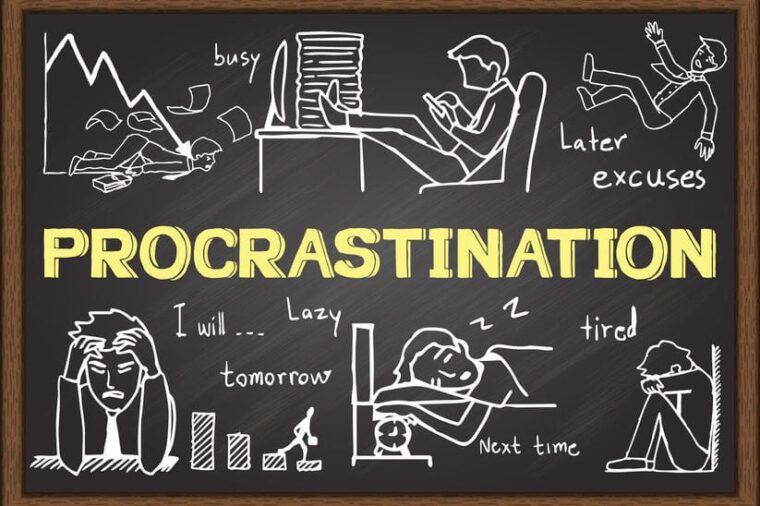
What even is procrastination? In simple word, procrastination means putting off tasks until the last minute, despite knowing it will cause stress later(1). In this blog post, I will be researching what procrastination actually means and what causes it. I’ll look into the science behind it and how our brain reacts to stress or tasks we don’t like.
Procrastination is often caused by many different things. For example, 20 percent of the population uses the excuse of “I don’t feel like it” to justify their procrastinating(2). We often assume that projects won’t take as long to finish as they really will, which can lead to a false sense of security when we believe that we still have plenty of time to complete these tasks(3). It also often comes from a result of perfectionism, where someone feels the pressure to produce work that is free from flaws. These beliefs can often ruin our desire or ability to move forward in a task due to the fear of having to face negative feedback or not “good enough” results. Getting things “just right” can cause a significant amount of stress to the point where tasks are delayed (aka procrastination)(4). These are just some of the more common reasons why people do this, there are many more things that you might be experiencing that may lead to procrastination.

Procrastination is deeply rooted in emotions, habits, and cognitive processes. It involves a complex interplay between your brain’s emotional and rational centers. Procrastination is a clash between the limbic system and the prefrontal cortex. The limbic system is the brain’s “emotional hub”, processing pleasure, pain, and reward. When faced with an unpleasant or challenging task, the limbic system tries to avoid discomfort. The prefrontal cortex is responsible for executive functions like decision-making, planning, and impulse control. It helps you prioritize long-term goals over short-term gratification. When you procrastinate, the prefrontal cortex struggles to override the limbic system’s emotional impulses. Research using fMRI scans has shown that the prefrontal cortex is activated when people make decisions involving delayed rewards. However, when immediate rewards are involved, the limbic system dominates. This is often the science leads to the brain procrastinating.(5)
Thank you for reading my blog post 3 I hope you enjoyed. My next blog post will be about the emotional and psychological Reasons Behind procrastination in case you are interested in learning more!
- Procrastination, The University of Kansas, retrieved from: https://caps.ku.edu/procrastination
2. Procrastination, Psychology Today, retrieved from: https://www.psychologytoday.com/ca/basics/procrastination
3. Kendra Cherry, Very Well Mind: What Is Procrastination?
4. Procrastination, The University of Melbourne, retrieved from: https://services.unimelb.edu.au/counsel/resources/study-related-issues/procrastination
5. The Neuroscience of Procrastination: What Happens in Your Brain?, insights psychology , retrieved from: https://insightspsychology.org/the-neuroscience-of-procrastination/

Hi Yula! liked how clearly you explained the science behind procrastination, especially the part about the limbic system vs. the prefrontal cortex. It all made lots of sense! One suggestion is to add a small personal example, since it could make the post feel more relatable. Here’s a helpful resource you could try for the next few posts: https://www.nytimes.com/2019/03/25/smarter-living/why-you-procrastinate-it-has-nothing-to-do-with-self-control.html. Great job overall!
Hello Yula,
this is a good blog post which explains what procrastination is, and what causes procrastination in a very digestible manner. I don’t have much advice for you as this clearly fits all criteria. One source I would consider is https://www.nlm.nih.gov/ the national library of medicine. information from the NIH is almost guaranteed to be correct since it is owned by the US government.
Hi Yula,
I really enjoyed reading your blog post especially because it had a very eye catching title and topic that grabbed my attention easily. I loved how you specifically explained the science behind it and how much you cared about keeping the reader entertained while also still learning something new. I would suggest connecting the science to everyday situations a bit more, since adding a small real-life example could help readers relate even more to what you’re describing. A source I would consider is : https://www.britannica.com/topic/time-management!