
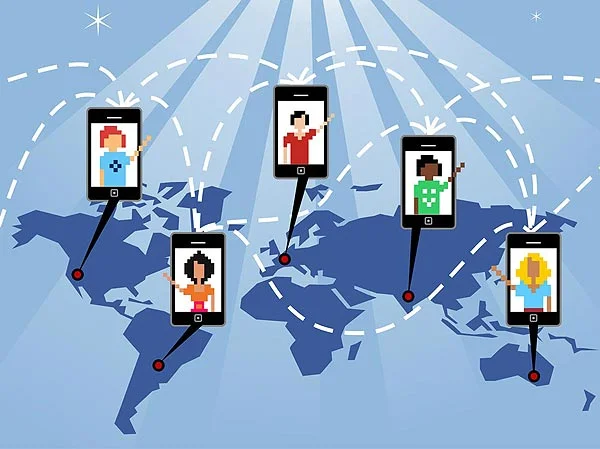
In today’s world, social media is built into the everyday life of teenagers. The average teen spends around 4.8 hours a day on social media (1), so as you’d expect, many teens begin forming relationships with other users all around the world. These online relationships can be super positive as you meet new people who share your interests, understand your emotions, and help you feel connected. But there still is a dark side to building these online relationships with people you’ve never met. Not everyone online is who they say they are and some people fake identities to manipulate, pressure, or take advantage of vulnerable people

For this post, I’m focusing on my second sub question: How does social media influence how teenagers communicate and build relationships?
One of the biggest positives about relationships through Social Media is the connections people make. The Pew Research Centre found that social media helps teenagers feel closer to people whom they might not see as much, and are able to build connections with people who share their interests all around the globe. I have come across many online communities where people have come together to talk about their Interests. (2) It has also shown that people can reach out to people they meet online to get help or advice for things they might be going through. (2)
The Toronto Counselling Centre for teens states that online friendships can be just as meaningful, but they still require boundaries, just like real-life friendships. (5) Some teens can open up quicker to people online because it feels safer or less awkward, which can be a positive way for them to get help, but it can also lead to that person getting taken advantage of because of their vulnerability. (5)

Even though you can meet some great people on social media, not all relationships are good. The Canadian Women’s Foundation explains how teens can ignore red flags early into the relationship because of the attention and validation they are getting. (3) Ignoring these red flags makes it easier for unhealthy communication patterns or toxic friendships to form, especially if that person is pressuring you for information about themselves. (3)

There is also an emotional side to the friendship when it involves social media. The Mayo Clinic says that teens can feel left out or stressed when seeing a post of their friends hanging out without them. (4) Online communication isn’t always the best, and false information travels fast and can lead to a lot of misunderstandings between the people involved. (4) When communicating with your friends off social media, this doesn’t happen as often and makes your friendships way healthier. Little things like being left on the delivered can be turned into unnecessary drama that is unhealthy.

One of the biggest risks of building relationships online is catfishing. Catfishing is when someone creates a fake identity online to trick others. (6) The Crisis Prevention Institute explains how teens are more at risk than others because they can be more gullible at their early age. Teens can put a lot of trust into people who don’t deserve it, which makes them easy targets. (6) Catfishers use fake photos to pretend to be closer in age to the person to make them easier to trust. (6) Once they gain your trust, they try to get personal information or pictures from you. (6) Some Catfishes will go as far as to use the info or pictures you sent them to blackmail teens into giving them money or do things you are uncomfortable with. (6)

So, while social media relationships can get teenagers to come together and express themselves with the people they might meet online, there is still a lot of risks. Online friendships can become stressful, confusing, or unsafe if teens aren’t careful with what they are saying to the people online. Understanding the difference between healthy and unhealthy online connections can help more teens enjoy the positive side of social media while still staying safe.

Sources
(1) Gallup – Teens Spend an Average of 4.8 Hours on Social Media Per Day – By Jonathan Rothwell https://news.gallup.com/poll/512576/teens-spend-average-hours-social-media-per-day.aspx
(2) Pew Research Center – Teens, Social Media & Friendships – By Amanda Lenhart https://www.pewresearch.org/internet/2015/08/06/chapter-4-social-media-and-friendships/
(3) Canadian Women’s Foundation – How to help your teen recognize unhealthy online relationships https://canadianwomen.org/blog/help-your-teen-recognize-unhealthy-online-relationships/
(4) Mayo Clinic – Social Media Use and Teen Mental Health – By Mayo Clinic Staff https://www.mayoclinic.org/healthy-lifestyle/tween-and-teen-health/in-depth/teens-and-social-media/art-20474437
(5) Toronto Counselling Centre for Teens – Online Relationships: The Risks, the Benefits, and How to Help Your Teen – By Delaney Stewardson https://www.counsellingtorontoteens.com/online-relationships-the-risks-the-benefits-and-how-to-help-your-teen/
(6)Crisis Prevention Institute – Catfishing: Teens Falling for Fake Online Identities – By Sue Scheff https://www.crisisprevention.com/blog/human-services/catfishing-teens-falling-for-fake-online-identities/