

As we continue to see that money plays a major role in our lives and dictates many of our choices, I have decided to determine whether the amount of money that s being spend, is able to control the amount of fulfilment we feel in our lives. It has been seen that having more money will often lead to being more happy in our future (7). By allowing our bodies to feel this sense of relaxation by money is places unrealistic standards in our minds (7). Many people spend their time chasing wealth, as they think this can solve their other challenges that they may be facing. Today, I will be discussing my research- if the amount of money that is being spent controls the amount of fulfillment we feel in our lives.
The daily question if money buys happiness has been the common debate question for decades on end. research has more complex answers than a simple “yes” or a “no”. We do know that money influences our wellbeing, but there are other factors that play a role t hat determine our fulfilment.

As it is clear, money allows us to enhance our lives as it helps us feel satisfied whether it is from objects, experiences or financial stability. In Brazil, there was a study that higher income people have lower stress, and a higher happiness on the scale (1). This may seem predictable, but those with an even higher income do not feel happier, they feel the opposite. These individuals feel more stress and it has degraded their well-being(1). This primarily highlights that money can help reduce stress, but not when you have “more of it”. In other sites across the world, peoples perspectives may vary, but many seem to agree that money always will have a negative toll on our bodies. In Australia, they said that “every extra dollar spent, brings less happiness than the previous”(2).
Last week we briefly discussed about where our money is being spent. A key factor that determines our happiness is spending money based off of our interests.(4). It was seen that over 70,000 bank transactions reported were experiences, and purchases that aligned with their personalities. These purchases showed that the purchasers felt more fulfilment and thought positively(4). This shows that the amount of money does not control the amount of happiness, but where we are spending it does. The amount that is being spent on items/experiences does not dictate the amount of happiness being released.
the following experiment confirmed this effect that money has been having on us. individuals randomly were assigned to spend money on personality-aligned activities experiences and we saw a positive emotion increase compared to those whose spending did not match their traits (3). This highlights that fulfilment from money depends on whether spending support their interests, and not the volume of money being spent(3). Money Is also often used to buy time, whether it is services around your house, or basic services. It is very common in the United States and Canada that people with more than the annual income, tend to spend their money on services that may seem lie a hassle, but an everyday chore to others (3). After further looking at the results, those who have spent money on “time saving services” seem to experience more happiness.
Another comparison that contributes to this problem. Comparing your income to others shows that it affects your satisfaction. Seeing others income and comparing it to your own, will only create unrealistic standard in our minds; as everyones situations are different (5). if someone is seen as “richer”, wealthier, or happier, it does not mean that you need to match their spending experiences at the same pace. Everyone should spend their own money accordingly to their own budgets, rather than the people around them. This shows that societal wealth does play role in our financial well-being as well (7). Income doest matter generally, but that varies to a certain point. As we saw that higher incomes were associated with people with higher happiness levels, it does not result in long term happiness (6).
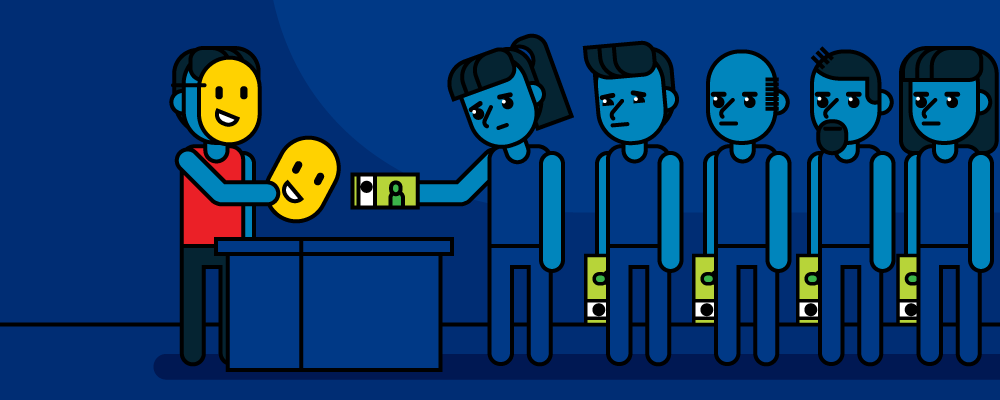
Overall, we have seen that the volume of money being spend does not control the amount of happiness being corresponded to. The official “yes” or “no” answer is not that clear as it is left open-ended due to all these statistics. Money can improve and negatively impact our mental health. Money can help us reduce stress, increase a feeling of security, and buy time, but it can also do the opposite to us. Fulfilment is mainly shaped by where money is being spent, rather than the amount. These facts from these statistics contradict each other which lead us to no clear official answer. It depends on where we are spending our money, not mainly the volume that is being spent.
- https://pubmed.ncbi.nlm.nih.gov/35703695
- https://pubmed.ncbi.nlm.nih.gov/35703695
- https://pubmed.ncbi.nlm.nih.gov/27056977
- https://macmillan.yale.edu/foxfellowship/money-can-buy-happiness
- https://www.hbs.edu/ris/Publication%20Files/buying-time-promotes-happiness_93388f5a-5f57-42c1-b9d8-63f50f473dd5.pdf
- https://theconversation.com/can-money-buy-happiness-new-study-suggests-it-might-201635
- https://upjourney.com/why-money-cant-buy-happiness