
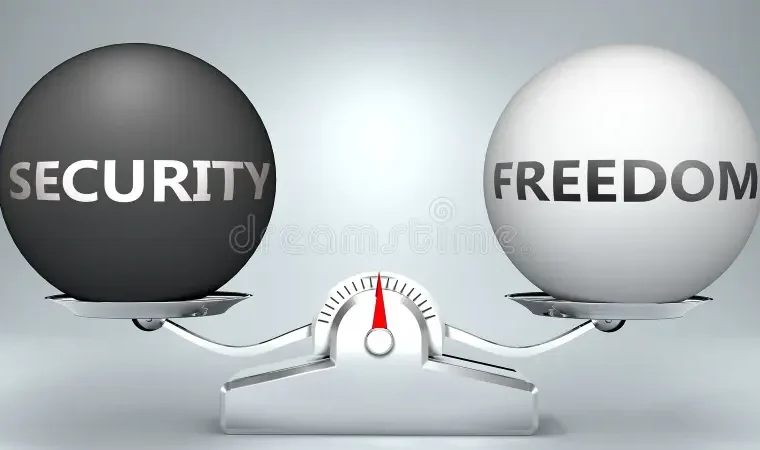
Inquiry Question: When does protecting people begin to limit their freedom?
In this post, I’m focusing on a sub-question that will help me answer my inquiry later with real examples: How do we decide when a safety rule is a fair protection and when it becomes too controlling? I picked this because in real life, rules are often introduced as for your safety, but it’s not always obvious where the line is. Sometimes protection is necessary (like stopping violence or keeping people safe in emergencies), but sometimes the same idea can lead to more surveillance, less privacy, and fewer choices.


One reason this question is interesting is because safety and freedom both sound like good things, but they can sometimes clash. For example, strict rules might reduce certain risks, but they might also reduce privacy, limit movement, or punish people who did nothing wrong. A lot of people assume that more security means more safety but that isn’t always the case. Some policies don’t actually solve the problem they’re meant to fix, and sometimes they create new problems, like mistrust or unfair treatment. That’s why I think the goal shouldn’t be no rules or no freedom, but a balanced approach where protection doesn’t turn into control.

I’m building a simple line test that I can use later on real examples. First, a safety measure should be necessary, meaning there should be a real problem it is responding to, not just fear or pressure. Second, it should be effective, meaning it actually reduces harm, not just makes people feel safer. Third, it should be proportional, meaning the restriction should match the level of risk. A small risk shouldn’t lead to extreme restrictions. Fourth, it should be the least restrictive option. If a problem can be solved in a less controlling way, then choosing the harsh option is clearly not fair. And finally, it should be temporary and reviewable, especially if it’s introduced during a crisis. If a rule lasts forever without review, it can quietly become a normal part of life even if the original danger is gone.
To start answering, I looked at how rights and limits are discussed in Canada. The Canadian Charter of Rights and Freedoms protects important rights like freedom of expression, freedom of peaceful assembly, mobility rights, and protection against unreasonable search. At the same time, it also allows rights to be limited in certain situations if the limit is considered reasonable and justified (1). This shows that in real life, even democratic societies (like Canada) admit that some limits can happen, especially during emergencies. The bigger question becomes: what makes a limit reasonable? Who decides, and what stops governments or organizations from going too far? We have to ask ourselves these questions in order to push forward as a society.

Privacy is one area where this issue becomes really obvious. When governments or organizations say they need data to protect people, that can sometimes lead to constant monitoring. That’s why here, in Canada, we have laws and institutions focused on privacy, like the Privacy Act and the Office of the Privacy Commissioner of Canada, which deal with how personal information should be collected, used, and protected (2)(3). This matters because privacy is connected to freedom. (Meaning if people feel watched all the time, they might change how they act, what they say, or what they look up online.) Even if the goal is safety, too much surveillance can still limit freedom.

Another important part of my line test is oversight and accountability. A safety rule is more likely to become unfair if it is secret, impossible to challenge, or controlled by one group (with no one to keep them in check). Organizations like Amnesty International and Human Rights Watch often report on situations where governments use “security” as a reason to restrict rights, increase policing, or treat certain groups unfairly (4)(5). Reading these sources reminded me that even when protection is the goal, power can still be misused if there isn’t transparency and accountability. To me, that means we should always ask questions like: Who is affected the most? Is it applied equally? Can people challenge it? Is there proof it works? And more.
Protection begins limiting freedom too much when it becomes too broad, too permanent, not transparent, not fair, or not accountable.
Sources: