Hello! Thank you for taking the time to read my blog post again! For my semester 2 project, I have decided to research into the inquiry question “How does storytelling through movement and performance create a deeper impact than spoken language?” In this post, I will be focusing on the first step of my project plan: understanding how movement communicates emotion and meaning. This step is important because it helps explain how people can express ideas and feelings without using words, which is a fundamental part of my project. This stage goes beyond just identifying what movement is, and instead explores why it is so powerful, how it works psychologically, and how it creates deeper emotional connections than words alone.
Movement is a fundamental form of nonverbal communication, allowing people to express emotions, intentions, and reactions without relying on spoken language (1, 2). This includes body language, facial expressions, gestures, posture, and physical interaction, all of which send constant signals to others, often without conscious effort (1, 2). Since these signals are so natural, they are often perceived as more genuine than words, which can be controlled or manipulated (2). One reason movement is so powerful is because it reflects internal emotional states directly through the body (2). When people experience emotions, their bodies respond automatically, such as tightening muscles when stressed or relaxing when calm, which makes movement a more honest representation of feeling (2). In performance, dancers intentionally use this connection between emotion and physicality to make their storytelling feel authentic and believable to the audience.

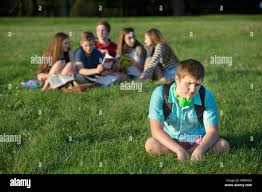
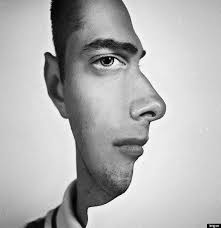
Body language plays a critical role in this process because it shapes how emotions are interpreted and understood (1). Subtle changes in posture, like leaning forward or pulling away, can signal interest, confidence, discomfort, or fear (1). These physical cues provide context that spoken language alone cannot fully capture, which is why audiences often rely heavily on what they see rather than what they hear (2). Facial expressions strengthen this communication even further, as they are one of the most immediate and recognizable ways humans identify emotion (1). Expressions such as a furrowed brow or a genuine smile can quickly communicate complex emotional states without explanation (1). Since many of these expressions are universal, they allow movement-based storytelling to cross cultural and language barriers, making it accessible to a wider audience (1).

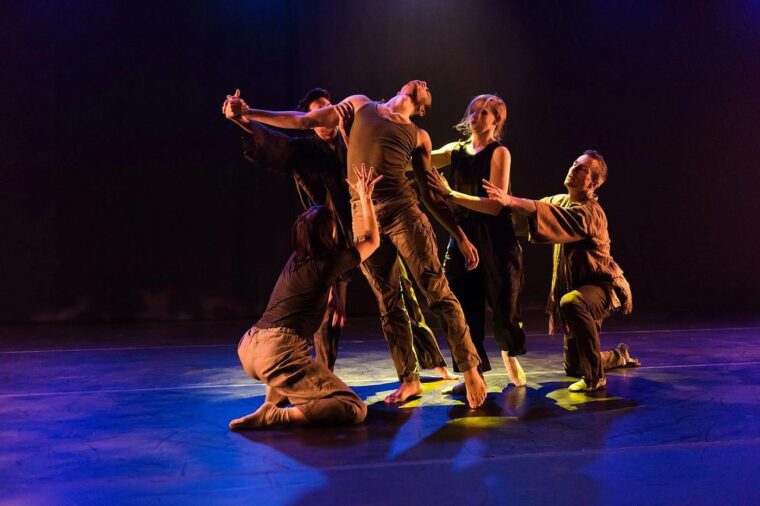
In dance and performance, movement becomes even more impactful because it is intentional and stylized, meaning every action is designed to communicate something specific (4). Dancers use elements such as timing, energy, and space to shape meaning, allowing them to express abstract ideas like struggle, freedom, or identity (4). This level of control turns simple movement into a complex storytelling tool. Additionally, dance as an art form uses the body as a primary instrument of expression, combining movement with rhythm and structure to communicate ideas and emotions (5). This creates a layered experience where meaning is built through physical motion, timing, and interaction with music or space (5). Because of this, the audience is not just hearing a story but feeling it through visual and emotional cues. Movement is especially effective at expressing complex or difficult-to-verbalize emotions, such as inner conflict, vulnerability, or emotional intensity (4). These types of feelings are often too nuanced to fully explain with words but can be communicated more clearly through changes in movement quality, such as sharpness, fluidity, or tension (4). This allows performers to express deeper emotional experiences in a way that feels more real and less limited than language.

Overall, movement communicates emotion and meaning through a combination of physical expression, emotional authenticity, and audience interpretation (1, 5). Because it engages both visual and emotional understanding, it creates a deeper and more immersive experience for the audience compared to spoken language alone (2, 3). This helps explain why storytelling through movement and performance can have such a strong and lasting impact.
For my next research round, I will be researching more on the side of Audience Impact. This will help me get closer to fully answering my inquiry question. Understanding the reaction is just as important, as there are always two sides to communication
Article 1: https://www.verywellmind.com/understand-body-language-and-facial-expressions-4147228
Article 2: https://www.helpguide.org/relationships/communication/nonverbal-communication
Article 3: https://www.in-mind.org/article/how-body-language-helps-us-understand-other-peoples-emotions
Article 4: https://danceabilitymovement.com/communication-expression-staying-connected-through-dance/
Article 5: https://www.ido-dance.com/news/news-details/DanceAsArt/