

Hi, welcome back to my blog! I’m making a timeline of conflicts in the Middle East to answer the question: Why is there conflict in the Middle East, and how did it get that way? By looking at major historical events and what’s happening now, I hope to understand the roots of these conflicts and what impact they might continue to have in the future.
In my last post I looked at early history in the middle east and the main causes of the conflicts of the era. I went through how the ruling has changed and what land had been conquered and by who. I saw how the having constantly changing rulers and the influence of different religions and cultures have shaped the culture to what we see today. there were local village and tribal warfare, city‑state rivalries, civil wars and rebellions, regional invasions, empire‑wide conquest campaigns. Most were caused by the competition for resources, trade, political power, survival, religion and the whole Holy land issue.
In this post I’ll be continuing the timeline and looking at what events shaped the middle east and its conflict during the 20th century. Notably WW1, WW2 and America’s earlier implication.
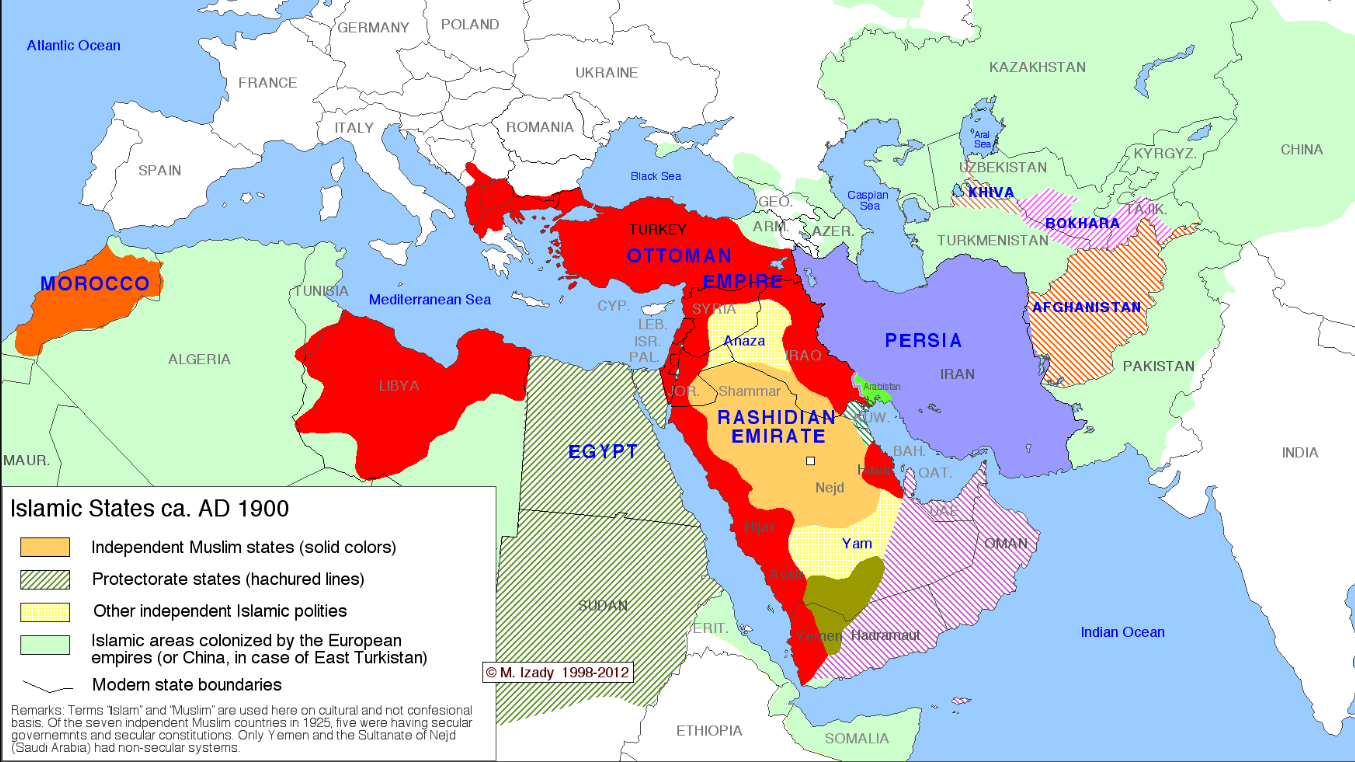
WW1 had many effects on the middle east one of the biggest ones being the results of the fall of the ottoman empire in 1922. (2) The time the Ottoman Empire had ruled much of the middle east for centuries. After the fall the empire was divided into many smaller territories and mandates, under the power of France or Britain. This was the start of a period of colonialism and foreign intervention, which continues today. This division created many new nation states: Iraq, Jordan, Syria, and Lebanon. The borders of these new states were drawn without though at the region’s ethnic, religious, and linguistic differences. This was the source of much conflict later. (1)
WW1 caused:
- Rise in Nationalism
- Economic Decline
- Religious Tensions
- Armenian Genocide
The division of the Ottoman Empire followed by European intervention sparked a rise in nationalism. People wanted independence from foreign powers which caused a rise in modern leaders. The war disrupted trade which in turn created food shortages. Conscription, famine and the millions of people who were displaced during the war also accumulated to the economic decline. The new borders and nation states brought together groups who had never lived together, they were often governed by a minority meaning that the people were accurately represented. For example, in 1921, Iraq was created. this new state brought together Sunni Arabs, Shiite Arabs and Kurds which had historically lived separate. Now they lived together, governed by a Sunni Arab minority. Situations like this caused ethnic and religious tensions which would spark conflict later. During WW1 the ottoman empire saw the Armenian population like the treat. So, in 1915 they created a campaign of deportation and extermination of the Armenian population in the region. This led to a 1.2 million Armenian deaths, making it one of the earliest modern genocides. (1)

The rise in nationalism, the economic decline and the religious tension in this period is what caused many revolts, rebellions and wars of independence in between the two world wars. Some of the main events included: Turkish War of Independence, Iraqi-Kurdish conflicts revolts in Palestine, Syria, and Iraq, the Great Syrian Revolt, Sheikh Said rebellion.
On Sep 1, 1939, WW2 began and had huge effects on the middle east. The colonial interest from both sides of the alliances, had impacts economically and socially both short term and long term. The war had weakened Great Britan’s and France’s power over the middle east, as was seen with the new uprises due to the nationalist movement. At the same time both sides of the alliances wanted control over the middle east for strategic reasons. In the Axis power it was mostly Germany and Italy. They wanted to take the power from Great Britan. By growing the sentiment of nationalism that was already present due to the event I’ve detailed previously they were able to rally together Arab nationalists. Hitler stated that the Arab freedom movement was the Axis powers “natural ally against England”. During WW2 oil was crucial for military operations, so the middle east’s resources more important as the war raged one creating even more interest from forgeman powers. the war also affected the identity of the people as groups became more polarized by fascism, nationalism, and anti-colonialism influences of local politics and social movements. (3)(4)
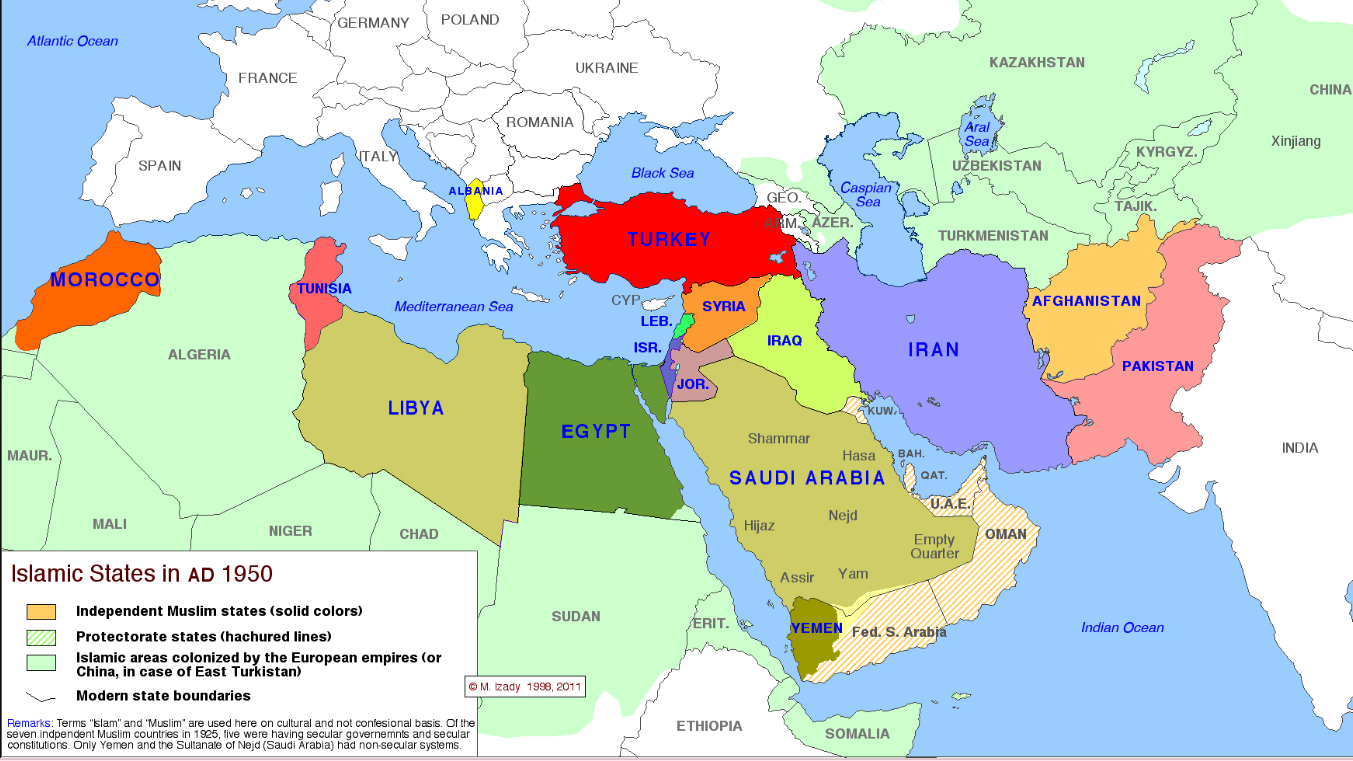
The end of the war also sparked many conflicts and long-term consequences. The establishment of Israel in 1948 as well as Palestinian displacement, which were directly influenced by politics and decisions from the war. The cold war also had effects on the middle east’s identity and politics. After the war there were even more independence movements catalyzed. (4)
After the war there were many conflicts in the 20th century The 1956 Suez Crisis happened when Egypt took control of the Suez Canal. Great Brittain, France, and Israel attacked, but they were forced to withdraw, this shows the decline of European control in the region. The 1967 Six‑Day War: Israel fought Egypt, Syria, and Jordan, they got territories like the West Bank and Gaza, which created the modern borders of the Israeli‑Palestinian conflict . The 1975–1990 Lebanese Civil War involved Christian and Muslim militias, Palestinian groups, and foreign powers like Syria and Israeal. It destroyed Lebanon and led to the rise of Hezbollah. The 1979 Iranian Revolution overthrew the Shah and created an Islamic Republic , turning Iran toward religious rule and reshaping regional power. The 1980–1988 Iran‑Iraq War began when Iraq invaded Iran to seize disputed land. In the end no one won and most countires were weaker. The 1990–1991 Gulf War started when Iraq invaded Kuwait. then the US pushed Iraqi forces out this increased the long‑term American military presence in the region. The 1987–1993 First Intifada was a Palestinian uprising against Israeli occupation in the West Bank and Gaza. (7)(8)(9)
That was alot of information, to make it simpler to see the causes of conlficts here’s a list every thing that caused a conflict mentioned in this post:
- Constantly changing rulers and empires created long‑term competition for land, resources, and power
- Religious and cultural differences shaped identity and fueled early conflicts
- Competition for trade routes and resources caused repeated wars and invasions
- Fall of the Ottoman Empire left a vacuum and broke the region into new states
- Poorly drawn borders after WW1 forced different ethnic and religious groups together, creating tension
- European colonial control (Britain & France) caused resentment and anti‑colonial revolts
- Rise of nationalism pushed groups to fight for independence and self‑rule
- Economic decline, famine, and displacement increased instability
- Armenian Genocide created trauma and long‑term ethnic tension
- foreign interest in ressources (WW2 = oil + stratagie)intensified outside interference
- Spread of fascism, nationalism, communist and anti‑colonial ideas reshaped political identities
- Creation of Israel and Palestinian displacement became a major source of ongoing conflict
- Cold War influence deepened divisions through U.S. and Soviet involvement
- WWI and the Middle East | National WWI Museum and Memorial
- Ottoman Empire – Dissolution, Fall, Legacy | Britannica
- HIST 570: The Middle East After World War II | Department of History
- Fighting World War II in the Middle East
- Wars Fought in the Middle East Timeline 499 BCE-Present Day | TheTimelineGeek
- The Six Days War | Facts, Summary, Overview, The End & Consequences
- Suez Crisis | Definition, Summary, Location, History, Dates, Significance, & Facts | Britannica
- Six-Day War | Definition, Causes, History, Summary, Outcomes, & Facts | Britannica
- Iranian Revolution (1979) | Summary, Causes, Effects, Islamic Republic, Ayatollah, & Facts | Britannica