
Hello, and welcome to my blog post #4. In this post, I will be talking about how much sleep normal students actually get, and how it compares to the amount of sleep they are supposed to get. I will also look at studies and surveys that show real data to see how many hours of sleep normal students usually get during the week.

How much sleep are students supposed to get?
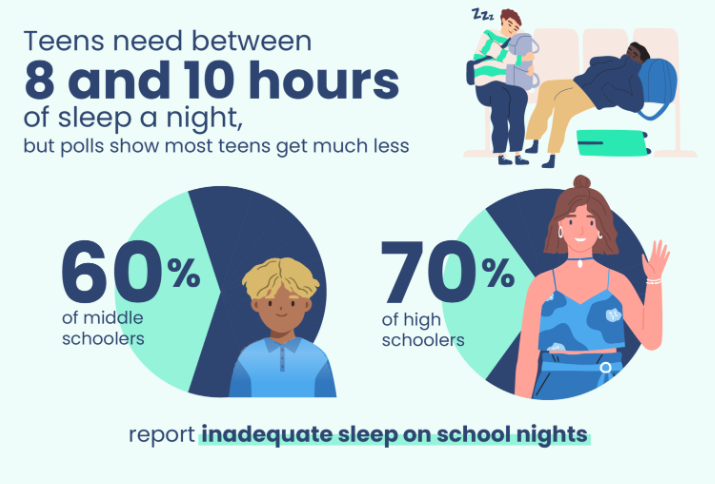
To start, I am going to talk about how much sleep students are supposed to get. So, everyone knows students need a certain amount of sleep for their brains to work properly. Teenagers should get 8–10 hours of sleep every night to stay healthy and focused (1). This amount of sleep can help the brain remember stuff and stay alert during school. Without enough sleep, students may feel tired, stressed, or unable to concentrate during class. This recommended amount of sleep is based on how much our brain needs to function at its best (2). So, when students don’t get the sleep they need, their brains struggle to keep up with their homework, which affects their learning and focus (4).

How Much Sleep Do Students Actually Get?
Even though students are supposed to get 8–10 hours of sleep, most students don’t even come close to that amount during the school week. Many students only get 6–7 hours of sleep on school nights, and sometimes even less (1)(4). For example, one survey I read found that over 70% of high school students do not get the recommended amount of sleep during the week (4). This means that most students start their day already tired from the night before. Homework, sports, stress, and staying up late on phones or doing homework make students sleep much less than they should (2). When students stay up late, their brains don’t have enough time to reset from the day before, which can cause “brain fog” the next morning (3). This can make it harder to think, remember information, or even stay focused in class.

How does the difference in sleep affect students’ school Performance?
So, as you have learned, there is a big difference between how much sleep students should get and what they actually get; this affects how well they do in school. Students who get enough sleep at night are more awake during class, remember information better, and perform better academically (2). They are also more likely to finish their assignments on time, participate more in class, and understand the material. But students who sleep less than the recommended time often struggle with focusing, remembering instructions, and feel more stressed in or out of class (1)(4). For example, a tired student may need to reread the same sentence over and over because their brain is too tired to concentrate (3). Sleep also affects students emotionally. Students who get enough sleep feel calmer and more confident, while tired students can feel more irritated or stressed (2)(3). When students don’t get enough sleep, their brains cannot work at their full power, which can affect everything (1)(4). This shows how important sleep is for students’ success in school.
References
Brain Basics: Understanding Sleep | National Institute of Neurological Disorders and Stroke (1)
How Much Sleep Should A Teenager Get? | Sleep Foundation(2)
The Glymphatic System: How Your Brain Washes Itself During Sleep (3)