
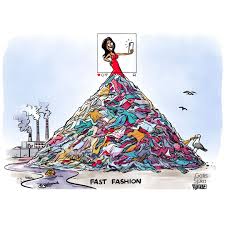
In this blog post, I am going to be talking about the environmental impacts of overconsumption, and how constantly buying more than we need is damaging our planet. In today’s society, overconsumption has become very common because of advertising, social media, fast trends, and the easy access to cheap products. While buying new things may seem harmless, the environmental effects are extremely serious and continue to grow every year.

One of the biggest environmental impacts of overconsumption is the large amount of waste that is produced. People often throw away products long before they are actually unusable, especially clothing, electronics, and plastic items. Because of this, landfills are filling up at extremely fast rates, and many of the materials are taking hundreds of years to break down (1). Plastic waste is especially harmful because it often ends up in oceans and rivers where it can harm wildlife and ecosystems. Many animals mistake plastic for food or become trapped in waste, which can lead to a serious injury or death. Overconsumption creates a cycle where more products are constantly being produced and thrown away, increasing pollution and environmental damage.

Another major issue caused by overconsumption is the overuse of natural resources. Producing products requires huge amounts of water, energy, trees, minerals, and fossil fuels. As consumer demand continues to rise, companies must extract more resources from the environment in order to keep up with production (3). This can lead to deforestation, habitat destruction, water shortages, and the depletion of nonrenewable resources (7). For example, large areas of forests are cut down to create farmland, produce paper products, or gather raw materials for manufacturing(7). This not only destroys ecosystems but also reduces the number of trees that absorb carbon dioxide from the atmosphere.

Overconsumption also contributes heavily to climate change. Factories, transportation, and power generation release large amounts of greenhouse gases into the atmosphere during the production and shipping (1). The burning of fossil fuels for manufacturing and transportation increases carbon emissions, which trap heat in the atmosphere and raise global temperatures. As a result, climate change is causing more extreme weather events, rising sea levels, droughts, and wildfires around the world (7).

Fast fashion is another example of how overconsumption harms the environment. Clothing companies produce massive amounts of cheap clothing very quickly to keep up with constantly changing trends. Many people buy clothes they only wear a few times before throwing them away and replacing them with newer items. The fast fashion industry uses enormous amounts of water and energy while also creating pollution from dyes, chemicals, and textile waste (2). Large amounts of clothing end up in landfills every year because many fabrics are difficult to recycle or decompose. Social media trends and influencer culture often make this problem even worse by encouraging people to constantly buy new outfits and keep up with trends.

Electronic waste, also known as e-waste, is another growing environmental problem connected to overconsumption. Many people frequently replace phones, computers, and other electronics even when the older devices still work. Electronics contain harmful materials and chemicals that can leak into soil and water if they are not disposed of properly (4). As technology continues to change, more electronic devices are being thrown away every year, adding to the growing waste problem.

Overall, the environmental impacts of overconsumption are extremely serious and affect ecosystems all around the world. Overconsumption leads to pollution, climate change, habitat destruction, and massive amounts of waste. Many companies continue producing products at very high rates to meet consumer demand, while advertising and social media encourage people to constantly buy more than they actually need. Learning about the environmental effects of overconsumption is important because it helps people understand how everyday choices can impact the planet. By making more sustainable decisions, such as reducing waste, reusing products, recycling, and only buying necessary items, people can help reduce the harmful environmental effects caused by overconsumption.
Sources
(1) https://www.nature.com/articles/s43017-020-0039-9
(3) https://link.springer.com/article/10.1186/s12940-018-0433-7
(4) https://www.nature.com/articles/d41586-022-02914-2
(5) https://www.mdpi.com/2073-4441/14/7/1073
(6) https://www.tandfonline.com/doi/full/10.1080/15487733.2024.2381871
(7) https://www.sciencedirect.com/science/article/pii/S1361920919314002

Hi Sydney!
This is a very well structured and informative blog post! I really enjoyed how you covered so many different angles of overconsumption that happens all around the world. It was cool to me to see how overconsumption can be from fast fashion to e-waste. I love how you intersected your main point with social media as certain influencers can contribute to this existing problem. I found it very interesting because it connects the environmental issue to something most people interact with every day without realizing the impact. I found a source you may find helpful as it mainly focuses on how larger corporate production and advertising is feeling and promoting over consumption.
https://www.google.com/url?sa=t&source=web&rct=j&opi=89978449&url=https://www.plasticpollutioncoalition.org/blog/2024/11/20/buy-now-how-big-brands-are-trashing-the-planet&ved=2ahUKEwjV5t6Yk9-UAxWOOTQIHZSRAbcQFnoECB4QAQ&usg=AOvVaw1lDcXZP6iIlcvliO8pc79D