
Does society impact fashion or is it the other way around? Hi I’m Lina and this is my third and final round of research to answer this question. Previously I researched the 60’s-80’s and found that women’s fashion helped impact their fight for freedom. Then I researched fashion in the early 2000s and how it was affected by societal beauty standards. For my final round of research, I will be looking at fast fashion and micro trends in the 2020s and whether it’s rooted in our societal behavior.

I will be researching 3 main points to find the answer to my question are the rise of social media and how that affected consumerism, how micro trends are erasing individuality and the affects these choices are having on our planet. Finding the final answer to this round will give me my deciding point to decide if society impacts fashion or if it’s the other way around.

Social media, which may seem like a harmless place for cute cat videos, is actively changing the way our brains work (1). 85% of Gen-Z are influenced by social media to make a purchasing decision (1) and 50% of consumers look to influencers before buying a product (1).

But how are these habits created? Social media platforms are specifically designed to attract customer attention (2). The algorithms use demo and physiographic to get consumers’ attention (2) and businesses utilize this feature to get consumers to spend more (2).

Consumer behavior is impacted by 3 main factors (3). The first is peer influence, when someone you look up to or aspire to be is posting themselves with a certain product (3), to feel validation from this person consumers would be more likely to purchase said product (3).

This brings me to the factor, emotional connection (3). When this customer buys the product, they will also feel more connected to the person selling it and the version of themselves they aspire to be (3). The final factor is cultural influence (3). When something is popular or seems to be based on social media customers will be more likely to purchase to feel ‘up to date’ (3). Based on the fast-paced nature of social media trends circulates at a quicker rate. To avoid feeling left out consumers will purchase these popular items at the same rate. This leads to more rapid purchasing and consumption.

But how do ever-changing trends on social media affect fashion? Through each video, a user sees a fragment of another’s personal style (5). With each video a consumer sees a new piece of who they could become (5). When each person’s style is being turned into an ‘asethetic’, the trends move faster than ever before. (5).

The ‘cool girl’ is no longer a person in our school but an unreachable identity. Every person’s social media has a slightly different perception of this ‘cool girl’ but no matter how hard anyone tries it can’t be obtained.

In the end, everyone ends up with barrel jeans and crochet tops in the back of their closet (5). With the more trends that are popularized through social media, the more clothes end up being purchased to keep up (5).

This impacts the fashion industry and brands that used to debut 2 fashion lines a year have up to 52 yearly collections (6).

And the more consumers buy into these short trends, the more their individuality gets erased (7). The more people consume content, the more they try to replicate it (7). This eventually becomes a world where everyone is wearing the same thing, which effectively kills our personal fashion identities (7). The clothes we wear no longer have more meaning than, “I saw this brand on TikTok” (7).

While social media can be a useful platform for spreading fashion knowledge and showing cute outfits, we must make sure we are buying clothes for the right reasons (7). No matter what an influencer tells you A $50 workout set won’t make you healthy, and a $90 dress won’t make you happy (7).

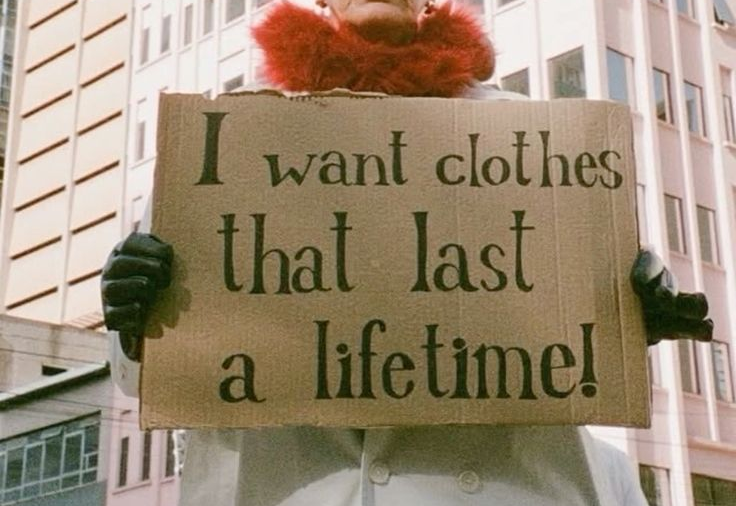
These microtrends are all fun and games for now. We can buy the new ‘in’ thing and when it’s inevitably ‘out’, we’ll replace it with something else. When we’re done with them, these things have to go somewhere, and that somewhere is probably a landfill. The definition of overconsumption is when humans use more resources than they can produce (8).

We live on a planet with limited resources and limited space (8). If we continue consuming at our current rate, we will use all of our resources and effectively destroy our planet (8). We need to be more conscious of what we are purchasing. Microtrends and the way we are consuming fashion currently can lead to serious harm on our society.

To conclude, social media in the 2020’s has created a rise in consumerism in the fashion industry. This helped micro trends and fast fashion gain popularity. These choices are affecting our planet and our lives in the future.

In this round of research, I found a multitude of answers to my question. The societal change of the implantation of social media changed the way we consume, which changed the fashion industry. On the other hand, through using social media as a tool, fashion influencers were able to show off their style, which led to a shift in their viewer’s fashion. This created the popularity of ‘microtrends’ and is currently contributing to overconsumption.

I think it is nearly impossible to decipher which answer is the truth. If I have learned anything from my previous blog posts, it’s that fashion and society are so closely linked. I think fashion both impacts and is impacted by societal events, and it holds more power than we believe. I personally think we should be more mindful of what we wear as there is almost always a deeper story behind each garment.

Thank you for reading my final round of research for my question “Does society impact fashion or is it the other way around?”. I hope to see you next time for my reflection!