
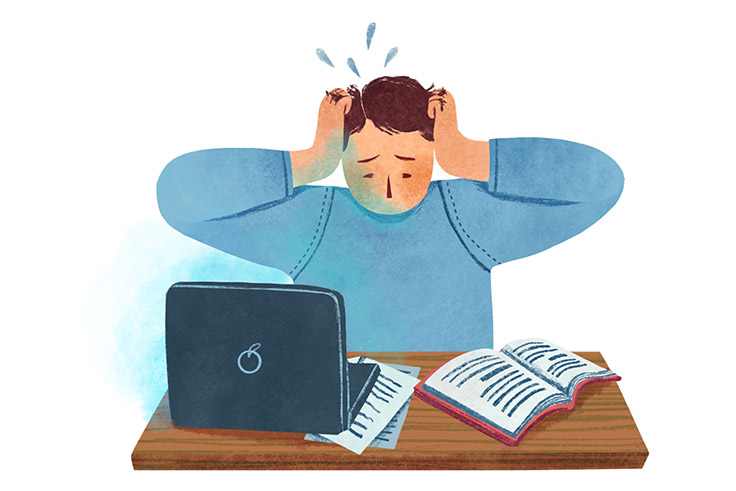
My third round of research will be centred around the strategies students can use to keep stress levels healthy. I will be looking into the consequences of extra stress, and ways students can reduce its effect on their daily lives. My goal with this round is to provide healthy ways for fellow students (and myself) to manage stress levels.
- Learning to manage and control stress in your life can greatly improve your mental health and well-being.
- There are a variety of ways for students to cope when feeling stressed about school. Some strategies include:
- Identifying resources. Reaching out to someone like a parent, teacher, friend, or counsellor is always a great way to find support.
- Reducing demands. Asking for extensions on stressful assignments or homework and prioritizing tasks can help reduce the weight of everything and help you organize your work.
- Practicing self-care. Eat regular and balanced meals, engage in physical activity, and get an appropriate amount of sleep to reduce stress symptoms.
- Focus on what is within your control. Let go of the things you have no power over, and try to focus on making changes where you can (1).

- Keeping a journal is a great way to vent and identify emotions.
- Limiting excess caffeine in soft drinks or coffee can help as well.
- Making time to do fun things and spend time with family and friends is a wonderful way to unwind when stressed.
- Learning to recognize and prepare for stressful periods can greatly reduce the load and help students feel less overwhelmed when this time arrives (2).

- Excessive academic pressure may contribute to overall stress and have negative effects, but there are coping strategies students can use to combat it.
- Arranging a study group. This can be especially helpful if a student isn’t motivated by a subject. It helps to be like a reward after completing each section of the assignment.
- Work in a café or library. The home or school environment can sometimes get distracting. Working somewhere quiet, like a nearby café or library, can help one focus and get work done.
- Request for assignments early. If students can get ahead of their work, it may save them the trouble of stressing over assignments that pile up later on.
- Avoid comparing to others. Students should try not to judge themselves based on their friends’ and classmates’ goals and achievements. Adolescents can set their own goals and take pride in their hard work.
- Remember what matters. Parents and guardians can shape how academic pressure affects their children by focusing on what really matters. Adolescents who believe their parents or guardians value character traits more than achievement tend to show better mental health outcomes and lower risk-taking behaviours (3).

- A proper schedule is very important for effectiveness and proper time utilisation.
- A proper routine lets students work effectively according to the time which helps to reduce work pressure, helping them manage stress and anxiety.
- Improper routines can cause students to panic in any situation and find it tough to utilise the time. A proper study schedule allows students to cope with the stress and study effectively without any difficulty.
- Listening to music is an incredible way to reduce stress, as music has the ability to enhance cognitive skills. Listening to music can calm the body and mind as well as enhance students’ mental health.
- It depends upon every individual which music helps them to stay relaxed and less stressed (4).

- Identifying stressors can help you figure out what’s really going on and how to deal with it in a way that works for you. You can try asking yourself these questions.
- What are the specific things that are making me stressed right now?
- Why are these things stressing me out?
- What can I do to make these things more manageable?
- After answering these questions, you might still feel stressed, but understanding where that stress is coming from and creating a plan to tackle it helps to make it more manageable. There’s no immediate fix to stress, but there are strategies that can help how you approach it (5).

- Plan your day. Use a calendar or planning app to keep track of your daily schedule. Fill in your class times, tests, and when assignments are due. Add your activities. Block in times to study for tests and work on assignments. Block in times to do things you enjoy. Having a plan and a daily routine lowers stress.
- Use the positive energy of stress. Don’t put things off until the last minute. It’s hard to do your best if you’re in a rush. Instead, let the stress motivate you to get moving on a task. If you have a deadline, give yourself a positive mental push. Think, “OK, I’ve got this.” Then go ahead and get started.
- Deal with problems as they come up. Don’t ignore everyday problems, but don’t stress out about them either. Instead, figure out how to handle them (5).
- Think right. Try to develop a positive attitude of “realistic optimism.” For example, believe that good things can happen and note good things when you see them. Also, pay attention to your own “self-talk” and see how the positive versus negative messages stack up. You can decide to increase the positive messages you send yourself.
- Let friends and family know how you’re feeling. It can feel good to talk, and they may have ideas that can help you to cope with a difficult problem or situation (6).
- Try a grounding exercise to connect to the here and now. Grounding techniques can help you anchor your mind and body to the present moment, especially when you’re feeling overwhelmed. It’s about feeling more attached and in tune with your current environment (as opposed to the flurry of thoughts and feelings you may be experiencing). To ground yourself, try to focus on relaxing your muscles.
- Breathing in specific ways can make a surprisingly big impact on how you feel. Taking some deep, slow breaths when we need to can help us calm down when we’re feeling swamped. A breathing exercise can allow your mind to focus on just one thing — breathing — while letting other thoughts and feelings slow for a few minutes (and not boil over). You may be surprised at how well this works when your mind is running away with you (7).
Thank you for reading!
References:
- Hammond, D. (2023). Dealing with school stress: its causes and how to manage it. ThriveWorks. https://thriveworks.com/help-with/stress/why-is-school-so-stressful/
- Reynolds, P. (2023). Managing Stress in High School. Harvard Division of Continuing Education. https://summer.harvard.edu/blog/managing-stress-in-high-school/#What-are-the-Best-Techniques-to-Help-Students-Manage-Stress
- Vallejo, M. (2023). Academic Pressure: Causes, Effects, and Coping Strategies. Mental Health Center Kids. https://mentalhealthcenterkids.com/blogs/articles/academic-pressure
- Pal, R. (2026). Top 7 Causes of Stress in Students and How to Manage Them. 21K School. https://www.21kschool.com/in/blog/causes-of-stress-in-students/#Ways_to_Overcome_Students_Stress
- University of Waterloo. (nd). How to cope with stress and stay motivated. Retrieved from https://uwaterloo.ca/future-students/missing-manual/wellness/how-deal-stress-healthy-ways
- Canadian Mental Health Association Ontario. (nd). Understanding and Finding Help for Stress. Retrieved from https://ontario.cmha.ca/documents/understanding-and-finding-help-for-stress/
- Kids Help Phone. (2021). 10 Ways to Cope with Feeling Overwhelmed. Retrieved from https://kidshelpphone.ca/get-info/im-feeling-overwhelmed-what-can-i-do-to-feel-better/?utm_source=google&utm_medium=paidsearch&utm_campaign=feel-out-loud&utm_content=overwhelmed&gad_source=1&gad_campaignid=22375979695&gbraid=0AAAAADfk3MFHBEoQgVtRnCTGyYyj_E8et&gclid=CjwKCAjwt7XQBhBkEiwAtStpp-_RBsyPADryFZyhSaiE2q-ZeV0FghJzHU3q9W1ztRK_DsshraJv3RoCr8oQAvD_BwE
Hi Kylie, I enjoyed reading your post. I appreciated your in-depth information, on-topic images, and the examples/strategies that you incorporated for students to manage their stress. Something you could add for your presentation is your personal connection to this question/topic, such as how stress has affected your own learning journey or daily life and whether you were able to manage it and how. This would make your presentation feel even more relatable and engaging. Great job on your post and good luck on your presentation!
Here is a source that might help you add a few points for your final response
https://scienceinsights.org/how-does-stress-affect-academic-performance-the-evidence/