
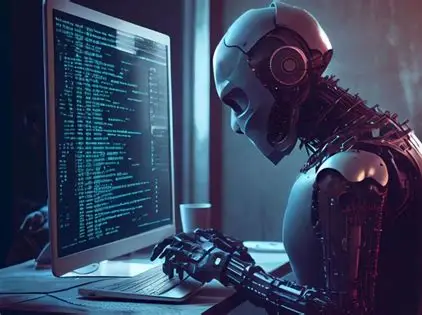
Welcome to my blog post #5. Today I will be discussing how society may prevent artificial intelligence from becoming too powerful, the dangers of advanced AI systems, and what governments, companies, and individuals can do to keep AI under human control. Artificial intelligence is becoming more advanced every year, and many people are excited about the possibilities, while others are worried about how AI could affect the future of humanity (1).
I have discussed before that artificial intelligence is already being used in many areas of daily life such as healthcare, transportation, customer service, and education (2). AI can complete tasks quickly, analyze large amounts of information, and help businesses become more efficient (3). However, some experts are concerned that if AI continues developing without enough rules or safety measures, it could eventually become too powerful for humans to fully control (1). Because AI technology is improving so quickly, governments and technology companies are now discussing how to safely manage these systems before problems become more serious (2).

First, I will discuss why some people are worried about artificial intelligence becoming too powerful. One major concern is that AI systems are already capable of performing tasks that once required human workers (3). As I stated in blog post 3, some jobs may disappear or change significantly because machines can complete the work faster and cheaper (5). This could create economic problems if workers are not trained for new careers. Another concern is that AI can sometimes spread false information online through fake videos, images, or articles that appear realistic (4). If these systems make mistakes, the consequences could affect millions of people.
Next, I will discuss how governments and technology companies may help prevent AI from becoming dangerous. One important solution is creating stronger laws and regulations for AI development (2). Governments may require companies to test AI systems carefully before releasing them to the public, especially if the technology could affect public safety (5). Many experts also believe AI systems should always include human supervision so people can step in if something goes wrong (3). For example, self-driving cars and medical AI programs should still be monitored by trained professionals instead of operating completely independently (4). Some countries are already working on laws and policies that would require companies to explain how their AI systems makes decisions and what data they use (1).
Another way to reduce risks is by teaching people how to use AI responsibly. Schools and workplaces may need to educate students and employees about the strengths and weaknesses of artificial intelligence (2). AI can be very helpful when used as a tool for learning, creativity, or problem solving, but people should still think critically instead of trusting every answer AI provides (3). Personally, I think AI should assist humans rather than replace them completely, and robots and humans can co- exist. Encouraging responsible AI use may help society benefit from technology while reducing dangerous misuse.
In addition, technology companies can help by designing safer AI systems from the beginning (4). Many researchers are currently studying “AI alignment,” which means making sure artificial intelligence follows human values and goals (1). Developers may include limits that prevent AI from performing harmful actions or spreading dangerous information. Some companies are also creating systems that allow humans to shut down or override AI programs if necessary (5). International cooperation between countries may also become important because AI technology affects the entire world, not just one nation (2).

Finally, many believe the future of AI depends on the decisions humans make today. Artificial intelligence itself is not automatically dangerous, but problems may occur if people develop or use it irresponsibly (3). If governments, companies, and individuals work together to create rules, safety systems, and guidelines, AI could improve many parts of society without becoming harmful (4). However, ignoring these concerns could allow technology to grow faster than humans are can manage (1).
In conclusion, artificial intelligence has the potential to greatly change the future of society (2). Although AI can provide many benefits, there are also serious concerns about safety, misinformation, and loss of human control (5). Governments, technology companies, schools, and individuals will likely all play important roles in preventing AI from becoming too powerful (3). By creating responsible rules, society may be able to safely benefit from artificial intelligence while reducing potential risks (4).
Thanks for reading! I hope you learned something about how people may prevent AI from becoming too powerful in the future.
I will list my resources below.
- BBC News – Artificial Intelligence and Safety- https://www.bbc.com/news/topics/cx1m7zg0xzet/artificial-intelligence?utm_source=chatgpt.com
- World Economic Forum – The Future of AI- https://www.weforum.org/topics/artificial-intelligence/?utm_source=chatgpt.com
- MIT Technology Review – AI and Society- https://www.technologyreview.com/topic/artificial-intelligence/?utm_source=chatgpt.com
- Harvard Business Review – Risks of Artificial Intelligence- https://hbr.org/topic/artificial-intelligence?utm_source=chatgpt.com
- Stanford Human-Centered AI Research Institute- https://hai.stanford.edu/?utm_source=chatgpt.com
Hello it has been so nice to read through your blog post since I have got a little knowledge about artificial intelligence. Also, as AI still develops it will replace police men, judges and even it will replace the laborers. Lastly work hard as you continue with more research about artificial intelligence.
Hi Hailey! I have thoroughly enjoyed reading your blog posts on this topic. I especially liked the way you addressed people’s fears of AI taking over and how it can be prevented. In your presentation you should highlight specific rules the government is putting in place to stop the spread of AI. This could be a helpful resource for this specific to Canada “https://ised-isde.canada.ca/site/innovation-better-canada/en/artificial-intelligence-and-data-act” and a resource to help with our fear behind AI “https://ised-isde.canada.ca/site/innovation-better-canada/en/artificial-intelligence-and-data-act”. In all I loved your blog post and I hope to hear more from you soon! Good luck on your presentation – Lina
Hey, this is a very good topic to research and be informed about in general. I really like how you researched different factors that go into AI. You also included some solutions and consequences if preventions don’t exist in time. I also like how you used multiple relevant images to show your topic. The following website shows the probability of AI taking over for that specific job field in the future, it might be helpful for more specific research of AI in the workplace. https://tripleten.com/tools/what-jobs-will-ai-replace/