
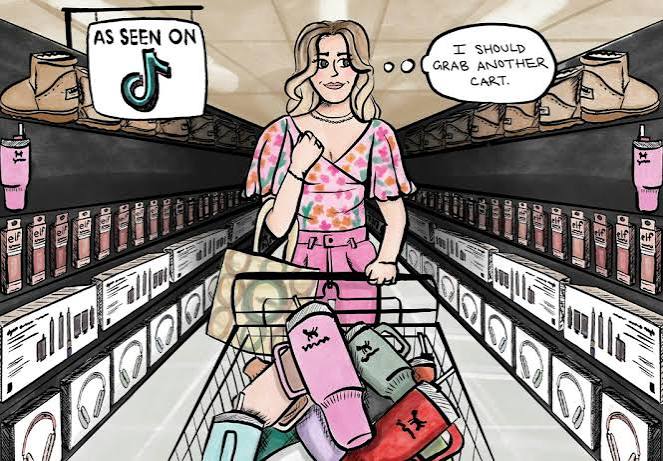
Throughout this inquiry project, I learned that overconsumption is much more complex than simply buying too many things. Before starting my research, I understood that waste and excessive shopping could negatively affect the environment, but I did not realize how big these issues really are. By researching fast fashion and textile waste, consumer culture and advertising, and the environmental impacts of overconsumption, I developed a much deeper understanding of how companies and our choices contribute to environmental damage.

One of the most interesting topics for me was fast fashion and textile waste. I learned that the clothing industry not only produces an enormous amount of waste, but also consumes huge amounts of water and energy while contributing to pollution. It was also interesting to read about the poor working conditions that many workers face in order to meet the demand for cheap clothing. This topic helped me realize that the low prices and convenience consumers often focus on come with huge environmental costs.

Researching consumer culture and advertising helped me understand why overconsumption has become so normalized in society. I found it interesting to learn how advertisements, social media, and influencer culture encourage people to constantly purchase new products by creating feelings of pressure, comparison, or fear of missing out. This was especially relevant to me because many of these influences target people my age. It made me reflect on how often I have wanted something simply because I saw it online or because it was trending, rather than because I actually needed it.

The environmental impacts of overconsumption were the most meaningful part of this inquiry because they connected all of the topics together. Learning about pollution, climate change, and the effects on wildlife and ecosystems showed me that overconsumption has consequences that extend far beyond individual purchases. I realized that every product requires resources to be produced, transported, and eventually disposed of, and these processes all contribute to environmental harm.

This project was personally important to me because I could relate it to my own experiences. In the past, I often bought makeup, skincare products, and clothing that I did not truly need, and many of these items ended up unused or bring thrown away. Through this inquiry, I became more aware of my own consumption habits and started thinking more critically about the choices I make as a consumer. Instead of making impulse purchases, I want to focus more on buying only what I need, using products for longer periods of time, and supporting more sustainable practices whenever possible.

Overall, this inquiry changed the way I think about overconsumption and my role within it. It helped me recognize that while large companies and industries play a significant role in this issue, individuals also have the ability to make more conscious decisions that can contribute to positive change. Most importantly, I learned that raising awareness about overconsumption is an important step in encouraging others to reflect on their own habits and consider how small changes can collectively have a meaningful impact on protecting our planet.