
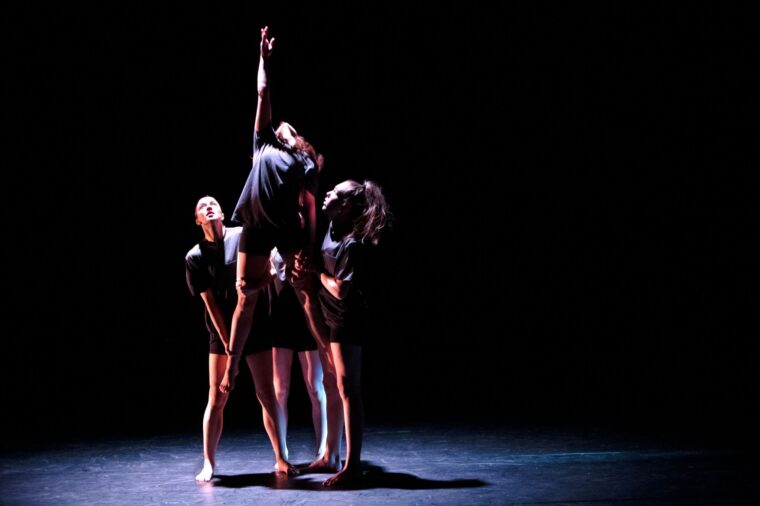
Hello everyone, and welcome back to my last blog post with my topic of “How does storytelling through movement and performance create a deeper impact than spoken language?” In this blog post, I will be reflecting the journey of my inquiry project, regarding challenges, and impact.
- What challenges did you overcome throughout this inquiry project? How did you go about
One of the biggest challenges I encountered during this inquiry project was finding sources that directly connected storytelling through movement to dance and audience impact. Since dance is such a broad topic, many of the sources I found focused on the emotions itself and body language, rather than specifically explaining how movement creates meaning and emotional connections with audiences through dance. This made it difficult to find research that directly answered my inquiry question.
To overcome this challenge, I broadened my research and looked at different sources from different fields, including dance, psychology, and nonverbal communication. Instead of searching only for information about dance storytelling, I combined all my ideas found from multiple sources to identify common themes about emotion, movement, and audience connection. This helped me piece together the information I needed and develop a stronger understanding of how movement can create meaning and impact audiences, even when there were limited sources that directly addressed my inquiry question.

2. How did this inquiry change the way you think?
This inquiry changed the way I think about the relationship between performers and audiences. Before this project, I mainly focused on the performers perspective in expressing emotions and telling their story. However, throughout my steps and my research, I discovered that audiences play an equally important role in creating meaning from a performance. People can interpret the same movement in many different ways based on their own experiences, emotions, and perspectives. This helped me understand that storytelling through movement is not always about communicating one specific message, but about creating opportunities for audience and performer connection. It helped me understand that the impact of a performance comes from both the performer and the audience working together to create meaning, making movement-based storytelling a unique and powerful form of communication.

3. How did this investigation impact your future decisions?
This investigation impacts my future decisions when it comes to performing. Typically, if I am having a rough day and I have to go on for a performance, I wouldn’t give it my best effort. Whether that is a recital, competition, drop in, or even a practice, you would be able to tell if I was exhausted and drained. This sort of emotion was really hard to leave at the door, and let go of, since it would be my only concern. However, this project helped me reconnect with the whole purpose of dance, to story tell. In the future, I want to give my all whenever it comes from performing, not only for my personal growth, but because I want the audience to have a connection. Whether its something small like smile, or if it’s a deep connection with lots of emotion, I want to be a part of that impact.

4. What impact will this investigation have on others locally and/or globally?
This inquiry has the potential to have an influence on both local and worldwide audiences by helping people better comprehend movement as a powerful form of storytelling. Locally, in dance studios and schools, it can inspire dancers and choreographers to focus on intention and emotional expression rather than skill alone. This can result in performances that feel more meaningful and engaging to audiences.
On a worldwide scale, it demonstrates how dance can communicate across language barriers. Since movement and emotion can be understood across nations, dance is reinforced as a universal human experience. This can also make an impact on people with disabilities. For example, people who are neurologically different are able to communicate with physical expression, such as body language, emotions, and reactions. This can also apply to people who are nonverbal or have difficulty expressing themselves through spoken language, as dance provides an alternative way to share thoughts, feelings, and experiences with others. Overall, this inquiry showed how movement-based storytelling can create emotional connections between artists and audiences worldwide.

Thank you all for reading this semester’s project! This course has taught me so much and I am so excited to keep diving deeper next year!