

Introduction
The world today is more connected than ever before. Through the internet, social media, international trade, and travel, people from different countries can easily communicate and share ideas. This has created what is often called a “borderless world,” where geographical boundaries have less influence on people’s daily lives. While this connection has brought many benefits, it has also affected the way people view and preserve their culture.
Cultural identityis the sense of belonging that a person feels to a particular culture or group. It is made up of shared things like language, traditions, beliefs, customs, values, and ways of life that connect people to their community and make them feel part of it.
Understanding Cultural Identity
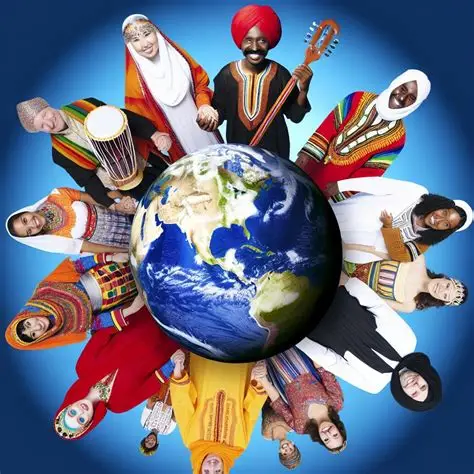
Cultural identity is the shared way of life of a group of people. It includes language, religion, food, dress, music, traditions, and social values. These cultural elements are usually passed down from one generation to another through families, schools, and communities.
Cultural identity is important because it helps people feel connected to their community and history. It also promotes unity and pride among members of a cultural group. Without cultural identity, people may lose their sense of belonging and connection to their roots.
Effects of Globalization on Cultural Identity
Sure — here are brief effects of globalization on culture:
1.Cultural similarity: Many places start to look and act the same due to shared global trends.
2.Cultural mixing :People adopt ideas, food, and lifestyles from different cultures.
3.Loss of traditions: Some local customs and practices become less important or disappear.
4.Language change: Global languages spread, reducing use of local languages.
5.Cultural awareness: People learn and understand other cultures better.
The Role of Technology and Social Media
1Technology and social media help people share culture, traditions, and experiences with others around the world.
2They can also help preserve culture by promoting local music, languages, and cultural events
3They can also expose people to foreign lifestyles, which may lead some to forget or replace their own traditions.
Strategies for Preserving Cultural Identity
1.Community participation: People should take part in cultural activities and pass traditions to the younger generation.
2.Promoting cultural education: Schools should teach students about local culture, history, and languages.
3.Supporting local languages: People should use and protect their native languages at home and in society.
4.Celebrating cultural events: Festivals, dances, and traditions should be encouraged to keep culture alive.
5.Using technology positively: Technology can be used to share and preserve cultural information.
Conclusion
The development of a borderless world has brought people closer together through technology, communication, and globalization. This has created opportunities for cultural exchange, learning, and economic growth. However, it has also created challenges such as the loss of traditional values, language decline, and cultural homogenization.
Cultural identity remains an important part of human life because it provides a sense of belonging, history, and community. Therefore, individuals, families, communities, and governments must work together to preserve cultural traditions while embracing the benefits of globalization. By promoting cultural education, preserving languages, celebrating traditions, and using technology responsibly, societies can protect their cultural identity and ensure that cultural diversity continues to thrive in the modern world.
Sources
- Stuart Hall (1996). Questions of Cultural Identity. Sage Publications.
- Anthony Giddens (2002). Runaway World: How Globalization Is Reshaping Our Lives. Routledge.
- John Tomlinson (1999). Globalization and Culture. University of Chicago Press.
- Arjun Appadurai (1996). Modernity at Large: Cultural Dimensions of Globalization. University of Minnesota Press.
- UNESCO reports on cultural heritage and cultural diversity.