
Inquiry Question: Why do certain memories stay with us longer than others?
For my first round of research, I wanted to understand how the brain creates, stores, and retrieves memories. I also wanted to learn about the different parts of the brain involved in memory, especially the hippocampus. Understanding how memory works will help me answer my inquiry question and explain why some memories last longer than others.
1. How does the brain create and store memories?
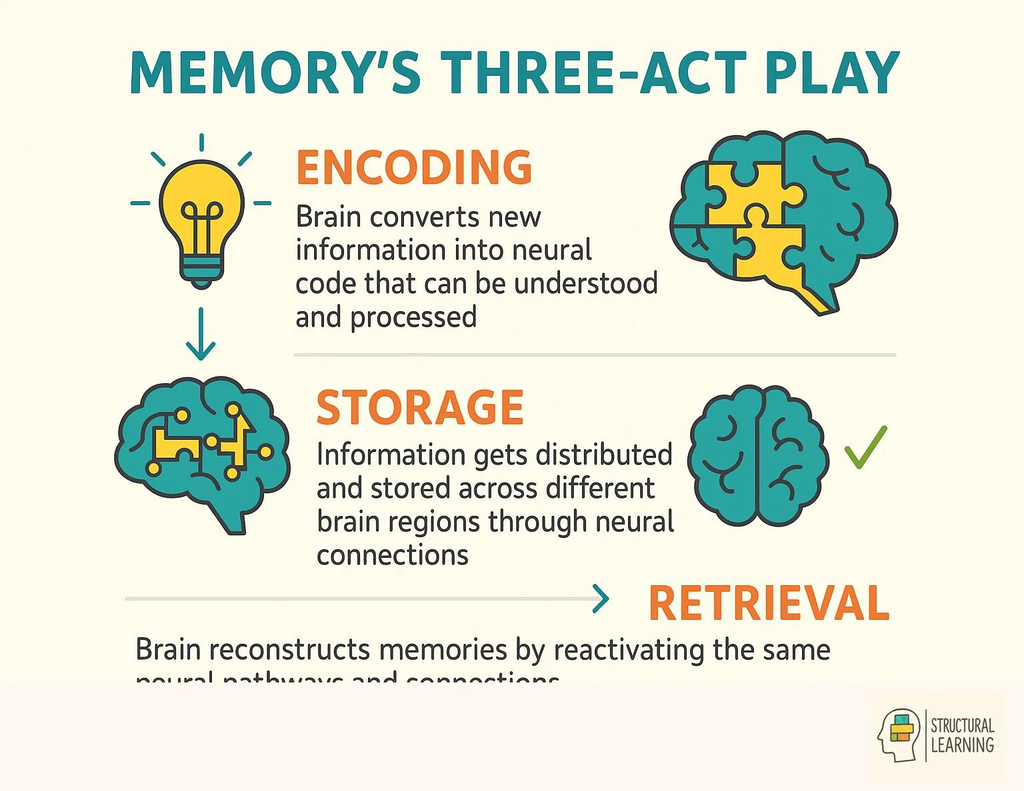
Memory is the process our brain uses to take in information, store it, and remember it later. There are four main stages involved in memory: gathering, encoding, storage, and retrieval. Gathering is when we receive information through our senses. Encoding is when the brain processes this information so it can be remembered. Storage is when the brain keeps the information for later, and retrieval is when we remember or access that information again. These stages work together to help us remember information and past experiences [1]. For example, when meeting someone new, our brain takes in their name, processes the information, stores it, and hopefully remembers it the next time we see them.
2. What parts of the brain are involved in memory?
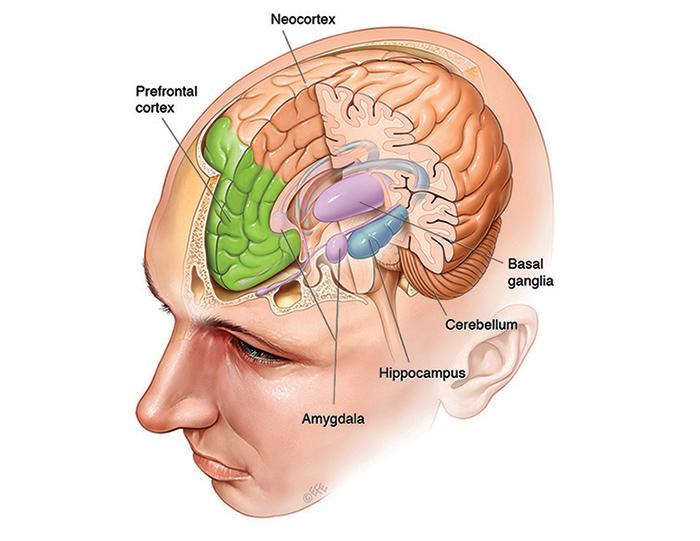
One of the most important parts of the brain involved in memory is the hippocampus. It is located in the temporal lobe and plays a big role in forming new memories and connecting different details of an experience. It helps organize new information so that it can become a long-term memory. However, the hippocampus is not the only part of the brain responsible for memory. Different parts of the brain work together to store different types of memories [2]. The prefrontal cortex helps with short-term and working memory, while the neocortex is involved in storing long-term memories. The amygdala is also important because it helps process emotional information connected to experiences.
3. How do memories become long-term?
When we experience something, groups of neurons (which are cells that communicate information throughout the brain) become active. Connections between these neurons can become stronger, making it easier for the brain to recognize and remember information in the future.Memories are formed through changes in the connections between neurons [3]. When connections are strengthened, the brain can reactivate similar patterns of activity when we remember an experience.Another important process is called memory consolidation. This is when new memories become more stable over time so that they can be stored and remembered later. Consolidation can happen over several days or weeks. It also becomes stronger when we access or remember information repeatedly [4] .
4. What I learned from this research
After researching how memory works, I learned that remembering something is actually a much more complicated process than I originally thought. Different parts of the brain have different responsibilities, and they all work together to help us remember information and experiences.I also learned that the hippocampus is especially important when forming new memories, but memories are not stored in just one part of the brain. They involve connections between many different brain regions. This research gives me a better understanding of how memories are formed and why some information is easier to remember than other information. For my next round of research, I want to explore how emotions and personal experiences affect memory and why certain moments can stay in our minds for years.
Thank you for reading!
References
[1] Cleveland Clinic. “Memory: What It Is, How It Works & Types.”
https://my.clevelandclinic.org/health/articles/memory
[2] Queensland Brain Institute. “Where Are Memories Stored in the Brain?”
https://qbi.uq.edu.au/memory/where-are-memories-stored
[3] Queensland Brain Institute. “How Are Memories Formed?”
https://qbi.uq.edu.au/memory/how-are-memories-formed
[4] University of California, San Francisco. “Memory.”
https://memory.ucsf.edu/brain-health/memory
