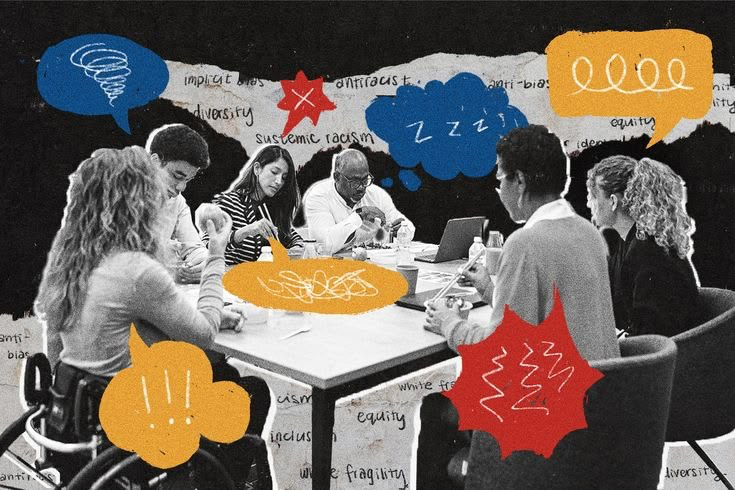
Have you ever been doing a group project or meeting someone new, and a person there is very honest with their words, and you and a friend could both leave with very different ideas on how it went? You might appreciate their honesty and straightforwardness while your friend may have thought they were being slightly rude. Both of you heard and experienced the same situation, so why did you two leave with such different impressions? For my first round of research, I will investigate how personality, personal values, and beliefs shape what we find to be unpleasant and magnetic.
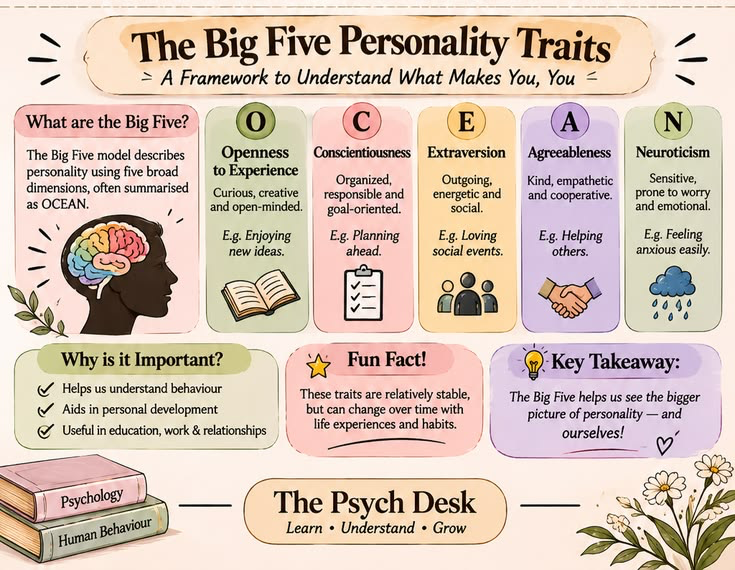
Personality shapes a person’s thoughts, feelings, and actions during different situations, which can affect their mental and physical health, relationships, and important life choices. (1) A personality model that will be useful when explaining this is the Big Five Model. This is a widely accepted psychological framework for measuring and describing the human personality into five factors (OCEAN). The five factors are Openness to experience, Conscientiousness, Extraversion, Agreeableness, and Neuroticism. (2) An example to show how personality can affect your impression of a person with a certain trait is by comparing two individuals, one who is high in the extraversion trait and one who is low in the extraversion trait (introversion). Psychologists Hans and Sybil Eysenck, who were personality theorists, theorized that extraverted individuals are social, very outgoing, and always ready to meet others, while introverted individuals are reserved, like their solitary time, and are less likely to interact with others. (3) If both these individuals met a very talkative person, the extraverted individual will find this person easy to connect with and will really enjoy their company. But if the introverted individual was with this person, they might find them really overwhelming and possibly even intrusive. Say instead they were meeting a person with a high introversion trait, the extroverted might find them awkward and maybe even rude for not replying to them, while the introverted would find their company very comforting and be glad they respect their silence as they are also respecting theirs. This is just a very simple example that still demonstrates how just one personality trait can change the impression of a person so much. It is also crucial to remember that human personalities are a mix of traits too, making everyone’s thoughts, feelings, and actions very different from one another, which can lead to an infinite number of ways people interact with each other.

Personal Values can influence what people admire as well. Values are established throughout one’s life and could constantly be changing. Factors affecting one’s values include geographical, climatic, political, economic, historical and legal variables. It also depends on cultural, institutional, and personality factors. Personal values can act like a filter; they can decide whether a personality trait will be considered positive or negative to that person. This can lead to very different views on the exact same trait because the difference in value hierarchies throughout a population is incredibly vast. (4) People can share the same values, but the hierarchies in which they place the values are what differentiates them the most. A way to illustrate this: imagine there is a group project that must be done. Two students who both value honesty and kindness work together. But one student values honesty over kindness, while the other is the opposite. The student who values honesty will be very blunt with their comments and feedback; to the student who values kindness, it seems like they are incredibly blunt, insulting their work, or calling it bad. The student who values kindness will focus on how their comment will make their partner feel, sugarcoating the situation a little. To the honest person, it may seem like they are lying, and since honesty is what matters most to them, this could seem very offensive to them. But if they were to be partnered with others that share a similar value hierarchy, they understand each other very well. (5) In this case, the difference in value priorities can make these two students not get along very well. But, in general, if two people share similar value priorities, they will find it very easy to get along with, but if two people have opposite value priorities, they might think very negatively of each other. (6)
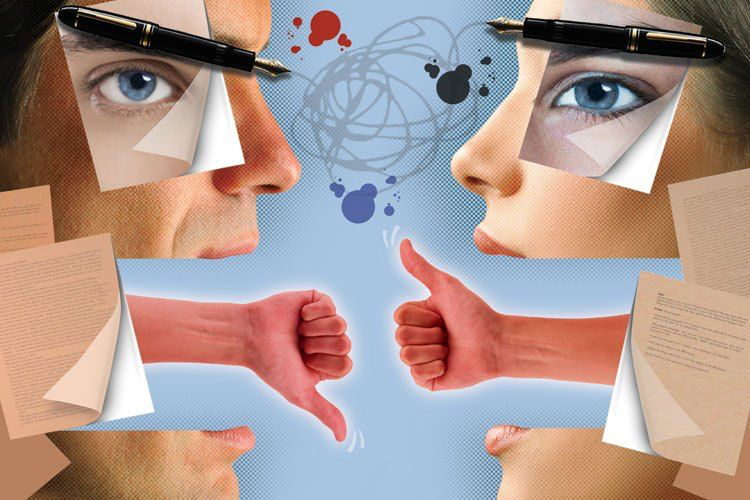
Beliefs are an important concept to consider too because they can shape what people think traits mean. This means personal bias and stereotypes are a big influence on what you think about a person. This factor really dives into intention: what was the other person’s intention? Past experiences can also affect this; if you had a situation where someone had very kind intentions, then you would automatically also have a positive impression of this new person who also shared those traits. Whereas if, in the past, someone with this trait had bad intentions, then you would automatically have a negative view of this person. Making you more cautious around them and being more suspicious of what they do. Another factor is cognition, the prominent unconscious thinking that uses our beliefs to form an opinion on traits and ultimately people. (7) An example to explain this could be a business meeting. Coworkers are working together on a presentation, and one speaks up because they want the presentation to be perfect. Some coworkers may think their intentions are good, and they are just giving constructive criticism because, in their past, the people they have worked with who always spoke up wanted the best for the group. Other coworkers may think this individual was dismissing the efforts someone had put in (bad intentions) because, in the past, groups they have worked with didn’t want the best for the group. The difference here is about what each coworker thought about the intentions of the coworker that spoke up. The beliefs that were developed from past experiences affected what they thought about a person they see in the present.
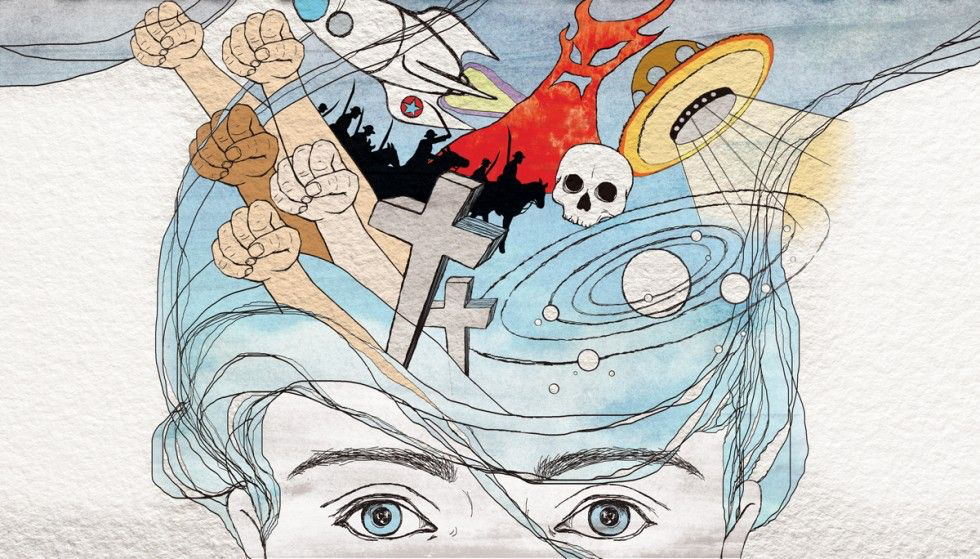
This question is relevant on the global level since personality, personal values, and beliefs can all be affected geographically. Where you live, your religion, your culture, etc., are all contributing variables that come together to make who you are as a person. It is always crucial to consider that your norms and expectations may not always be everyone else’s because everyone is different.
Sources:
- Hampson S. E. (2012). Personality processes: mechanisms by which personality traits “get outside the skin”. Annual review of psychology, 63, 315–339. https://doi.org/10.1146/annurev-psych-120710-100419
- McCrae, R. R., & John, O. P. (1992). An introduction to the five-factor model and its applications. Journal of personality, 60(2), 175–215. https://doi.org/10.1111/j.1467-6494.1992.tb00970.x
- Spielman, R. M., Jenkins, W. J., & Lovett, M. D. (2020, April 22). 11.7 Trait theorists – psychology 2e | OpenStax. Openstax.Org. https://openstax.org/books/psychology-2e/pages/11-7-trait-theorists
- Czerniawska, M., & Szydło, J. (2021). Do Values Relate to Personality Traits and if so, in What Way? – Analysis of Relationships. Psychology research and behavior management, 14, 511–527. https://doi.org/10.2147/PRBM.S299720
- Schwartz, S. (2012). An overview of the schwartz theory of basic values. Psychology and Culture Article, 2(1), 1–20. https://doi.org/10.9707/2307-0919.1116
- Parks-Leduc, L., Feldman, G., & Bardi, A. (2015). Personality traits and personal values: A meta-analysis. Personality and Social Psychology Review, 19(1), 3–29. https://doi.org/10.1177/1088868314538548
- Spielman, R. M., Jenkins, W. J., & Lovett, M. D. (2020b, April 22). 7.1 What is cognition? – Psychology 2E | OpenStax. Openstax.Org. https://openstax.org/books/psychology-2e/pages/7-1-what-is-cognition