
Welcome back to my blog!
Continuing from my last post, I want to re-introduce my inquiry post:
How does sleep effect a teenager’s brain?
In my last post, I gave you an overview of how many hours of sleep teenagers require and explained that teenagers require sleep to support physical, mental, and emotional development. I also explained that there are 2 main sleep stages in our sleep cycle.
In today’s post, I want to explain how sleep affects a teenager’s ability to remember information, focus on class, learn new things, and explain why sleep is important for the brain.
I will address 2 questions:
- How does sleep affect emotions and mental health?
When teenagers have too little sleep, it affects a teenager’s mood, stress, and emotions. Teenagers need at least 9 whole hours of sleep per night for healthy brain development, but many teens get around 5-7 hours. Research shows that when teenagers are sleep deprived it shows that people become less positive and more negative with emotions. (1)
Sleep also affects how teenagers act and feel. Sleep affects teenagers because sleep is essential for how they feel emotionally and behave mentally and socially. During sleep, the brain processes and modifies emotional memories. (2)
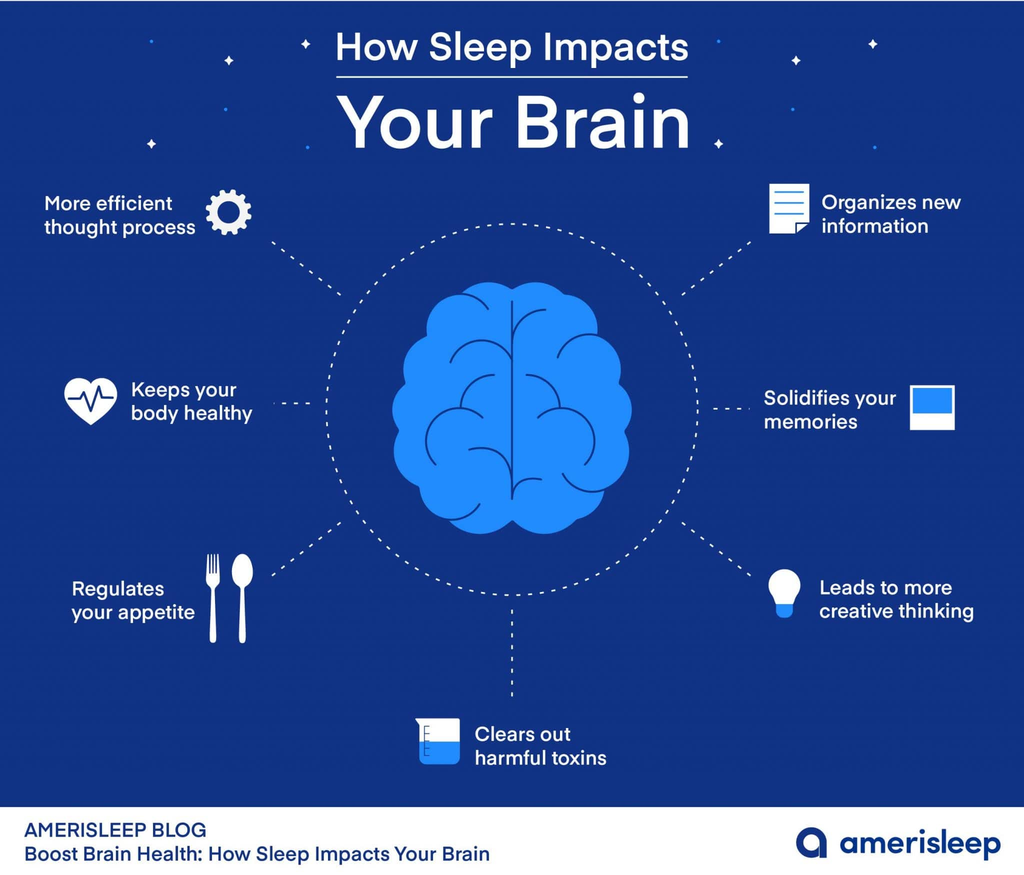
Further, how good the sleep you get can also help your brain. Sleep strengthens memory, clears toxins from your brain through the glymphatic system, supports learning, stabilizes mood, and helps neurons communicate effectively. These processes occur during both REM and non‑REM sleep, which together restore brain function and protect long‑term cognitive health. (3) As I mentioned in my previous post, during non-rapid eye movement sleep (NREM), the teenager’s brain is forming memories, and during rapid eye movement (REM) sleep, the teenager’s brain is processing experiences and creative thinking.
However, what happens when teenagers don’t get enough sleep? How does not get enough sleep affect the brain? Too little sleep disrupts memory, attention, emotional regulation, and the brain’s ability to maintain healthy cellular function, leading to both short‑term cognitive problems and long‑term neurological risks. After 1-2 nights of bad sleep, it can lead to reduced concentration, slower thinking, and mood swings. If teenagers have chronic sleep deprivation, they could have the risk of depression, anxiety, and memory problems. (4)
- How much sleep do teenagers need?
There is a lot of research conducted to determine how many hours of sleep is required for teenagers. Most scientists recommend that kids (teenagers) aged 13-18 should get 8-10 hours of sleep per night. If teenagers do not get the recommended amount of sleep per night, then they could experience growth stunts. (5)
And what else happens when teenagers do not get enough sleep? When teenagers do not get enough sleep, it can lead to physical consequences. And most teenagers nowadays get less than the normal number of hours of sleep due to school schedules and sports. The lack of sleep can lead to weight gain, increased risk of diabetes, heart disease, and weakened immune function, making teenagers more vulnerable to infections. (6)
The amount of sleep also supports brain development. People think sleep is just for rest, but it is an essential process. Sleeping can also help with memory consolidation and learning. A major part of sleep is emotional regulation and behavior. (7)
You may ask then, what happens during sleep? During sleep our bodies cycle through non-REM (NREM) and REM stages which slow down our heart rate, lowering temperatures and repairing tissues across 4-5 sleep cycles. REM sleep starts to begin 90 minutes (about 1 ½ hours) after you fall asleep, and brain activity increases to near-waking levels. (8)
Also, during REM sleep, the brain strengthens memories. The brain strengthens memories through neural changes that make connections between neurons. Another way is that the brain replays recent experiences through hippocampal sharp wave ripples. If you do not get enough sleep, then it could badly harm your memory in the future. (9)
Thank you for reading my post: Stay tuned for my next post in which I will explain how sleep affects me as a teenager, especially my performance in school and in sports, and how sleep can affect the community when the majority of teenagers don’t get enough sleep.
