Step 1: Research more about implicit bias, social biases, mental shortcuts and cognitive blindspots
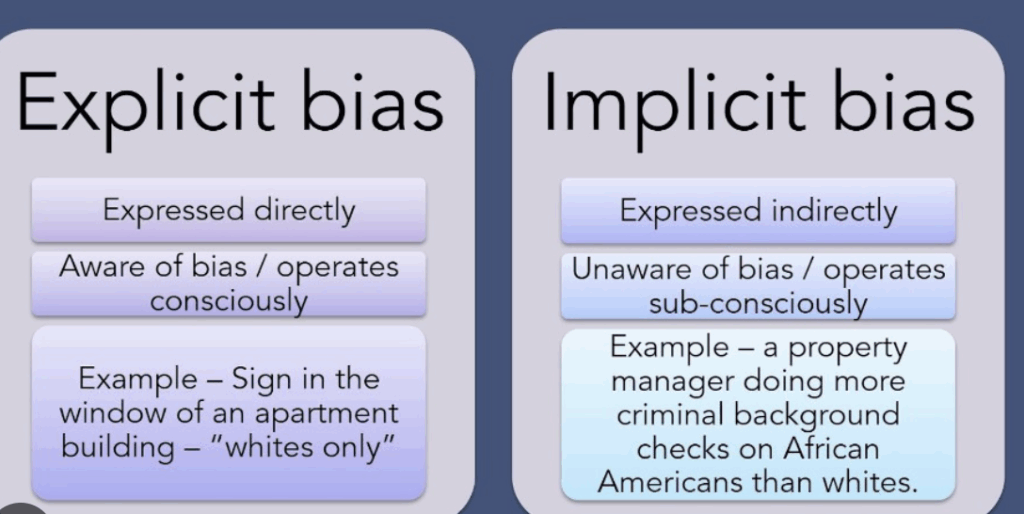
First, let’s look at what biases are: a bias is a inclination, prejudice, preference or tendency against something or someone. (1) Biases are usually lacking in real evidence, knowledge or experience, rather they are based on worldly stereotypes. Anybody can be susceptible to biases in any point in their life. The dangerous part of biases are that we are usually unaware of how they affect our decisions and perceptions, because we make them subconsciously. Bias is usually an unconscious beliefs we make towards groups of people based on their physical characteristics or who they identify with. (2)
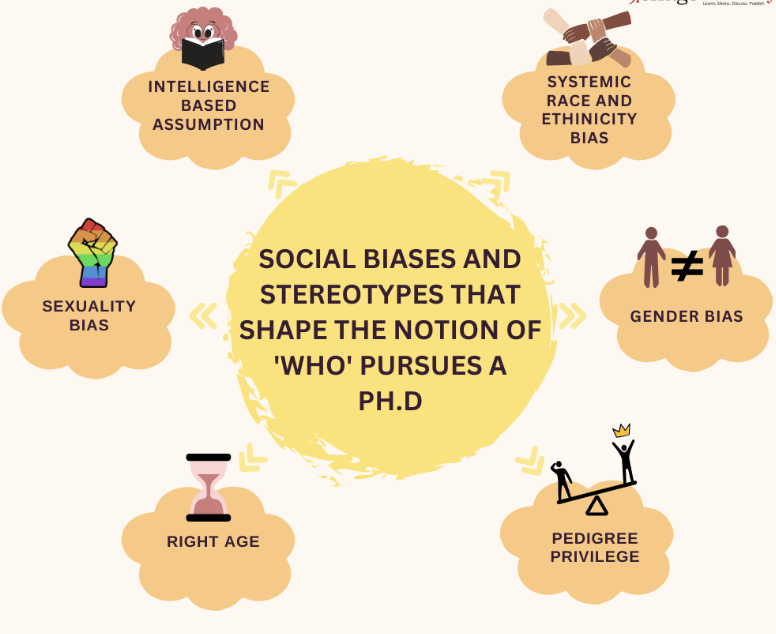
This is now where we can look specifically at implicit bias. Implicit bias is a type of bias that as a base understanding our the unconscious attitudes and stereotypes we hold in our heads that we have about groups of people in society. This is the cause to people judging others based on race, ethnicity, gender, religion, socioeconomic background and educational background. This causes humans to judge others that are different from us and unconsciously make stereotypes and assumptions against social groups. Implicit bias are influenced by our experiences, although are not a direct result of personal experience, but rather cultural conditioning, media portrayals and upbringing. (3)
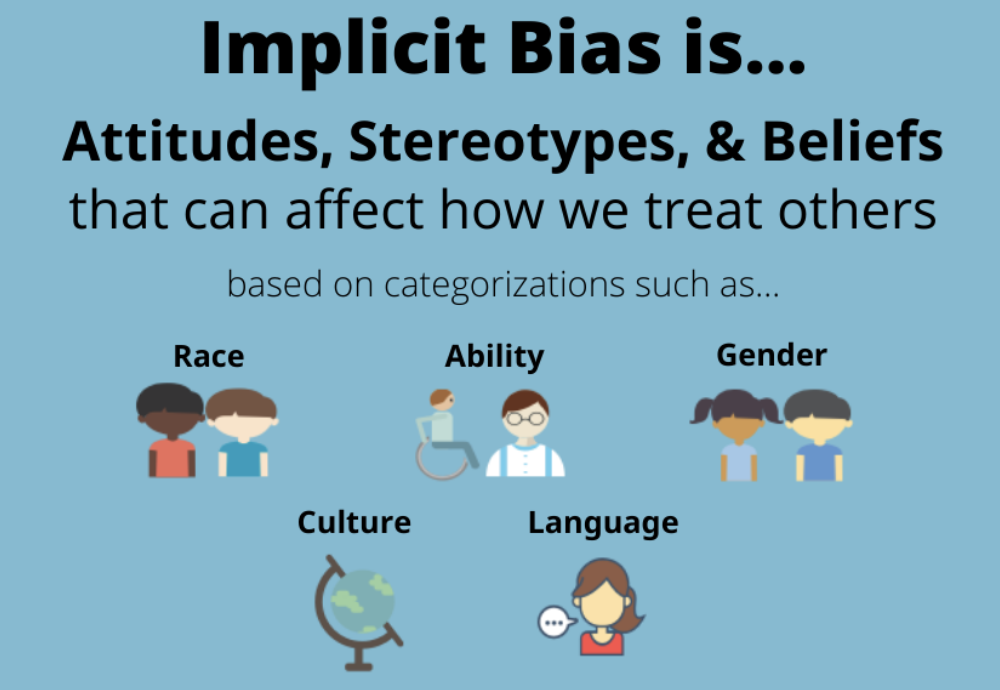
Just like implicit bias affects our everyday decisions and perceptions, so do social biases. Social bias is what we learn from our early experiences in life learnt in childhood, based upon family, social environment, media and cultural norms. We judge others that are different from us, because of these social biases that were instilled in our brains at a young age. (4)
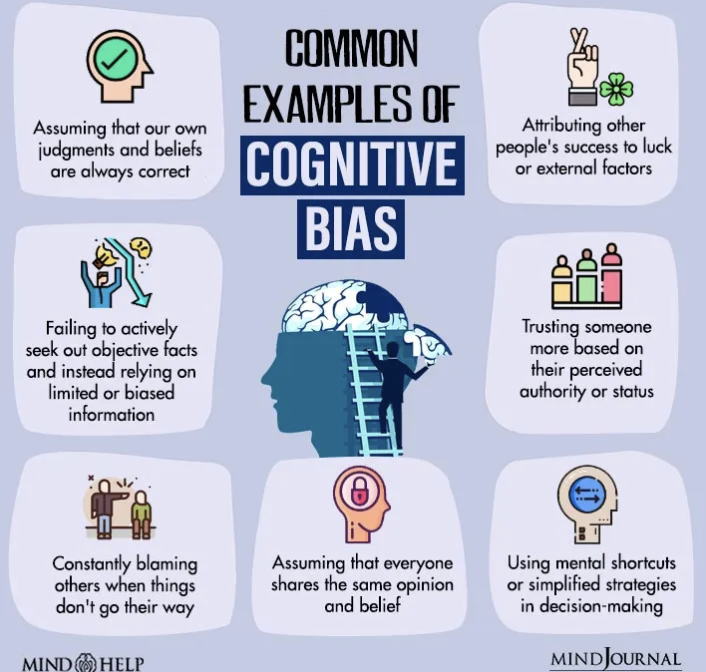
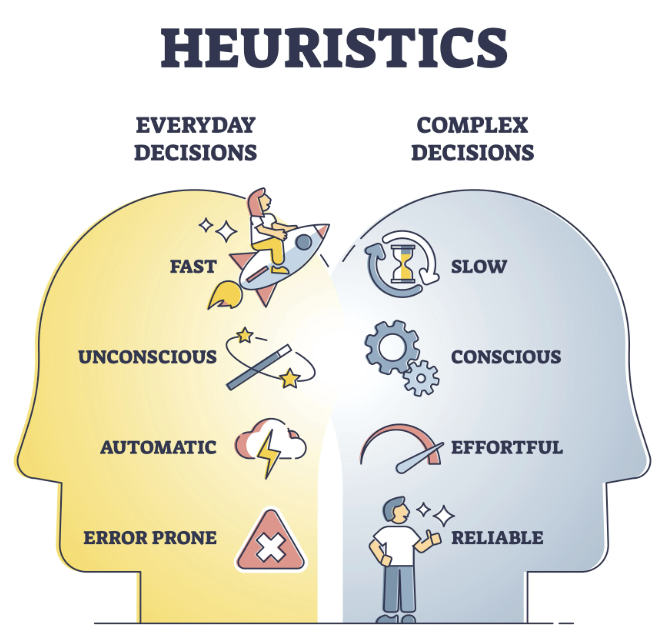
The reason why we are so susceptible to biases are because our brain makes mental shortcuts, because as humans we have to make 1000s of decisions in a day. Mental shortcuts, also called heuristics are efficient mental processes that help humans solve problems and learn new things. This process makes the problems that we have to deal with easier, by consciously or unconsciously ignoring some of the information being sent to the brain. By ignoring some information, we don’t give each decision the same amount of attention. By using these mental shortcuts, it makes us susceptible to bias. (5)
Our brains are susceptible to bias, because we all have cognitive blindspots. Cognitive blindspots are errors in thinking, where we are not able to see our biases, flaws or fixed viewpoints that do not allow ourselves to notice our biased perception of the world. Our blind spots can affect many aspects of our life, such as our decision-making, self-awareness, interpersonal relationships and professional settings. They can even affect societal issues which can lead to polarization and misunderstanding between different groups in society, causing judgements and assumptions towards people different than us. (6)
The point of this blog post was to explain more about the biases that affect us unconsciously on an everyday basis. We are all susceptible to making judgements, stereotypes and assumptions about groups of people, which is called implicit bias. We are born in a society full of stereotypes and our environment makes it physically impossible not to be impacted by the influence of society. Because our brains try to simplify the world, this bias can cause many types of discrimination in the world: racism, ageism, sexism, homophobia and ableism. Implicit bias is present in many settings in the world including school, work, healthcare and even legal proceedings. Our experiences are the main cause of this bias and it might not even be part of our true beliefs, but just being a little more conscious about them can solve many problems in the world. (7)
Now with the information of biases in our everyday life, in my next blog post we can look more at how these affect our perception and the negative implications on our brain in early childhood development.
Sources:
- https://www.psychologytoday.com/ca/basics/bias
- https://cpdonline.co.uk/knowledge-base/safeguarding/types-of-bias/
- https://www.apa.org/topics/implicit-bias
- https://online.utpb.edu/about-us/articles/psychology/what-is-social-bias/
- https://www.thoughtco.com/heuristics-psychology-4171769
- https://psychotricks.com/blind-spot-bias/
- https://www.verywellmind.com/implicit-bias-overview-4178401
Hi Ariana, I like your post! It’s very clear and informative. Since in your next post your looking into how these affect us in early childhood development I think it would be interesting if your looked at how biases show up in young childrens media like books, TV show and even toys. As well as how media plays a role in reinforcing/challenging bias.
Here’s an article from UBC’s magazine about this if you want to look into it:
https://magazine.alumni.ubc.ca/2022/arts-humanities/how-stories-and-media-can-shape-childrens-bias-towards-social-groups
Hi Ariana, I really enjoyed reading your blog post! The topic you chose is so important and I really think you did such a good job explaining implicit bias and all the different forms of biases. I also loved how you tied concepts such as cognitive blind spots and mental shortcuts to our day-to-day decision-making processes.
You might want consider adding a few personal examples or reflections about times when you’ve noticed bias in yourself, or moments when you realized you had made an assumption about someone based on stereotypes.
Overall, you explained a very complex topic well, and I am definitely looking forward to read your next posts!