1) Currently, my three group members and I have reached out to a local retirement residence that we hope to partner with for our initiative. In our message, we outlined our purpose, the positive impact we aim to create, and what we hope to achieve. Although we are still awaiting a reply, our backup strategy is to follow up by phone or reach out to an alternative care center. We have already selected a target date for our visit and are actively drafting a lineup of games and events to host, with several promising concepts already on the table. Once the staff gets back to us, we will lock in our final schedule. Throughout this process, we are also incorporating constructive feedback from our classmates to ensure our outreach achieves the greatest possible impact.
2) A major milestone for our team has been aligning on a target schedule, selecting a venue, and initiating outreach with local care homes. We put significant thought into choosing the right facility and designing an itinerary tailored to the residents. Specifically, we drafted and sent detailed inquiry emails to two different retirement residences and are currently anticipating their replies. Additionally, we have successfully generated a diverse list of interactive entertainment options such as bingo, card games, and group sing-alongs that will keep everyone engaged.

3) One of our main hurdles was designing an experience that felt genuinely uplifting and memorable rather than like a routine, passive visit. We wanted to make sure the residents would be actively involved and energized instead of simply sitting back as spectators. To overcome this, we are organizing a group karaoke activity where residents can bond with peers, sing familiar tunes, and enjoy a vibrant atmosphere. Clinical research demonstrates that structured group karaoke in residential care facilities improves frontal executive cognitive skills, tongue strength, and respiratory function in older adults (1). Singing also boosts emotional well-being, reduces stress, and fosters social connection. Similarly, for games like bingo, recreation staff frequently rely on oversized print cards, chunky easy-to-hold markers, and creative twists like song-based bingo to accommodate varying visual and auditory abilities. Offering modest rewards or friendly recognition keeps the environment light, encouraging, and free of pressure.
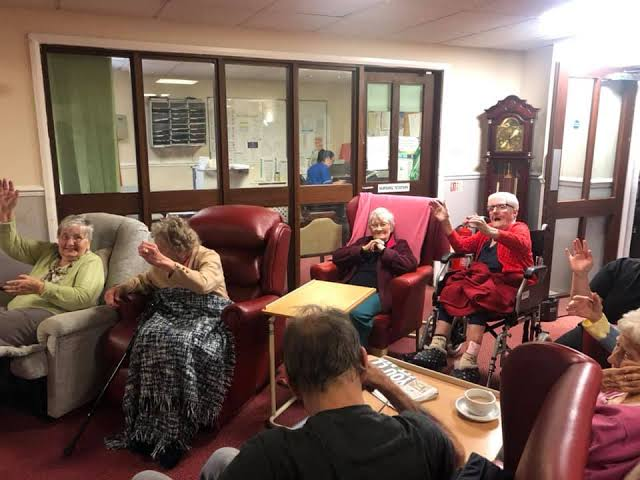
4) Moving forward, our immediate priority is connecting with the residence coordinators to confirm a date that aligns with their calendar. Once confirmed, we will prepare our supplies and lock in our final itinerary. We plan to tailor details—such as our bingo themes and karaoke song selections—based on the preferences and insights shared by the facility’s staff. Additionally, because our group has limited prior experience working with older adults, we intend to research best practices for intergenerational communication. Research on youth-senior programs shows that well-structured, shared activities significantly enhance social connectedness, reduce age-related stereotypes, and improve overall well-being for older adults (2). Taking these steps will keep us organized and ensure our initiative runs smoothly and meaningfully.
Citations:
- Miyazaki, A., & Mori, H. (2020). Frequent karaoke training improves frontal executive cognitive skills, tongue pressure, and respiratory function in elderly people: Pilot study from a randomized controlled trial. International Journal of Environmental Research and Public Health, 17(4), 1459. https://doi.org/10.3390/ijerph17041459
- connectedness in older adults participating in intergenerational programmes with adolescents: A realist review. BMJ Open, 13(10), e069765. https://doi.org/10.1136/bmjopen-2022-069765