

Hello everyone, this is my fifth blog post on the inquiry question: “What would a perfect society look like?”. Today, I will be addressing the third mini-question I have posed myself, how can we create a system in which all points of views and opinions are accounted for?
This is a rather difficult problem, as the simplest and most reliable method is to find a compromise between whichever two parties’ opinions or points of views are conflicting. However, if one party’s demands are too unreasonable, or if one party is stubborn and does not budge, it becomes difficult to choose.
Solutions:
- Compromise [3]
We can find a compromise between the two arguing parties that makes each party loosen their opinions and give in on some of their points so that we can create a path that both parties are willing to follow without dispute. This, however, will only work if both parties are flexible and not steadfast in their opinions. [1]

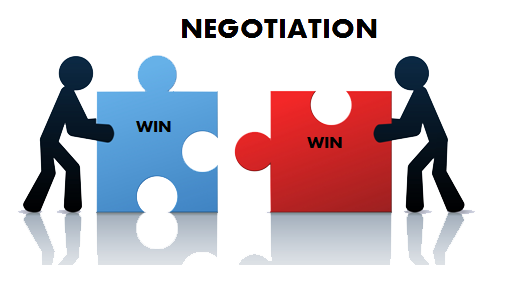
2. Negotiation [3]
This is similar to compromise, however in this instance we do not pose a solution, rather, the two parties hold a discussion or debate in which they can discover their own compromise. This is also used when the two are flexible, and this could be an alternative to a compromise. [3]
3. Arbitration [3]
Arbitration is the act of bringing in a person without any bias towards either of the indicated opinions and letting that person judge on which party’s opinion to choose. Of course, both parties in question will have to agree to an arbitration, and arbitrations can have their negative aspects. For example, the arbitrator could have only a shallow understanding of the issue, or they could have misjudgement as they are not a professional judge. This can be used when the parties do not want to find equal footing and only want their proposition. [4]

4. Litigation [3]
This is the most popular form of resolving a conflict, bringing it to court. This is where you have real judges that look at the moral aspects, the legal aspects, and the cause and effects of each proposition. This is the most concrete way to determine an answer, if none of the parties want a compromise. The parties are allowed to appeal, there are lawyers, and all the typical events that happen in a court hearing will pass. [5]

Those were all the methods that I could find that solve an issue where two parties are at a standpoint in their argument and cannot find a solution. Thank you for reading my blog post, and I will see you soon!
- Frederick Han
Appendix:
https://smallbusiness.chron.com/strengths-compromise-conflict-resolution-10502.html
[1]
https://www.tpsgc-pwgsc.gc.ca/gcc-bdm/8etapes-8steps-eng.html
[2]
https://www.okbar.org/freelegalinfo/disputes/
[3]
https://www.stewartslaw.com/expertise/international-arbitration/arbitration-process
[4]
Hello Fredrick! I loved reading your blog post, as I have been following your research. Your blog post offers a well-structured exploration of how to create a system that accounts for all points of view and opinions. I particularly liked how you’ve highlighted the importance of flexibility and willingness to engage in dialogue.
Now that your 3 research posts are complete, my question to you is: “Which method do you think is the most effective for resolving conflicts in a perfect society and why?”
Were you able to achieve what you wanted from this research project?
I really enjoyed following you on this journey and I can’t wait to see what’s in store for you next!
Best of luck,
Anannya Bala