I will complete 3 steps to be able to answer my inquiry question to the best of my abilities, by looking at deindividuation in different settings.
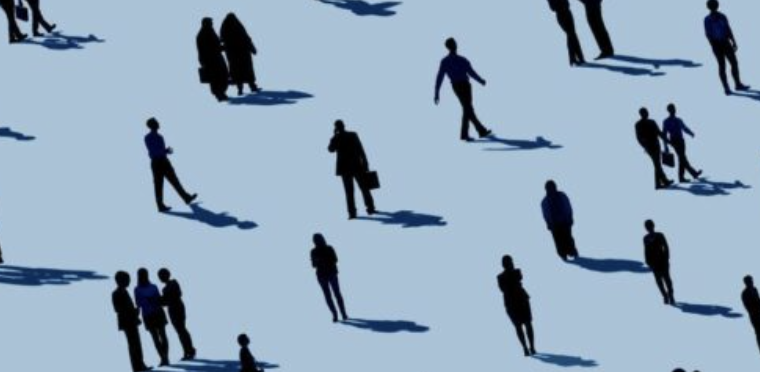
In my first blog post, I explained the concept of deindividuation, where individuals lose self control, awareness and personal accountability in a group setting. These are environments, where people are susceptible to mob mentality as your personal actions can be justified if everybody else is doing it. Individuals then participe in actions and trends, showing impulsive behaviours that they would typically avoid if alone. The larger the group, the greater sense of deindividuation, and loss of one’s self.
Step 1: Research about deindividuation among teenagers on online platforms, digital environments and social gatherings
Deindividuation takes place in many social settings, especially among teenagers. As teenagers are trying to find their identity, they are more susceptible to adopting mindsets and actions of those around them to fit in and feel as if they belong. Between online platforms and social gatherings, deindividuation is present. On online platforms, such as social media applications, it is much easier for people to say things that they wouldn’t in person as they have anonymity and distance. This can lead to cyber-bulling and flaming other people that you don’t even know. Teenagers have also been shown to change their behaviour in social settings, such as parties where they are more prone to take impulsive choices, like participating in drinking or drugs. Most teenagers just want to feel accepted, but how far can they change their behaviours and lose themselves due to deindividuation and what mental processes do our brains go through to allow us to commit to this behaviour. In my step 1, I will look more into this topic.
Sources that will help me with this step:
- https://www.ashcatton.com/posts/428-cyberbullying-deindividuation-or-self-esteem
- https://www.verywellmind.com/deindividuation-7546896
- https://groundbreakertherapy.com/blog/deindividuation/

Step 2: Research about deindividuation in large gatherings, mobs and high-arousal situations
As I explained in my last blog post, there were incidences in New York City, where suicide attempts were happening all over the city with people gathering to watch the event. Because of the darkness in the night and the large crowd, people started to yell ‘jump’, encouraging the individuals to plummet to their deaths. This form of deindividuation is present in large gatherings, where people adopt a mob mentality. In this step, I want to be able to justify or explain this behaviour as it seems to cruel for humans to do this without psychological processes being underway. The other situation that I will talk about in this step are high-arousal situations, such as concerts, sporting events and festivals, where the energy of the crowd can cause reckless and impulsive behaviours. During these events, physiological changes are happening in your body, such as increased heart rate, sweating and rapid breathing. These can also have cognitive impacts, such as tunnel vision. I want to be able to explain how your body is physical impacted in these large gatherings in this step.
Sources that will help me with this step:
- https://nashvillemh.com/blog/deindividuation-in-crowds-group-psychology/
- https://thedecisionlab.com/reference-guide/psychology/deindividuation

Step 3: Research about deindividuation in warfare and masked or uniformed groups
It has been shown that wearing a uniform or a mask, participating in warfare hides individual identity, which can lead to aggressive and anti-social behaviour, as proven in the Stanford Prison Experiment. War shows higher rates of immorality, aggression and violence as they believe that they are fighting for their country, showing patriarchy. Since they are participating with other people, who believe that they are all doing the right thing as a group, they lose sense of personal identity and accountability, replacing with a group identity. In this step, I also want to explore deindividuation in these settings and how it changed a big part of history.
Sources that will help me with this step:
- https://www.britannica.com/event/Stanford-Prison-Experiment
- https://researchcentre.army.gov.au/library/australian-army-journal-aaj/volume-2-number-2/military-uniforms-psychological-dimension