
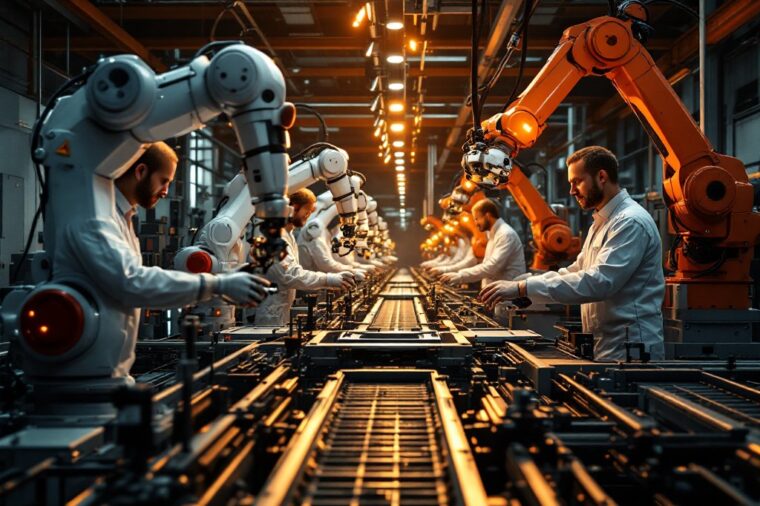
Human workers face several challenges when collaborating with robots.These challenges include:
PSYCHOLOGICAL AND SOCIAL CHALLENGES.
Working alongside robots can significantly impact mental health and social interaction. Workers often experience job displacement anxiety, fearing that robots may replace them, which can lead to stress, decreased job satisfaction and even depression. The presence of robots can also reduce social interactions among human colleagues, potentially affecting team cohesion and morale. Trust is another critical factor. Humans may hesitate to rely on robots for critical tasks due to concerns about reliability and safety. Over-reliance among humans can also create dependency issues.
TRAINING AND ADAPTATION.
Workers need to acquire new skills, particularly in robotic technologies. Training employees need to operate, maintain and repair robots which can be resourse-intensive,especially in industries where advanced robotics are a new addition.
SAFETY CONCERNS.
Despite the advanced safety features of robots, humans-robot collaboration does introduce new safety risks. While robots can be designed with sensors to prevent accidents, there is still the possibility of a malfunction or human error that can lead to injuries.
RESISTANCE TO CHANGE.
Some workers may resist the integration of robots into their workspaces, fearing displacement of their jobs. This creates a great challenge to human-robot collaboration.



Hello Madona, your research is an answer to that question asked in Kenya and outside the country. This shows that we require your content to solve these challenges which involves unemployment. Thanks for your topic.