
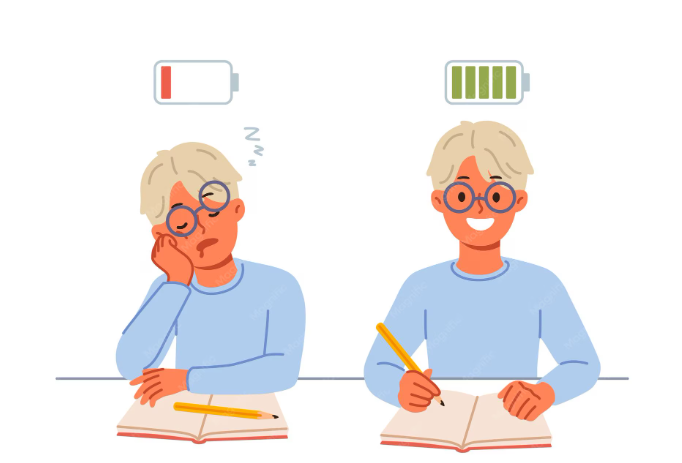
In this post, I will look at other things that may affect students’ sleep or learning. I will research things like stress, homework, screens, and school schedules, which will help me understand why students might not get enough sleep and how that affects their learning.
Stress and how it impacts sleep

Firstly, let’s understand how stress impacts sleep. Stress is one of the biggest reasons students can struggle with sleep. When students worry about school, grades, or other things happening in their lives, their brains stay active even when they are trying to sleep (1). This makes it much harder to fall asleep and can cause students to wake up during the night. When stress gets in the way of sleep, students may feel tired the next day, which makes it harder to focus, remember lessons, or stay calm in class (2). So, stress doesn’t just make students tired, it also affects how well they learn (4).
Homework and busy routines
Another big thing is homework and busy schedules, which also play a big role in how much sleep students get. Many students stay up late finishing assignments or studying for tests. (1). Or have sports and clubs, that keep them up later than they want. When students go to bed late, they don’t get enough time in deep sleep, which is important for their memory and learning (2). This can make school feel harder the next day because their brain didn’t get enough rest (4).

Screens and technology
Screens are another big reason students lose sleep. Phones, tablets, and computers give off blue light, which causes many problems for the brain (2). It can make it harder to fall asleep, even when it’s late. Many students stay up scrolling, texting, or watching videos, which makes them sleep later (1). Using screens before bed can also make sleep lighter and less restful, which affects focus and memory the next day (3).
School start times
School start times can also affect sleep. Many schools start very early in the morning, which forces students to wake up before they get the recommended amount of sleep(4). Teenagers naturally fall asleep later because of changes in their internal clocks, so early start times make it even harder to get enough sleep during the school week (1). When students have to wake up too early, they may feel tired all day, which affects their learning at school (2).

Everyday habits
Some everyday habits also affect sleep. Drinking caffeine too late in the day can make it harder to fall asleep at night, and having an irregular sleep schedule by staying up later on weekends can confuse the brain’s internal clock (2). When students don’t have a steady routine, their bodies don’t know when to feel tired or awake (1). These habits can lead to poor sleep, which makes it harder to focus and learn in school (3).
In conclusion, all of these things have big impacts on students’ sleep. Thank you for reading.
References
National Institute of Neurological Disorders and Stroke – Brain Basics: Understanding Sleep (1)
Sleep Foundation – How Much Sleep Do Students Need? (2)
Science News Today – The Glymphatic System: How Your Brain Washes Itself During Sleep (3)
American Academy of Pediatrics – Sleep and School Performance (4)

Hello Hailey,
I found your blog post very insightful! I love the layout of your blog post, containing bolded headings, numerous pictures, and informative descriptions for each topic covered. In addition, I like how you made a connection regarding stress and sleep, elaborating on how the amount of stress a student has can consequently affect their quality of sleep. One recommendation I would make for your upcoming Presentation of Learning is to incorporate all of the various factors that may affect sleep (the bolded titles) and include relevant pictures to make your presentation fascinating for students. Overall, your blog post is very informative and engrossing. I wish you the best for your presentation of learning this upcoming Friday!
-Vanessa Vukovic
Hi Hailey, I really enjoyed reading your post. I liked how you used a layout to make your post more organized and unique; I also appreciated the in-depth information that you provided. Moreover, your thoroughly explained examples of the many ways students don’t get much sleep helped me better understand how important of an issue this is, especially for students. Something you can add for your presentation could be more images or graphs to visually show the audience how sleep affects students’ learning and daily lives, helping them to better understand the information and its impact. Overall, great job, and good luck for your presentation!
I also found a source that might be helpful to add to your final response!
https://lifestylemedicine.stanford.edu/sleep-and-academic-excellence-a-deeper-look/