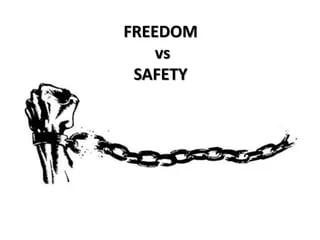
Initial question: “When does protecting people begin to limit their freedom?”
Throughout this inquiry project, one challenge I had to overcome was learning how to stay balanced (looking at both sides equally) instead of choosing one side right away. At first, I wanted to say that protecting people is always good, but as I researched more, I realized that some safety rules can also limit freedom if they go too far. I overcame this by using a checklist to organize my thinking, asking questions like whether a rule is necessary, fair, temporary, and accountable. This helped me make my research clearer and helped me avoid making my answer too opinions based.


This inquiry changed the way I think because it made me realize that safety and freedom are not simple opposites. Before, I mostly thought of protection as something positive, but now I understand that protection can become controlling if there are no limits or checks on power. I also learned that even rules with good intentions can affect many different people differently, especially if they are applied unfairly or without transparency. This made me think more critically about rules in school, online privacy, surveillance, and government decisions during emergencies. Instead of just asking if this keeps people safe, I now also ask if this is fair, necessary, and not taking away more freedom than needed frompeople.

This investigation will impact my future decisions because I will now be more aware of how safety policies affect my rights and the rights of others. For example, when I see rules about privacy, cameras, online data, or public safety, I will think more carefully about whether those rules are reasonable or whether they might go too far. I will also pay more attention to who is affected by these decisions and whether people have a way to question or challenge them. This project helped me understand that being safe is important, but people should still have basic freedoms and protections from unfair control.

Finally, I believe this investigation can also impact others locally and globally because the balance between safety and freedom affects everyone. In local communities, people deal with safety rules in schools, public spaces, policing, and online platforms. And globally, governments and organizations also make decisions about surveillance, emergency laws, protests, and digital privacy. If more people understand the risks of protection becoming control, they may be more willing to ask questions, demand fairness, and support safeguards like transparency, time limits, and accountability. Overall, my inquiry showed me that the goal should not be choosing only safety or only freedom, but finding a balance where people are protected without losing their rights.

Hi Joelle! Thank you so much for sharing your take on how protection can limit freedom for others! I really felt that this was a prevalent question, especially considering the gloomy state of the world right now!
I loved the examples you gave of safety policies and surveillance that supported your argument! Next time, I would personally add more real life examples or philosophical debates to reference in your work! Here’s an article to get you started:
https://www.amnesty.org/en/what-we-do/freedom-of-expression/
Happy writing!