
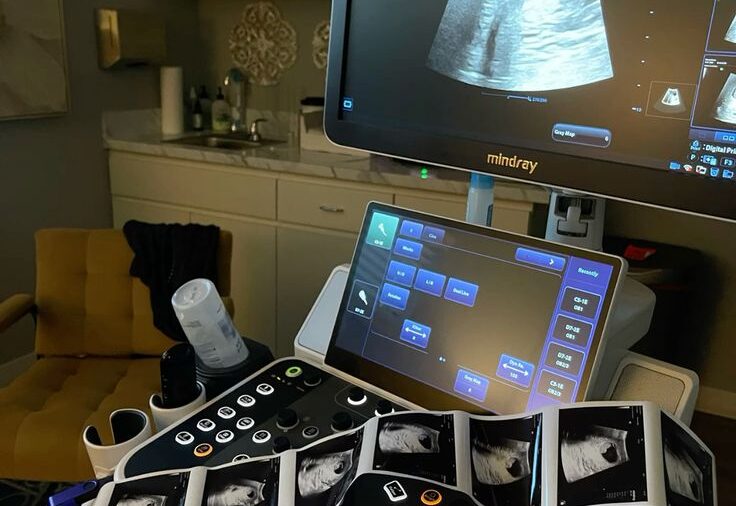
My Inquiry Question
How has ultrasound technology changed the way medical conditions are diagnosed and treated, and how could future advancements improve patient care?
What Is Ultrasound Sonography?
Ultrasound, also known as sonography, is a medical imaging technique that uses high-frequency sound waves to create pictures of the inside of the human body. It allows healthcare professionals to examine organs, tissues, blood vessels, and even a developing baby during pregnancy without needing surgery. Unlike X-rays and CT scans, ultrasound does not use ionizing radiation, making it a useful option for many medical examinations [1].
How Does Ultrasound Technology Work?
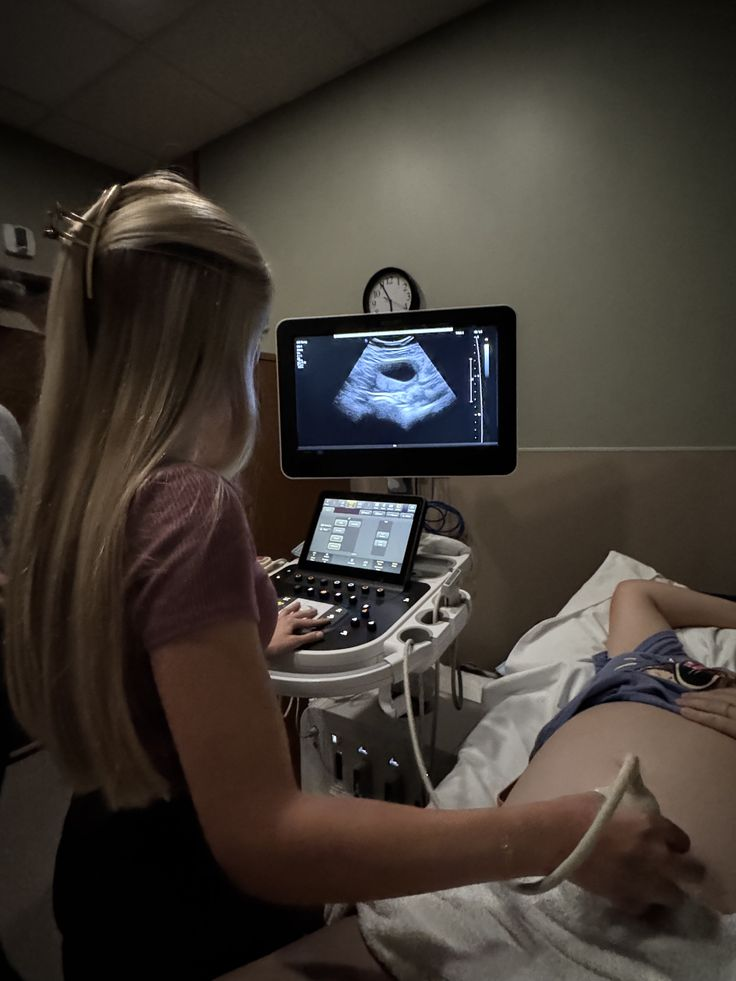
Ultrasound machines work using a device called a transducer, which is also known as a probe. During an examination, a sonographer applies a special gel to the patient’s skin and moves the probe over the area being examined. The gel helps sound waves travel into the body by preventing air from getting between the probe and the skin.
The transducer sends high-frequency sound waves into the body. These waves bounce off different organs and tissues and return to the probe as echoes. The ultrasound machine processes these echoes and turns them into images that appear on a screen. This allows healthcare professionals to see what is happening inside the body in real time [2].
How Is Ultrasound Used in Healthcare?
Ultrasound is used for many different medical purposes. One of its most common uses is during pregnancy, where it helps healthcare professionals monitor a baby’s growth, development, and movement.
It is also used to examine organs such as the heart, kidneys, liver, and thyroid. Another important use is Doppler ultrasound, which allows healthcare professionals to examine blood flow through blood vessels. This can help identify circulation problems and other medical conditions.
Ultrasound can also help guide medical procedures, such as biopsies, by allowing doctors to see where a needle needs to go. This makes certain procedures more accurate and helps healthcare professionals examine areas that may be difficult to reach [3][4].

Benefits and Limitations of Ultrasound
One major benefit of ultrasound is that it does not use ionizing radiation. It is also non-invasive, meaning most examinations do not require surgery or entering the body. Another advantage is that ultrasound produces real-time images, allowing healthcare professionals to observe movement, such as a heartbeat or blood flowing through vessels [1][3].
However, ultrasound does have some limitations. Sound waves do not travel well through air or bone, which can make it difficult to get clear images of certain areas of the body. For example, ultrasound is not always the best option for examining areas hidden behind bones or filled with air. In these situations, doctors may need to use other imaging technologies, such as MRI or CT scans [3].

What I Learned
Through this first round of research, I learned that ultrasound is an important part of modern healthcare because it allows medical professionals to examine the inside of the body without using ionizing radiation. I also learned that ultrasound is used for much more than pregnancy examinations. It can help identify medical conditions, monitor blood circulation, examine organs, and guide certain procedures.
This research helped me understand the basic science behind sonography and why it is so useful in healthcare. It also made me interested in learning more about how ultrasound technology has improved over time and what future advancements could mean for patients and healthcare professionals.
References
- Health Canada. Ultrasound. https://www.canada.ca/en/health-canada/services/health-risks-safety/radiation/medical/ultrasound.html
- U.S. Food and Drug Administration (FDA). Ultrasound Imaging. https://www.fda.gov/radiation-emitting-products/medical-imaging/ultrasound-imaging
- RadiologyInfo.org. Ultrasound (Sonography). https://www.radiologyinfo.org/en/ultrasound
- National Institutes of Health (NIH). What Is Medical Ultrasound? https://newsinhealth.nih.gov/2025/05/what-medical-ultrasound