
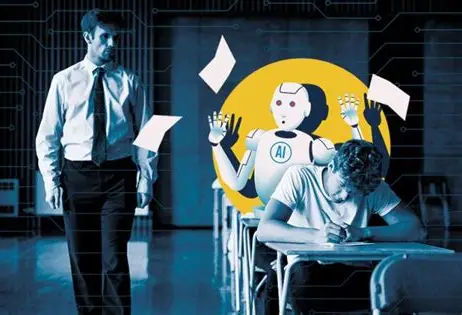
Welcome to my blog post #4. Today I will be discussing how students using artificial intelligence to cheat in school could affect future jobs, how schools may prevent AI cheating, and how accurate AI detection websites really are. AI tools have become very common in schools, and many teachers and students are concerned about how this technology could change education in the future (1).

Artificial intelligence has quickly become one of the most powerful tools available to students today (1). AI can help students research topics, explain difficult concepts, and improve writing skills when used correctly (2). However, many students are now using AI to complete assignments, write essays, and answer homework questions without actually learning the material themselves (3). This has caused major concerns for teachers, parents, and employers because education is supposed to prepare students for real jobs and responsibilities in the future (2). Some experts believe students are becoming too dependent on these resources instead of learning how to think independently and solve problems on their own (4).
First, I will discuss whether students who rely heavily on AI in school will be able to perform well at jobs later in life. Many jobs require important skills such as communication, problem solving, critical thinking, and teamwork (2). If students allow AI to do most of their work for them, they may never fully develop these abilities (5). For example, students who use AI to write essays may struggle to communicate clearly in future careers that require reports, emails, or presentations (3). In jobs such as medicine, engineering, or law, workers must understand information deeply because mistakes can have serious consequences, especially in high stake jobs (4). For example if I were to go for surgery, I wouldn’t want my surgeon asking websites such as ChatGPT what to do. If students cheat their way through school using AI, they may have difficulty handling real responsibilities in the workplace (5). Employers may also become frustrated if workers cannot complete basic tasks without relying on artificial intelligence (2).

Next, I will discuss how schools and teachers may help prevent AI cheating. One possible solution is changing the way students are tested (1). Many teachers are starting to use more in-class writing assignments, oral presentations, and handwritten work because these are harder for AI to complete (4). Teachers may also ask students to explain their thinking step by step or show rough drafts to prove their work is original (5). Some schools are also teaching students how to use AI responsibly instead of banning it completely, which I think could be helpful (2). For example, students could use AI as a study tool to help explain topics instead of copying answers directly (1). Personally, I use Ai to help me create study questions when I have a test in math. Using Ai for studying could allow students to still benefit from technology while continuing to learn independently (3).
Another way to reduce cheating is by helping students understand the consequences of relying too heavily on AI (2). Students may earn good grades in the short term by cheating, but they could struggle later when they are expected to perform independently at jobs or college programs (4). Developing real skills and knowledge is still very important, even as technology continues improving (5). Teachers and parents may also need to encourage students to take pride in their own work instead of always searching for shortcuts (3).

Finally, many people are wondering how accurate AI detection websites really are. AI detection tools claim they can identify whether writing was created by artificial intelligence, but many experts say these systems are not always reliable (5). Sometimes AI detectors incorrectly accuse students who wrote their own work, while other times AI-generated writing is not detected at all (4). Because of this, many schools are careful about relying completely on AI detection software when deciding whether students cheated (2). Some researchers believe AI detectors will improve over time, but currently they still make many mistakes (5).
In conclusion, artificial intelligence is creating major challenges for schools and students (1). Although AI can be a useful learning tool, using it to cheat may prevent students from developing important skills needed for future jobs (2). Schools will likely continue changing assignments and teaching methods to reduce AI cheating while still allowing students to benefit from technology (3). AI detection websites may help somewhat, but they are not perfect and still have many limitations (5). As AI becomes more common, students and teachers will need to learn how to use it responsibly without harming education (4).
Thanks for reading! I hope you learned something about AI cheating in schools and how it may affect the future.
I will list my resources below.